Impact of Salient Political Issues: Race (AQA A-Level Politics): Revision Notes
📚Revision Notes
Impact of Salient Political Issues: Race
Race has been one of the most significant and enduring political issues in American history. The country's legacy of slavery and systemic racism continues to shape modern US politics, influencing elections, policy debates, Supreme Court decisions and social movements.
Historical background
Slavery was legal in southern states until 1865, when northern abolitionist states defeated pro-slavery Confederate states in the Civil War. The southern states had attempted to leave the union to preserve slavery, but their defeat led to significant constitutional changes.
Note
The period following the Civil War saw three crucial constitutional amendments designed to establish equal rights for formerly enslaved people. These Reconstruction Amendments fundamentally reshaped American citizenship and voting rights.
The Thirteenth Amendment (1865) abolished slavery throughout the USA. The Fourteenth Amendment extended equal protection under the law to all citizens, whilst the Fifteenth Amendment guaranteed voting rights regardless of race. The Civil Rights Act 1875 further expanded the rights of formerly enslaved people and people of colour.
However, southern states quickly found ways to undermine these protections. They enacted Jim Crow laws that enforced racial segregation across all aspects of public life. In Plessy v Ferguson (1896), the Supreme Court ruled that 'separate but equal' facilities for white people and people of colour were constitutional. In reality, facilities for people of colour were vastly inferior to those for white people. This legal framework of segregation would remain in place until the 1950s.
Important
Jim Crow laws created a comprehensive system of racial oppression that touched every aspect of daily life, from education and housing to transportation and healthcare. This legal segregation would persist for more than half a century, demonstrating how Supreme Court decisions can either advance or hinder civil rights.
Native Americans
The treatment of indigenous Native Americans by European settlers represents one of the darkest chapters in American history. Over several centuries, Native Americans were systematically killed and forced from their lands. The US government deliberately attacked their culture and communities through policies of forced assimilation.
Important
The scale of this violence was devastating. In 1851, California's governor openly declared that 'a war of extermination will continue to be waged between the two races until the Indian race becomes extinct'. The Native American population of North America fell from an estimated 5-15 million in 1492 to just 238,000 by the end of the nineteenth century.
Whilst some Native Americans gained US citizenship in the 19th century, it was not until 1924 that all became citizens. The Indian Civil Rights Act 1968 extended Bill of Rights protections to Native Americans living under tribal governments, though many resented federal court authority over tribal matters.
Today, more than 5 million Native Americans live in the USA. Around 1 million live on 326 reservations across the country, covering an area equivalent to Idaho. Each reservation operates under its own tribal government and laws. Unemployment and limited educational opportunities remain major problems on reservations, where the poverty rate exceeds twice the national average. Native Americans continue to face racist stereotyping and discrimination.
Note
Current Conditions on Reservations
Despite legal protections, Native Americans living on reservations face significant socio-economic challenges. The combination of limited educational opportunities, high unemployment, and poverty rates double the national average reflects ongoing structural inequalities that stem from centuries of displacement and discrimination.
The civil rights movement
The civil rights movement gained momentum in the late 1940s, led by pressure groups, campaigners and religious organisations. It achieved crucial Supreme Court victories, including Brown v Topeka Board of Education (1954), which overturned Plessy v Ferguson and ended legal segregation in American schools.
Example
The Emmett Till Case: A Catalyst for Change
The murder of 14-year-old Emmett Till in 1955 by white men graphically demonstrated the dangers faced by ordinary black Americans. Till's killers were acquitted by an all-white jury, even though they later admitted the crime. This case exposed profound failings in the criminal justice system regarding killings and lynchings of African-Americans.
The national attention surrounding Till's murder and his mother's decision to hold an open-casket funeral, showing the brutality inflicted on her son, helped galvanize support for the civil rights movement.
Civil rights campaigners employed direct action tactics such as sit-ins and bus boycotts. These methods publicly exposed the brutality of police and many white people, who frequently used violence against peaceful protesters. Martin Luther King Jr. led a non-violent campaign of civil disobedience, inspired by Mahatma Gandhi's tactics in India. King helped transform public attitudes towards race and built widespread support for civil rights.
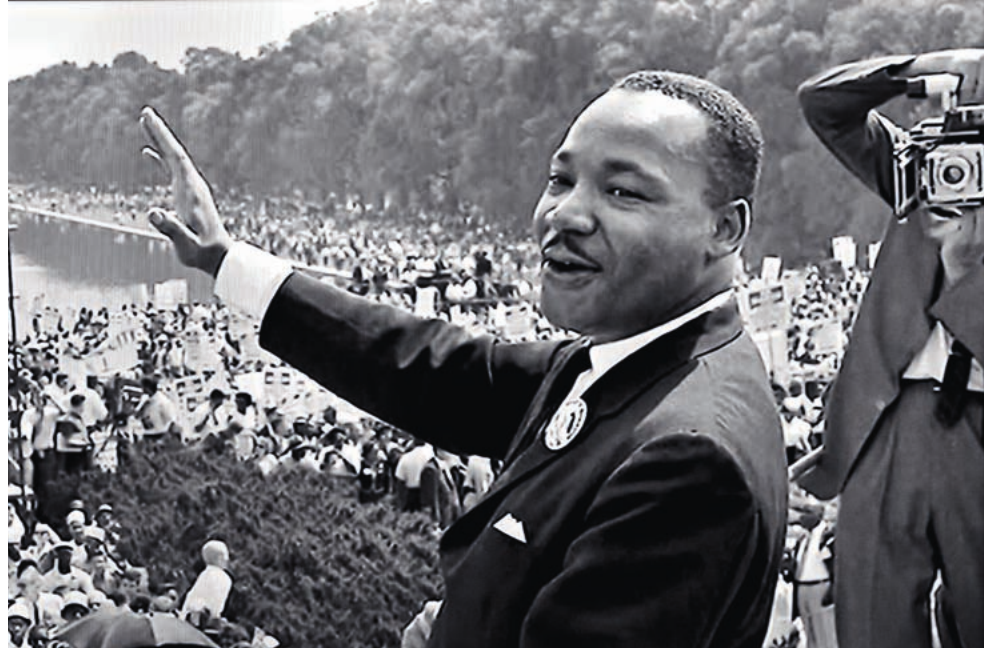
King's 1963 'I have a dream' speech articulated a powerful vision of a society where people would be judged 'not by the colour of their skin but by the content of their character'. He won the Nobel Peace Prize, but his assassination in 1968 represented yet another example of violence inflicted on African-Americans, particularly civil rights leaders. King's model of black leadership ultimately paved the way for Barack Obama's election as the first black US president in 2008.
The moral authority of the civil rights movement built an effective coalition of support in government and Congress. Key legislative achievements included:
- Civil Rights Acts of 1957, 1964 and 1968
- Voting Rights Act of 1965
- Twenty-Fourth Amendment (1964), which protected African-Americans from voting discrimination
Note
Despite these advances, some southern states resisted desegregation, and African-Americans continued to face widespread racism and structural inequalities. The 2019 Democratic presidential primary debates revealed ongoing debates about civil rights policies from this era, when Joe Biden faced challenges over his 1970s opposition to 'school busing' – a desegregation policy that transported African-American students to schools in white areas.
Affirmative action
In the 1960s, Democrats advocated for affirmative action to address deep inequalities faced by African-Americans. This policy involves positive discrimination, making it easier for people from racial minorities to secure employment or university places.
Note
What is Affirmative Action?
Affirmative action is a form of positive discrimination designed to favour racial minorities. It can be implemented by employers, universities, or federal and state governments to address historical disadvantages and promote diversity.
Affirmative action remains highly polarising in US politics:
Liberal/Democratic position:
- Affirmative action is fair because it accounts for economic and social disadvantages faced by many people of colour
- Supported by Obama and Biden
- Helps address historical injustices and structural inequality
Conservative/Republican position:
- Represents 'reverse discrimination' against white people and economically successful minority groups like Asian-Americans
- Infringes on the right not to be discriminated against based on race
- People from majority or successful minority groups may need to meet higher standards than African-Americans
- Opposed by George W. Bush and Trump
Important
Affirmative action varies by state and is banned in nine states. In 2020, California voters rejected Proposition 16, which would have removed the 1996 ban on public sector affirmative action, demonstrating that support for affirmative action is not universal even in liberal states.
The Supreme Court has repeatedly been asked to define constitutional limits on affirmative action. In Fisher v University of Texas (2016), the Court ruled that racial affirmative action was legal if certain criteria were met. However, this decision relied on Associate Justice Anthony Kennedy's crucial 'swing vote'.
Since the Court gained a conservative majority in 2018, opponents of affirmative action have anticipated a shift in approach. In 2020, Trump's administration filed an amicus brief arguing that Harvard University's use of race in admissions was unconstitutional. The federal court ruled in Harvard's favour, but Amy Coney Barrett's appointment in October 2020 created a 6-3 conservative majority that could potentially rule against affirmative action if the Court hears such a case.
Voting rights
The Voting Rights Act 1965 dramatically increased African-American political participation by removing voting restrictions in most southern states. African-American turnout grew significantly, particularly in states with extreme discrimination. In Mississippi, for example, turnout increased from 7% in 1964 to 67% in 1969.
African-Americans became an important voting bloc, especially in the South where their numbers were greatest. Politicians began tailoring policies to attract African-American support, and African-American candidates won election to office.
Important
Impact of Shelby County v Holder
In Shelby County v Holder (2013), the Supreme Court ruled that states could impose voting restrictions, arguing that conditions had changed since 1965. Since 2010, more than 25 states have introduced voter restrictions, including strict photo identification requirements.
These voter ID laws disproportionately affect Hispanics and African-Americans, who are less likely to possess the required identification. Turnout for these groups has fallen in states with strict voter ID laws, whilst white turnout has remained largely unaffected. Since African-Americans and Hispanics predominantly vote Democratic, these laws benefit Republicans.
In 2016, black voter turnout fell by 7 percentage points, reversing a trend of increasing participation since 1996 and contributing to Hillary Clinton's defeat. Whilst the absence of an African-American presidential candidate after Obama's two elections played a role, many commentators highlighted the impact of voting restrictions.
In 2020, pressure groups such as the NAACP, African-American churches and the Democratic Party mounted a major effort to mobilise black voters. The resulting record African-American turnout proved crucial to Joe Biden's victory, particularly amongst:
- Black 18-30-year-olds: 88% voted for Biden, 9% for Trump
- Black women: 91% voted for Biden, 8% for Trump
Incarceration rates
The incarceration rate for African-Americans is more than five times that of white people. In 2018:
- 12% of the US adult population was African-American, but 33% of prisoners were African-American
- 63% of adults were white, but only 30% of prisoners were white
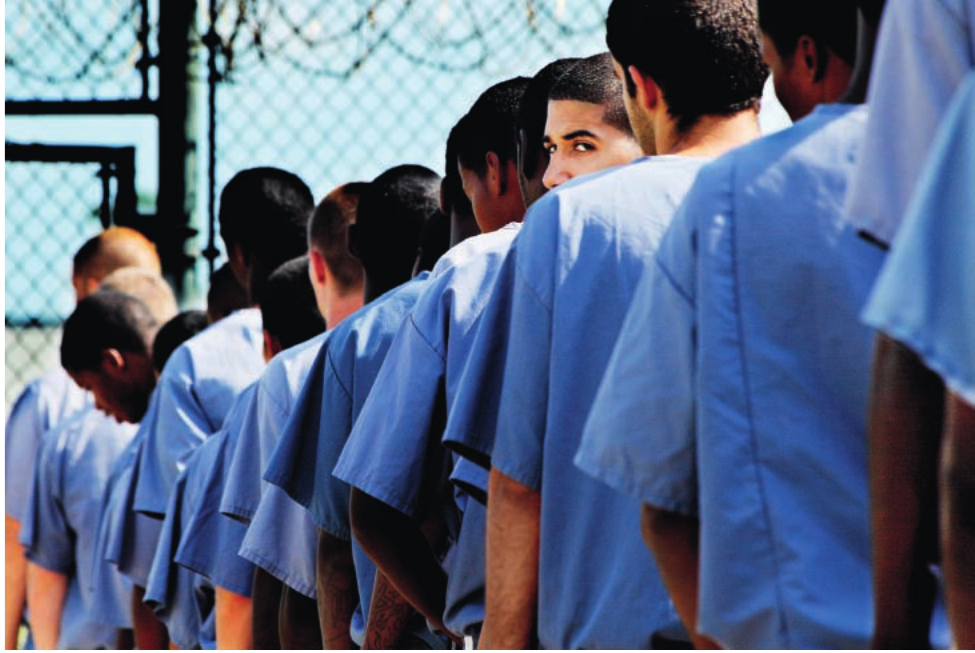
One possible explanation is that African-Americans commit certain types of crimes at higher rates than white Americans. Evidence from the Bureau of Justice and FBI supports this, and some sociologists suggest this may relate to African-Americans being more likely to face socio-economic disadvantage.
Important
Disparities Beyond Crime Rates
Crime rates alone do not fully explain incarceration disparities. Although African-Americans and white Americans use drugs at similar rates, African-Americans are six times more likely to be imprisoned for drug offences. During the COVID-19 crisis, African-Americans received more than 80% of summonses for social distancing violations in New York City. This evidence suggests the law is not being applied equally.
More than half of all low-income African-American men have served time in prison, which significantly impacts their lives and future employment prospects. A black man born in 2001 has a 1 in 3 chance of spending time in prison during his lifetime. A white man born that year has only a 1 in 17 chance.
Felony disenfranchisement
Note
Defining Felony Disenfranchisement
Felony disenfranchisement refers to the loss of voting rights by people convicted of serious crimes (felonies). This may be temporary or permanent and varies from state to state.
All but two US states prohibit people convicted of a felony from voting. The majority of states deny the vote to people on probation or parole, and 11 states extend this ban until after the sentence, probation and parole periods have ended.
The growing prison population since the 1970s led to increased felony disenfranchisement. By 2016, 1 in every 13 African-Americans of voting age could not vote due to a previous criminal conviction.
Example
The Florida Voting Rights Restoration Initiative
Pressure groups campaigning for reform achieved a significant victory in 2018. Voters in Florida – the state with the highest rate of felony disenfranchisement – passed a ballot initiative restoring voting rights to people who had fully completed their sentences.
What are Ballot Initiatives? Ballot initiatives are petitions signed by a certain number of registered voters, leading to the electorate voting on a proposed law or constitutional amendment.
This amendment to Florida's state constitution restored voting rights to around 1.4 million people, many of them African-American. However, subsequent legal challenges prevented them from voting in the 2020 election.
Changes to voting rules in other states reduced felony disenfranchisement by nearly 15% from 2016 to 2020, but still left more than 5 million Americans unable to vote. The rate at which African-Americans are disenfranchised fell to 1 in 16 in 2020, but this remains 3.7 times greater than for other Americans.
Note
The Florida initiative united diverse pressure groups, including the liberal ACLU and NAACP, and the conservative Christian Coalition of America. The Christian Coalition was motivated by principles of Christian redemption and forgiveness, though many other conservative groups opposed the initiative. This demonstrated how certain issues can create unusual political coalitions across ideological lines.
Black Lives Matter
This influential social movement began in 2013 after George Zimmerman was acquitted for shooting dead unarmed teenager Trayvon Martin. The hashtag #BlackLivesMatter started trending on Twitter. President Obama spoke movingly about Martin's death and expressed frustration at racial bias within US society. Subsequent police shootings of unarmed African-Americans resulted in street protests, some turning violent, including unrest in Ferguson, Missouri in 2014.
Black Lives Matter has had significant political impact by exposing violence faced by African-Americans across the USA and the difficulties African-Americans face in obtaining justice. Black Americans are two and a half times more likely to be killed by police than white Americans. Numerous smartphone videos posted online have shown brutality towards unarmed African-Americans by both the public and police, often with lethal consequences.
Important
The fatal shooting of 25-year-old Ahmaud Arbery, an unarmed African-American jogger, by two white men sparked national outcry in 2020. Several months later, a white police officer was filmed kneeling on George Floyd's neck for 9 minutes 29 seconds during an arrest as Floyd pleaded for his life, repeating 'I can't breathe'.
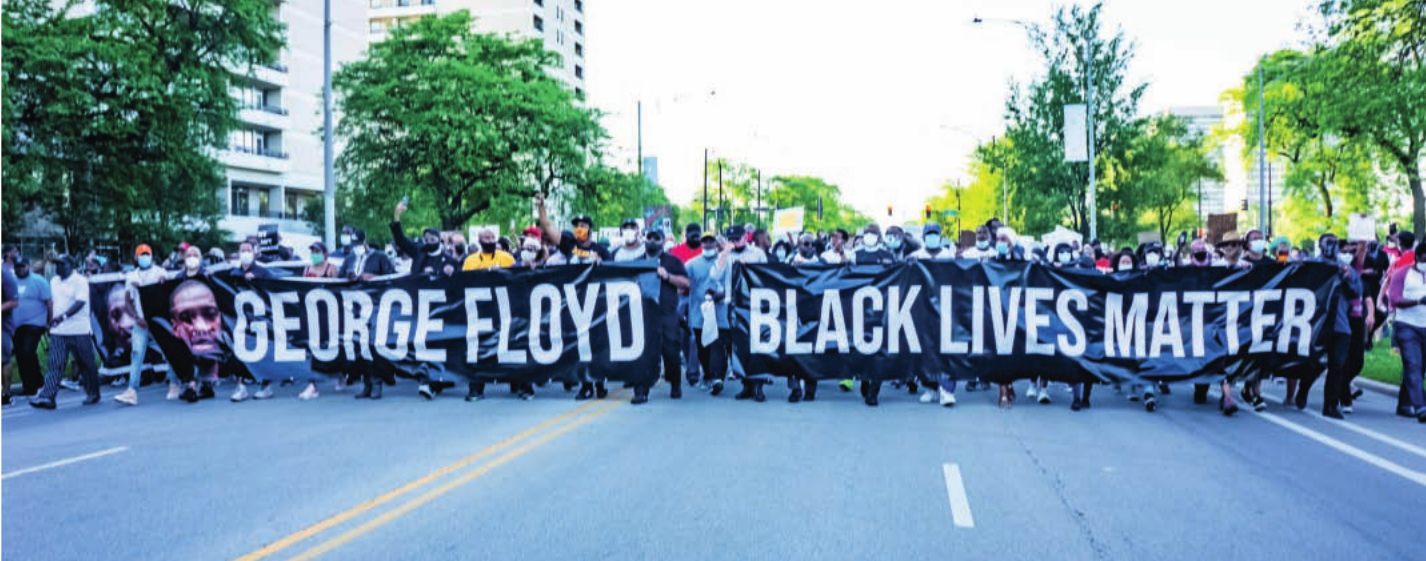
Floyd's death triggered one of the biggest protest movements in US history, with an estimated 23 million people attending demonstrations across the country despite the COVID-19 pandemic. Some protests included rioting, looting, arson and violence against police. Authorities responded with curfews, tear gas, smoke grenades and rubber bullets, whilst Trump threatened to send in the military – a response widely condemned as inflammatory.
The protests did achieve results:
- Police officer Derek Chauvin was convicted of murder
- Three other officers were charged with aiding and abetting
- Plans for police reform were outlined
- Crowds toppled statues of figures connected to slavery and colonialism
- Use of the Confederate flag was banned in the US Navy
Note
Black Lives Matter protests spread to other Western democracies, including the UK, France, Germany, Canada and Australia, demonstrating how American racial issues resonated globally and sparked international conversations about police violence and systemic racism.
The Alt-Right and domestic terrorism
Far-right extremists and white supremacists were responsible for two-thirds of terrorist activity in the USA in 2020. This type of domestic terrorism has been increasing: 50 people were killed by the far right in 2018, and according to the Southern Poverty Law Center, the number of white nationalist groups increased by 50% in 2018 to 148.
Note
What is the Alt-Right?
The Alt-Right is a political movement comprising individuals who hold various far-right beliefs, including white supremacists, neo-Nazis and neo-Confederates (people who support the pro-slavery states from the US Civil War).
African-American churches have been burnt down, and in 2015 nine African-Americans were killed in a shooting massacre at their church in Charleston, South Carolina. In 2018, the NAACP wrote to the House Committee on Homeland Security highlighting the danger posed to African-Americans by domestic terrorism, and held an emergency tele-town hall on the issue in 2019.
Trump's association with leading Alt-Right figures quickly raised fears that civil rights were at risk under his administration. His failure to clearly condemn the far right after a liberal protester was killed at a 'Unite the Right' rally in Charlottesville in 2017 was widely criticised, as was his tweet 'when the looting starts, the shooting starts' during the 2020 Black Lives Matter protests. Far-right groups and individuals targeted numerous Black Lives Matter protests, using weapons to attack demonstrators or driving vehicles into crowds.
Important
Far-Right Threats to Multiple Minority Groups
Far-right extremism poses a grave threat to other minority groups:
-
Hispanics have been targeted since Trump identified stopping illegal immigration from Mexico as a major policy priority. Twenty-three people were murdered in a 2019 shooting at a Walmart in El Paso, Texas, with Hispanics the main target
-
Jews were targeted in two synagogue shootings in 2018 and 2019 that killed 12 people in total
-
Asian-Americans experienced a 150% rise in hate crimes in large US cities in 2020. Many argued that Asian-Americans faced racial scapegoating for the global pandemic after Trump described COVID-19 as the 'Chinese virus'
The rise of the far right ultimately poses a threat to democracy itself. Swastikas and Confederate flags were displayed when armed militia members entered the Michigan Capitol in April 2020, and again in January 2021 when a mob attempted to take over the US Capitol.
Summary
Key Points to Remember:
-
Endemic racism has shaped US politics throughout American history, from slavery through Jim Crow laws to modern-day inequalities
-
The civil rights movement of the 1950s and 1960s achieved landmark Supreme Court victories and legislative changes, led by figures like Martin Luther King Jr., but structural inequalities persist
-
Affirmative action remains deeply polarising, with Democrats supporting it as necessary to address historical injustice whilst Republicans oppose it as reverse discrimination
-
Voting rights for African-Americans have expanded and contracted over time, with the Voting Rights Act 1965 dramatically increasing turnout, but recent voter ID laws and felony disenfranchisement disproportionately reducing African-American participation
-
Incarceration rates for African-Americans are five times higher than for white people, with one in three black men born in 2001 likely to spend time in prison, compared to one in 17 white men
-
Black Lives Matter has become a major social movement exposing police violence and racial injustice, triggering massive protests after George Floyd's murder in 2020
-
The rise of the Alt-Right and far-right domestic terrorism poses significant threats to African-Americans and other minorities, as well as to democracy itself