Coastlines are now increasingly managed by holistic integrated coastal zone management (ICZM) (Edexcel A-Level Geography): Revision Notes
📚Revision Notes
Holistic integrated coastal zone management (ICZM)
🔗 A process for planning and coordinating how coastal resources are used & developed
The Principles
- That the entire littoral zone is managed, not just a narrow zone
- Recognition of the importance of the littoral zone to people's livelihoods as large numbers of people live and work at the coast
- Recognition that management of a littoral zone must be sustainable
Coastal Management Must:
- Plan for the long-term
- Involve all stakeholders
- Adopt adaptive management, allowing for changes in plans and policies if threats change
- Try to work w/ natural processes, not against them
- All stakeholders should have a say in any decision that is made
Shoreline Management Plans
📝 An example of ICZMs
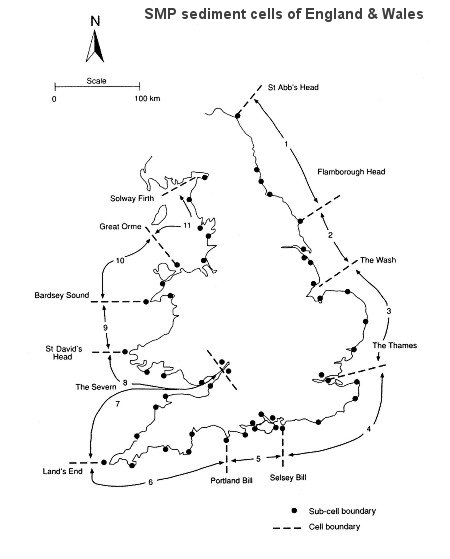
↳ Coastal management plans can be divided by littoral cells
- Introduced in England & Wales by DEFRA
- Predict, if possible, the way in which a coastline will be shaped in the future
Shoreline Management Plans (SMPs) are developed through consultation with local interest groups and engineers to gather background information about specific stretches of coastline. There are four main strategies considered in these plans. The "Do Nothing" approach allows existing coastal defences to collapse naturally without intervention. "Hold the Line" involves using hard engineering to keep the coastline in its current position, as seen in Sheringham. The "Advance the Line" strategy focuses on building new coastal defences further out to sea, like the artificial breakwaters in Dubai. Lastly, "Retreat the Line" allows the coastline to erode back to a predefined point, such as the approach used south of Mappleton. Each strategy is chosen based on local conditions and needs, balancing environmental and socio-economic factors.
Policy Decisions/Options
| No active intervention | No investment in defending against flooding or erosion, whether or not coastal defences have existed previously ↳ The coast is allowed to erode landward and flood |
|---|---|
| Hold the line | Build or maintain coastal defences so that the position of the shoreline remains the same over time |
| Managed realignment | Allows the coastline to move naturally, but manage the process to direct it in certain areas |
| Advance the line | Build new coastal defences on the seaward side of the existing coastline |
Determining Factors
- Economic value of the land that could be protected
- The cultural & ecological value of the land
- The technical feasibility of the engineering required
- The attitudes of, and pressure from local communities
Cost Benefit Analysis
↳ Used to help decide whether defending the coastline from erosion and/or flooding is economically feasible
EIA
Identifies the environmental impact of construction. Takes into account impacts on:
- Water movement & sediment flow - can affect marine ecosystems
- Water quality - impacts vulnerable marine species
- Flora & fauna - Marine plants, fish, shellfish & mammals
- Air quality & noise pollution (during construction)
Conflicts
| Causes | Winners May Gain | Losers May Lose |
|---|---|---|
| Local authorities, homeowners and pressure groups having differing priorities | • Economic → Property is safe • Environmentally → Habitats conserved • Socially • Communities can remain where they are | • Property & be forced to move • Their business/jobs • Aesthetics/environment as they see the coastline being blighted |
Why are Reactions Usually Significant
- Communities & homeowners may have a strong attachment to a place
- Businesses face losing customers (particularly tourism sector)