There are physical causes and human causes of water insecurity (Edexcel A-Level Geography): Revision Notes
📚Revision Notes
There are physical causes and human causes of water insecurity
Water supply → The amount of accessible freshwater, from precipitation and surface and ground stores
Water demand → The amount needed by people for consumption or activities such as farming & industry
Water stress → Where annual water resources are only between 1000 and 1700 m3 per person. There will be supply restrictions & tensions
Water scarcity → Where annual water resources are only between 500 and 1000 m3 per person. People will go without water and there will be conflict and overuse of reserves
- Physical scarcity → When more than 75% of a country's or region's blue water flows are being used
- Economic scarcity → When the development of blue water sources is limited by the lack of capital, technology & good governance Water insecurity → When people do not have enough quality water to sustain livelihoods, human wellbeing and socio-economic development
Physical Factors That Reduce Water Availability
- Greater rates of EVT possibly linked to climate change
- Variations in precipitation rates
- Geology also determines the distribution of aquifers
- Topography - higher relief promotes more precipitation
- Salt water encroachment into groundwater supplies, and salinisation of wells and boreholes ⇒ Diminishing supplies
- Water supplies are spread very unevenly across the world (60% of the world's water supplies are contained in just 10 countries)
Human Factors That Reduce Water Availability
- Contamination of surface and groundwater supplies by domestic, industrial and agricultural activities
- Over-abstraction of water from rivers and groundwater aquifers
- Population growth
- Rising standards of living - people adopt dairy and meat-rich diets which leads to a higher consumption of water
- Economic growth ↑ demand in agriculture, industrial etc settings
The Water Availability Gap
- Growing gap between availability of water in developing and developed countries
- Imbalance of usage (richer countries using up to 10x more water per head)
- Many countries also experience water stress
KEY CONCEPT: The Water Poverty Index
An assessment of the degree of water shortage and the subsequent water insecurity problems
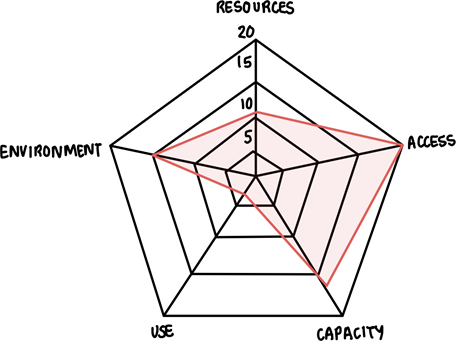
The 5 Parameters
- Resources: The quantity of surface and groundwater per person and its quality
- Access: The time and distance involves in obtaining sufficient safer water
- Capacity: How well the community manages its water
- Use: How economically water is used in the home and by agriculture and industry
- Environment: Ecological sustainability (green water)