Business Ethics (Edexcel A-Level Religious Studies): Revision Notes
📚Revision Notes
Globalisation
Integration of world economies, industries, markets, cultures and policy-making – the impact on stakeholders
The range of people affected by what a business does has increased to be a global market.
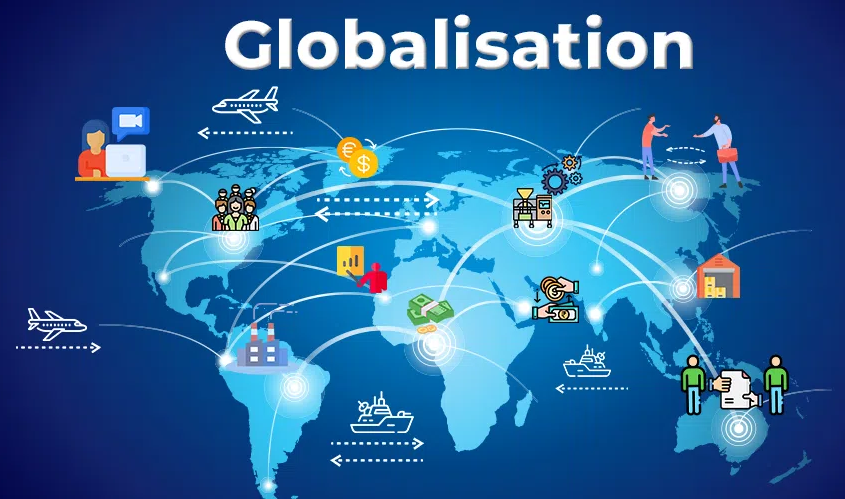
Why is globalisation good for business?
- Globalisation is more profitable for a business.
- Businesses can hire workers in countries where resources needed are cheaper, labour is cheaper and Health & Safety requirements are fewer making it cheaper to produce the product.
- Businesses that operate in more than one country are known as TNCs(transnational corporations). The biggest TNCs in the world often have budgets bigger than some smaller countries)
- Another benefit is highlighted by the World Bank, as it has calculated that 800 million Chinese people have been lifted out of poverty since 1978 through manufacturing.
What are the drawbacks of globalisation?
- Cheaper work is often achieved through the mistreatment of workers, who may be exploited to work endless hours with very little pay due to their desperation, these workers often work in factories known as sweatshops.
- The lack of development opportunities and repetitive nature of the work leads to workers feeling alienated and in despair, with many attempting to end their lives (Fox conn).
- Poor working conditions would not be tolerated within Western countries yet are accepted as working practice in less developed countries (Rana Plaza)
Case studies:
Nike
Until 1971 Nike goods were manufactured in America, however, Nike was able to grow quickly using the model of outsourcing production to a network of suppliers in parts of the world where costs were lower (both labour and resources). Sweatshop workers became the norm for Nike to allow their profits to soar because they could sell their goods at a marginally cheaper price while making them at a much cheaper cost.. Everything changed in 1996 as a photograph of a child stitching footballs was distributed and outrage, so they had to change their tact. Nike claims to have ended this practice.
- Organisations such as 'NikeWatch' and the Clean Clothes Campaign expressed scepticism about Nike's efforts, taking a cynical view of its seriousness and sincerity.
Rana Plaza factory - Bangladesh Factory used by Monsoon, Mango & Primark
Rana Plaza was a multi-purpose building, the building contained clothing factories, a bank, apartments, and several shops.
Cracks were discovered in the building; these cracks were so severe that the shops and the bank on the lower floors were immediately closed due to fear of the building collapsing.
Garment workers however who were housed on the upper floors were ordered to return the following day, the building collapsed on 24 April 2013 causing a death toll of 1,134 with 2,500 people being left injured.
There was outcry across the world in regard to the negligent behaviour of these companies. This case highlights the importance placed on profit above everything else and how globalisation allows us to be blissfully ignorant until it all goes wrong.
Fox conn
Foxconn is one of the largest electronics contract manufacturer in the world it is used by Apple to produce its goods (iPad, iPhone, etc…)
Foxconn was criticised by labour activists, who accused the company of providing low wages and allowing employees to work past legal overtime limits, accidents at work are not reported.
Workers are paid a minimum wage however they also have to spend the money on food and living expenses from the factory as the location is not near residential areas. Workers are not given enough time off from work to be able to see family as the one day off does not allow for the travel time needed.
It is not uncommon for workers to work 12-hour shifts for years doing their part of the assembly line never having seen the final product of what they have seen. 22% of the workforce has attempted or committed suicide.
Utilitarianism on Globalisation
Utilitarianism generally opposes elements of globalisation that disrupt free market dynamics, particularly the influence businesses can wield over policy decisions. However, utilitarian's might support offshore outsourcing if it results in the greatest overall happiness.
Kantian Perspective on Globalisation
From a Kantian viewpoint, globalisation can be troubling because it often leads to the violation of corporate social responsibilities. This includes treating people merely as means rather than ends, which goes against Kant's ethical principles.