What Is Biodiversity? (OCR A-Level Biology A): Revision Notes
📚Revision Notes
What Is Biodiversity?
Introduction to biodiversity
Biodiversity represents the variety of life in a given area, ranging from a small habitat to the entire planet. Despite centuries of scientific study, researchers continue to discover new species. In 2005, scientists found the wattled smoky honeyeater (Melipotes carolae) in the remote Foja mountains of New Guinea, demonstrating that Earth still holds many biological secrets.
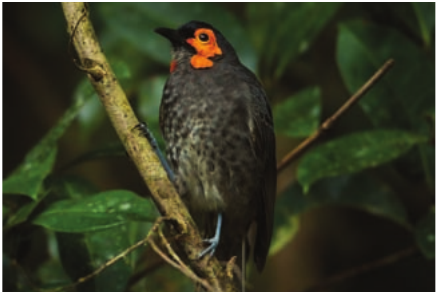
At its simplest level, biodiversity is a catalogue of all living organisms in a particular area. However, the concept extends far beyond a simple species list to encompass the full complexity of life at multiple scales.
Note
Even in the 21st century, scientists continue to discover new species in remote and unexplored regions. This ongoing discovery process highlights how much we still have to learn about Earth's biodiversity.
Defining biodiversity
The Rio Convention on Biological Diversity (1992) provides the standard definition used in conservation and ecological studies:
"Biological diversity means the variability among living organisms from all sources including terrestrial, marine and other aquatic ecosystems and the ecological complexes of which they are part; this includes diversity within species, between species and of ecosystems."
Biodiversity refers to the number of different ecosystems and habitats in an area, the number of species within those ecosystems, and the genetic variation within each species.
Important
This definition establishes three distinct levels at which biodiversity can be assessed:
- Ecosystem and habitat diversity – the variety of ecosystems and habitats present in an area
- Species diversity – the variety of species present in the same area
- Genetic diversity – the genetic variation within each species
Most biodiversity studies focus primarily on documenting ecosystems, habitats and species. Genetic diversity is typically recorded only for species with very small populations where limited genetic variation poses conservation concerns.
Species diversity
Defining species
Biologists use at least seven different ways to define a species. The most commonly cited definition describes a biospecies:
A group of organisms that interbreed to give rise to fertile offspring and are reproductively isolated from other species. If organisms breed with other species, any offspring produced are usually sterile.
However, this definition presents practical limitations. Scientists who discover and name new species rarely observe breeding behaviour or test offspring fertility. Many species reproduce only asexually, and extinct organisms cannot be tested for reproductive compatibility.
Note
Practical Alternative: The Morphological Species Concept
For these reasons, most species descriptions rely on a morphological species concept:
A group of organisms that share many physical features that distinguish them from other species.
Modern genetic analysis techniques increasingly supplement morphological descriptions, allowing scientists to distinguish species based on DNA sequences and molecular markers.
Measuring species diversity
Species diversity refers to the variety of species within an area. This can be measured in multiple ways:
- Simple species counts record how many different species occur in a defined area
- Taxonomic diversity considers evolutionary relationships between species
Example
Worked Example: Comparing Taxonomic Diversity
Consider two islands, each with 25 species total:
Island A: 20 bird species + 5 lizard species
Island B: 25 bird species + 0 lizard species
Even though both islands have the same total number of species (25), Island A shows greater taxonomic diversity because it represents more evolutionary lineages and ecological strategies. The presence of both birds and lizards indicates a wider range of adaptations and ecological roles.
Genetic diversity
Understanding genetic variation
Genetic diversity encompasses the genetic variation that exists within a species. This variation can occur between geographically separated populations or within a single population.
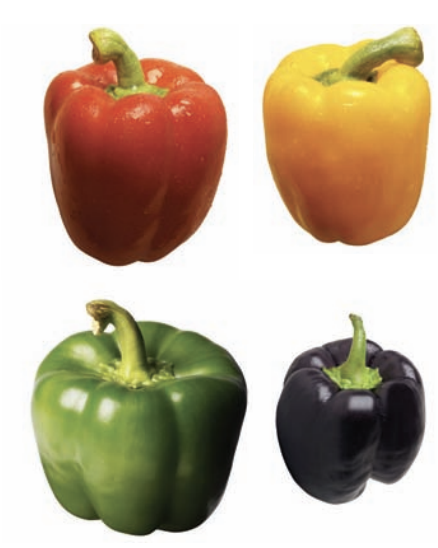
Consider the variation in fruit colour seen in peppers (Capsicum annuum). The different colours – red, yellow, green and purple – represent polymorphism (the existence of many forms within a species), expressing genetic diversity that exists within this single species.
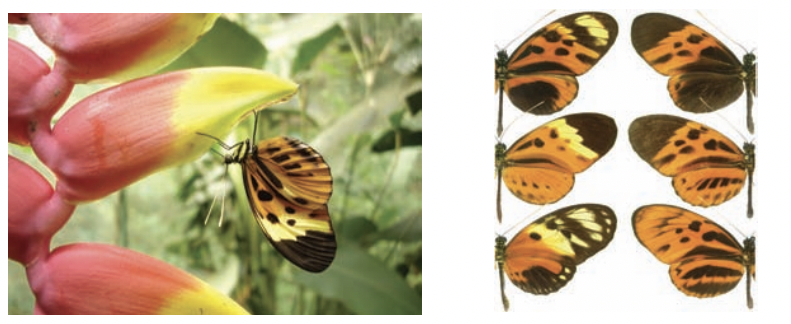
Similarly, the Heliconius butterflies display remarkable genetic diversity through varied wing colours and patterns. Each individual possesses the same genes at the same positions (loci) on their chromosomes, but different versions of these genes (alleles) produce the observable differences.
Genes, alleles and the gene pool
Although different species may share many genes for basic cellular functions like respiration, each species possesses a unique combination of genes. All individuals within a species have the same genes, but different individuals carry different alleles (gene variants).
The position a gene occupies on a chromosome is its locus (plural: loci). The gene pool consists of all alleles of all genes within a species.
Note
Hidden Genetic Diversity
Not all genetic diversity manifests in visible characteristics (morphology). Much variation exists at the molecular level and requires specialised techniques to detect:
- Allozymes (or alloenzymes) are different forms of the same enzyme produced by different alleles. These variants may have slightly different amino acid sequences, causing them to function in subtly different ways
- The different amino acid sequences arise from different nucleotide sequences in the DNA
- Modern DNA sequencing can directly analyse these nucleotide differences
Factors affecting genetic diversity
Inbreeding – breeding between closely related individuals – reduces genetic diversity by increasing homozygosity (genotypes like or ). When many individuals become homozygous for numerous genes, the population's overall genetic diversity decreases. This can increase the frequency of genetic diseases caused by recessive alleles, as seen with genetic dwarfism in Californian condors and hip dysplasia in boxer dogs.
Outbreeding – breeding between unrelated individuals – maintains or increases genetic diversity. Offspring from unrelated parents are more likely to be heterozygous (genotypes like ) and show greater variation.
Important
Population Bottlenecks and Genetic Diversity
Populations that survive near-extinction events, called bottlenecks, often show reduced genetic diversity. For example, all modern cheetahs descended from a small number of individuals approximately 10,000 years ago, resulting in very low genetic diversity across the species today.
This reduced diversity can make populations more vulnerable to disease and environmental changes.
Assessing genetic diversity
Methods for assessment
Scientists use several approaches to measure genetic diversity within populations:
- Proportion of polymorphic gene loci – the fraction of genes that have two or more alleles (showing genetic polymorphism)
- Proportion of heterozygous individuals – the fraction of the population with heterozygous genotypes () for particular gene loci
- Allele richness – the total number of different alleles present for certain genes
Each method requires determining whether different alleles exist for each gene locus. Some alleles produce visible differences (like pepper colour), while others require protein analysis or DNA sequencing to detect.
Calculating the proportion of polymorphic gene loci
Genetic polymorphism occurs when a gene has different alleles, where the rarest allele has a frequency exceeding either 1% or 5% (researchers choose the threshold). These percentages are arbitrary conventions rather than biologically significant values.
To calculate the proportion of polymorphic gene loci ():
A polymorphic locus is one where the most common allele has a frequency less than 95% or less than 99% (depending on the chosen threshold). Gene loci without alleles are monomorphic.
When sampling a diploid population, each individual contributes two alleles to the count (represented by two letters in genotypes: , , or ).
Example
Worked Example: Calculating Proportion of Polymorphic Loci
If investigators examine 100 gene loci and find 50 are polymorphic, then:
This indicates that half of the examined gene loci show genetic variation in the population.
Case study: genetic diversity in dogs
A study of pedigree dogs (Canis familiaris) in the USA revealed that long-established breeds showed lower values than recently established breeds, demonstrating the effects of prolonged selective breeding.
Researchers examined 100 gene loci across multiple breeds:
- Total alleles observed across all breeds: 1780
- Alleles per breed ranged from 399 to 805 (average: 605)
- Breeds with smaller populations had approximately 6% fewer alleles
- Older breeds had approximately 7% fewer alleles than newer breeds
Note
Limitations of as a Diversity Measure
However, a separate study of 18 blood proteins found all were polymorphic (), with allele richness ranging from 2 to 11 alleles per locus (mean: 3.9 alleles per locus). This demonstrates that alone may not fully capture genetic diversity.
Case study: marine worm genetic diversity
The following table shows genetic variation at five gene loci in the marine horseshoe worm (Phoronopsis viridis). The table displays allele frequencies and indicates whether each locus is polymorphic at two different thresholds (0.95 and 0.99).
| Gene locus | 1 allele | 2 alleles | 3 alleles | 4 alleles | 5 alleles | 6 alleles | Polymorphic at 0.95 | Polymorphic at 0.99 |
|---|---|---|---|---|---|---|---|---|
| Acph-1 | 0.995 | 0.005 | — | — | — | — | ✗ | ✗ |
| Acph-2 | 0.882 | 0.066 | 0.024 | 0.014 | 0.009 | 0.005 | ✓ | ✓ |
| Est-6 | 0.979 | 0.012 | 0.010 | — | — | — | ✗ | ✓ |
| Fum | 0.986 | 0.014 | — | — | — | — | ✗ | ✓ |
| Lap-5 | 0.551 | 0.326 | 0.119 | 0.004 | — | — | ✓ | ✓ |
Note
Understanding Polymorphism Thresholds
A gene locus is polymorphic at the 0.95 level if the most common allele has a frequency less than 0.95. To be polymorphic at the 0.99 level, the most common allele must have a frequency less than 0.99.
Notice that Lap-5 shows the highest genetic diversity with multiple alleles at relatively high frequencies, while Acph-1 is nearly monomorphic with one allele dominating at 99.5%.
Beyond simple polymorphism
The genetic code is degenerate – multiple base triplets (codons) can code for the same amino acid. This creates an additional level of genetic variation that does not affect protein function. Modern biodiversity assessment increasingly focuses on DNA sequencing, examining specific sequences in nuclear DNA and mitochondrial DNA (mtDNA) to reveal the full extent of genetic variation.
Habitat diversity
Defining habitats and ecosystems
Three related terms describe where organisms live:
Biome – a region of the world characterised by a dominant type of vegetation associated with climate conditions (e.g., tropical rainforest, temperate grassland, tundra)
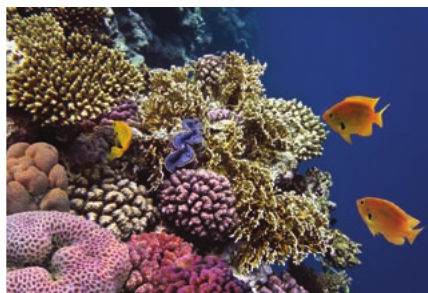
Ecosystem – an area supporting communities of organisms that interact with each other and their surroundings. Ecosystems can be large (like open ocean, Earth's dominant ecosystem) or small (like rock pools on a shore)
Habitat – a place where a species lives, described in one or a few words (e.g., pond, lake, river, coral reef, forest, grassland, sand dune, heathland). Habitats provide the resources organisms need: light, carbon dioxide, water and mineral ions for plants; food, water, shelter and breeding sites for animals
Note
The terms "ecosystem" and "habitat" often refer to the same place. For example, "coral reef" can describe both an ecosystem (the community of organisms and their interactions) and the habitat of species living there.
The niche concept
A niche describes an organism's role within an ecosystem, including its position in food webs and all interactions with environmental factors. The niche concept helps measure habitat diversity because more species indicate more available niches and therefore greater habitat complexity.
Example
Worked Example: Niche Partitioning in Forest Lizards
A study in Dominican Republic forests discovered several lizard species occupying different niches at various heights on trees:
- Species A: Forest floor and tree base
- Species B: Lower trunk (0-2 meters)
- Species C: Mid-trunk (2-4 meters)
- Species D: Upper canopy
This vertical stratification demonstrates that trees provide multiple distinct habitats with slightly different physical conditions (light intensity, temperature, humidity), allowing multiple species to coexist by exploiting different niches.
Challenges in measuring habitat diversity
Habitat diversity proves harder to quantify than species or genetic diversity because habitat boundaries are often unclear. Many species use multiple ecosystems:
- Seabirds (gannets, guillemots, puffins) feed in marine ecosystems but roost on coastal cliffs
- Migratory birds spend part of the year in one ecosystem and breed in another
Important
Despite these complications, species diversity provides a proxy for habitat diversity – more species suggest more niches and therefore more varied habitats within the ecosystem.
Local biodiversity
Creating species lists
When investigating an area's biodiversity, the first task involves identifying and cataloguing all organisms present to create a species list. Biologists use identification keys – which may include drawings, photographs, or written descriptions – to identify specimens. Modern keys are often available as mobile applications for field use.
A timed search provides one method for generating species lists. Team members spread across the study area and record as many different species as possible within a set time (e.g., 20 minutes). The team then pools results, photographs unidentified species for later identification, and labels species that remain unidentified as "species A", "species B", etc.
Species richness
Species richness indicates how many species occur in an area. However, a single survey provides limited information:
- Surveys conducted during one season miss species active at other times
- Daytime surveys miss nocturnal species
- Surface surveys miss soil organisms
- Standard surveys may overlook bacteria and fungi, which require specialised culturing techniques
Important
Requirements for Comprehensive Assessment
Comprehensive biodiversity assessments should:
- Sample all organism types, including microscopic species
- Identify occasional visitors or migrants that use the habitat seasonally
- Conduct surveys at different times of day and different seasons
- Use appropriate techniques for different organism groups
Summary
Key Points to Remember:
- Biodiversity operates at three levels: ecosystem/habitat diversity, species diversity, and genetic diversity within species
- Species can be defined in multiple ways: biospecies (based on interbreeding) and morphological species (based on physical features) are most common
- Genetic diversity depends on alleles and breeding patterns: outbreeding maintains diversity through heterozygosity, while inbreeding reduces diversity through homozygosity
- The proportion of polymorphic gene loci () provides one measure of genetic diversity: calculated as the number of polymorphic loci divided by total loci investigated
- Complete biodiversity assessment requires multiple approaches: species lists, abundance measures, temporal sampling, and inclusion of all organism types from visible species to microorganisms