Evidence for Evolution (OCR A-Level Biology A): Revision Notes
📚Revision Notes
Evidence for Evolution
Introduction
Evolution is supported by multiple lines of scientific evidence gathered from various fields of biology and geology. The general theory of evolution states that life has evolved over time from simple ancestral forms to the diverse range of organisms we see today.
The main sources of evidence for evolution include:
- Comparative morphology – similarities in the outward appearance of organisms
- Comparative anatomy – similarities in internal body structures
- Fossil records – preserved remains and traces of ancient organisms
- Comparative biochemistry – shared biochemical features across different species
- Classification systems – how taxonomic groupings reflect evolutionary relationships
Note
Each type of evidence provides a different perspective on how organisms have changed over geological time. When multiple independent lines of evidence all point to the same conclusion, this strengthens the scientific case considerably.
Evidence from comparative anatomy
Comparative anatomy reveals that organisms share underlying structural similarities despite having different functions or appearances. The most striking example is found in tetrapods (amphibians, reptiles, birds and mammals).
All tetrapods possess the same basic pattern of bones in their limbs, even though these limbs serve different purposes – walking, flying, swimming or grasping. This shared skeletal arrangement suggests these groups descended from a common ancestor. Over time, natural selection modified these structures to suit different environmental conditions and lifestyles, but the fundamental pattern remained.
Important
Homologous Structures
The similar bone arrangements in tetrapod limbs are called homologous structures – features that share a common evolutionary origin but may serve different functions. This is one of the most powerful pieces of evidence for common descent.
Evidence from fossils
What are fossils?
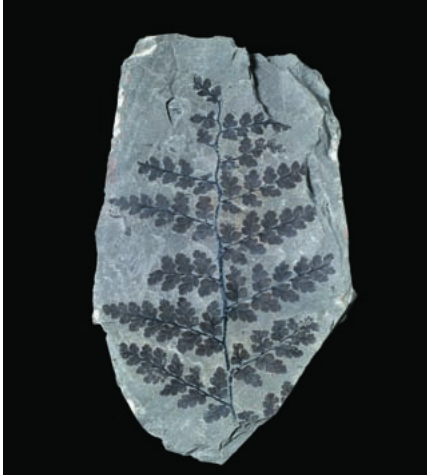
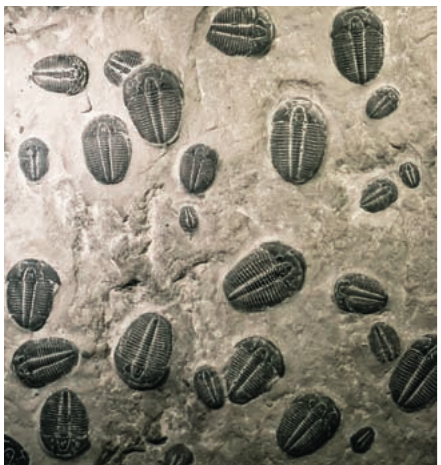
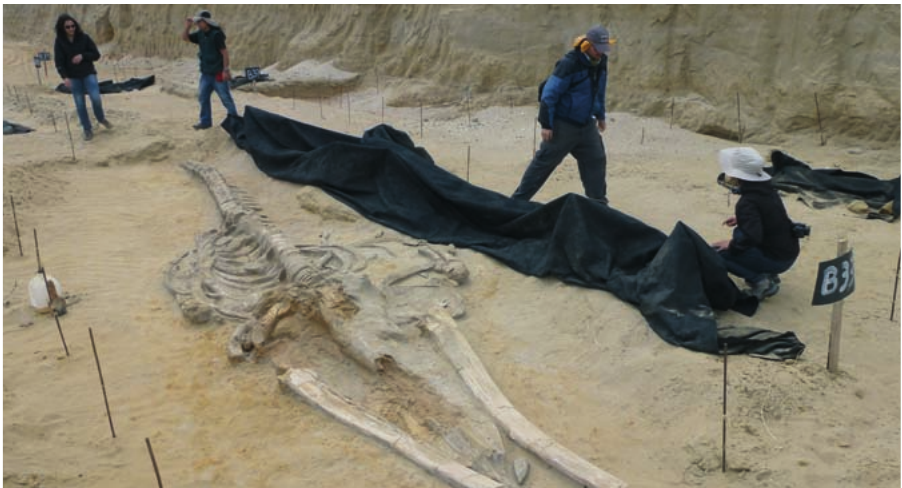
A fossil is the mineralised or otherwise preserved remains of an organism. Fossils can take several forms:
- Complete or partial skeletal remains
- Impressions of organisms in rock
- Traces of activity such as footprints, burrows or faeces (known as coprolites)
- Chemical signatures left by ancient organisms
Fossils are predominantly found in sedimentary rocks, though chemical traces have also been detected in metamorphic rocks.
Note
The process of fossilisation is rare and requires specific conditions. Organisms must be rapidly buried in sediment, protected from decomposition, and subjected to the right chemical conditions over millions of years for mineralisation to occur.
What fossils tell us about evolution
Fossils provide a historical record of life on Earth. The oldest known fossils are those of prokaryotes (simple single-celled organisms without a nucleus) found in rocks approximately billion years old. Chemical traces suggest life may have originated as early as billion years ago.
The fossil record demonstrates a clear progression from simple to more complex life forms:
- Ancient rocks contain only prokaryotic fossils
- Intermediate layers show increasingly complex organisms
- More recent rocks contain fossils resembling modern species
Example
Worked Example: The Grand Canyon Fossil Record
The Grand Canyon in Arizona provides an exceptional natural laboratory for studying evolutionary history. The Colorado River has exposed rock layers spanning over million years.
Examining the layers from bottom to top:
- Bottom layer ( million years ago): Prokaryotic fossils only
- Middle layers: Fossils of reptiles, amphibians and terrestrial plants appear
- Upper layers ( million years ago): More recent fossils, including coral and molluscs
Ascending through the canyon is like walking through a timeline of Earth's biological history, with each layer representing a different chapter in the story of life.
Dating fossils and rock strata
Scientists use various methods to determine the age of rocks and fossils:
- Chemical analysis techniques
- Examination of rock layers (strata)
- Using known fossil ages to date surrounding rocks
The principle of stratigraphy states that in undisturbed rock, the lowest layers are oldest and upper layers are youngest. By arranging fossils according to their position in rock strata, scientists can create evolutionary sequences showing how groups of organisms changed over time.
For instance, a fossil species from millions of years ago may share features with several modern species. While we cannot prove definitively that this ancient species was their ancestor, it provides strong evidence for what that ancestral form likely resembled.
Limitations of the fossil record
Important
Why the Fossil Record is Incomplete
The fossil record is incomplete and will never be fully complete because:
- Not all organisms become fossilised
- Organisms without hard parts (shells, bones, woody tissue) rarely fossilise
- Geological processes may destroy fossils
- Many fossils remain undiscovered
Despite these limitations, the fossil record provides powerful evidence for evolution. The patterns we do observe are consistent and predictable, supporting evolutionary theory.
Extinction events
Throughout Earth's history, there have been several mass extinction events where large percentages of species disappeared rapidly. Seven major extinction events have occurred, each followed by periods where surviving species diversified and evolved to fill vacant ecological roles.
Scientists estimate that over of all species that have ever lived on Earth are now extinct.
Important
The Sixth Extinction?
Many biologists believe human activity is causing an eighth major extinction event. Current extinction rates are estimated to be 100-1000 times higher than the natural background rate, primarily due to habitat destruction, climate change, pollution, and overexploitation of resources.
Evidence from biochemistry
The biochemical similarities shared by all living organisms provide compelling evidence that life has a common origin. These universal features include:
Universal biochemical features
Amino acid chirality: Amino acid molecules can exist in two mirror-image forms, called left-handed and right-handed. In nature, all amino acids used by living organisms are exclusively left-handed. This consistency across all life forms suggests a single origin.
Standard amino acids: Although many different amino acids are chemically possible, only specific amino acids are used to construct proteins in all organisms. This shared set indicates common ancestry.
DNA as genetic material: All cellular organisms (both prokaryotes and eukaryotes) use DNA (deoxyribonucleic acid) as their hereditary material. This universal genetic system points to a common origin of life.
Universal genetic code: The genetic code that translates DNA sequences into amino acid sequences is essentially identical across all organisms. The same three-letter DNA codons specify the same amino acids whether in bacteria, plants or animals.
ATP as energy currency: All organisms use ATP (adenosine triphosphate) as the universal energy currency for cellular processes. This shared energy system reflects common ancestry.
Note
The universality of these biochemical features is statistically remarkable. If life had evolved independently multiple times, we would expect to see different amino acids, different genetic codes, or different energy molecules being used by different lineages. Instead, we observe the same biochemical toolkit across all domains of life.
Protein sequence comparisons
Analysing the amino acid sequences of proteins reveals evolutionary relationships between organisms. Closely related organisms have very similar protein sequences, while distantly related organisms show greater differences.
Some parts of proteins, particularly active sites of enzymes, remain virtually identical across different organisms. For example, the active site of the enzyme catalase has the same amino acid arrangement regardless of its source, because this precise three-dimensional shape is required to fit the substrate. However, other regions of the protein molecule can vary without affecting function. These variable regions accumulate differences over evolutionary time, with greater differences indicating more distant relationships.
Enzymes performing fundamental cellular functions, such as DNA polymerase (which repairs and copies DNA), show only minor differences across different phyla or even kingdoms. Significant changes in such essential enzymes reflect major evolutionary events in the history of life.
Note
Why Active Sites Are Conserved
Active sites must maintain their precise three-dimensional structure to function properly. Even small changes to the amino acids in these regions could destroy enzyme function, so natural selection strongly favours conservation of these sequences. This explains why we see such remarkable similarity in essential enzymes across vastly different organisms.
DNA sequence comparisons
The primary structure of proteins is determined by the sequence of bases in DNA. Comparing DNA sequences between species provides direct evidence of evolutionary relationships.
Closely related species have highly similar DNA sequences in their genes. The degree of difference between DNA sequences can indicate approximately when speciation (the formation of new species) occurred. Species that diverged recently have fewer DNA differences than those that separated long ago.
This molecular approach to understanding evolutionary relationships is explored in greater detail in classification studies.
Classification and phylogeny
Modern classification systems are designed to reflect the phylogeny (evolutionary history and relationships) of organisms. Groups in taxonomic systems are based on shared characteristics inherited from common ancestors. The hierarchical nature of classification – with species grouped into genera, genera into families, and so on – mirrors the branching pattern of evolutionary descent.
Note
This approach to classification, called phylogenetic systematics or cladistics, ensures that our naming systems reflect actual evolutionary relationships rather than superficial similarities.
Remember!
Summary
Key Points to Remember:
- Multiple independent lines of evidence support the theory of evolution
- The fossil record shows a progression from simple to complex life forms over billions of years
- Comparative anatomy reveals shared structural patterns indicating common ancestry
- Universal biochemical features (DNA, genetic code, ATP, 20 amino acids) point to a single origin of life
- Protein and DNA sequence similarities reflect evolutionary relatedness – the more similar the sequences, the more closely related the organisms
- Each type of evidence strengthens the others, creating a comprehensive picture of how life has evolved on Earth