Inflation (OCR A-Level Economics): Revision Notes
📚Revision Notes
2.4 Inflation
DEFINITIONS:
- Inflation: A sustained increase in the general price level of goods and services in an economy over time, leading to a decrease in the purchasing power of money.
- Deflation: A sustained decrease in the general price level of goods and services in an economy over time, leading to an increase in the purchasing power of money.
- Disinflation: A decrease in the rate of inflation, meaning prices are still rising but at a slower rate than before.
- Hyperinflation: Extremely rapid or out-of-control inflation, often leading to a collapse in the value of the currency and severe economic instability.
Explain:
2.4.1 Inflation, deflation, disinflation and hyperinflation
Inflation
Key Points:
Note
- Measured by indices such as the Consumer Price Index (CPI) or the Retail Price Index (RPI).
- Moderate inflation is often considered normal in a growing economy.
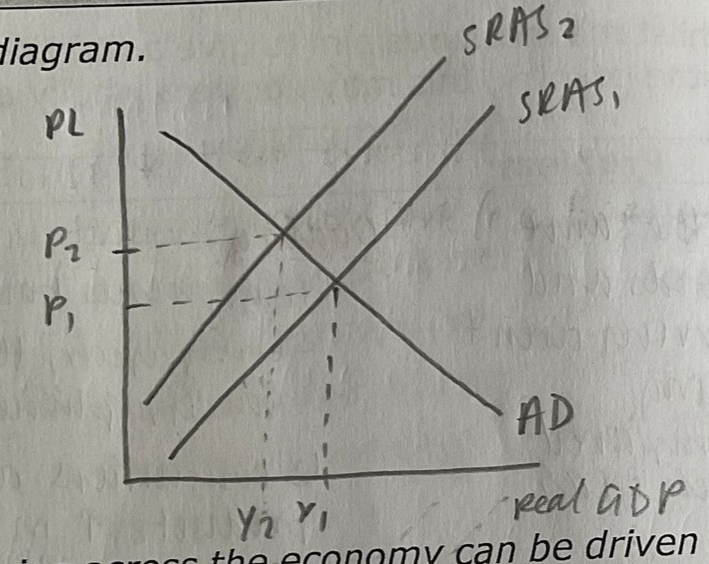
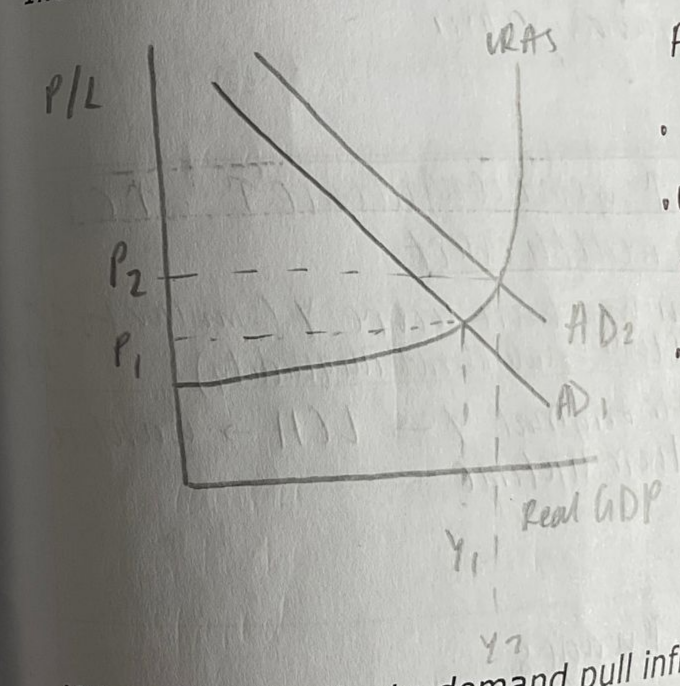
- Causes can include demand-pull inflation (excess demand), cost-push inflation (rising production costs), and built-in inflation (adaptive expectations).
Deflation
Key Points:
Note
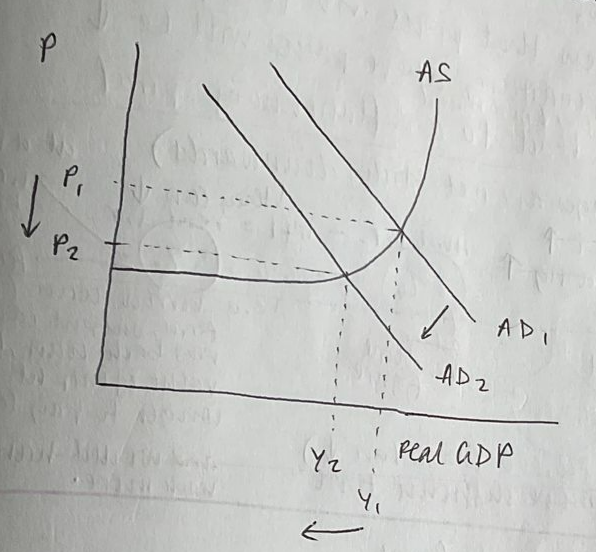
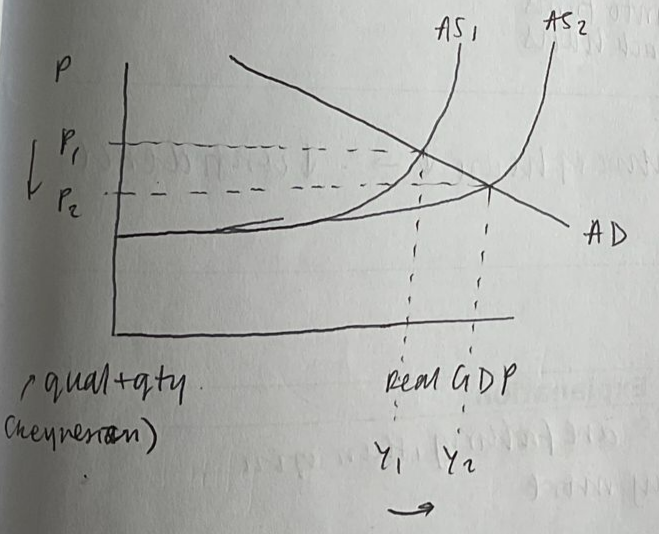
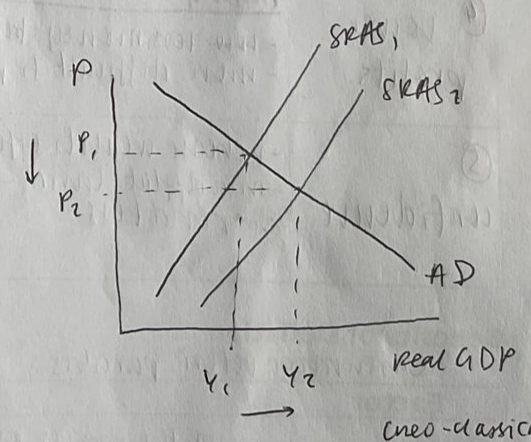
- Often associated with reduced consumer spending and lower levels of economic activity.
- Can lead to a deflationary spiral, where falling prices lead to decreased production, lower wages, and higher unemployment.
- Causes can include a decrease in aggregate demand, technological advancements, or increased productivity.
Disinflation
Key Points:
Note
- Indicates that inflation is slowing down, which can be due to tighter monetary policy or improved supply-side conditions.
- Different from deflation, where the price level actually falls.
- Often a goal of monetary policy to ensure stable and predictable inflation.
Hyperinflation
Key Points:
Note
- Erodes the real value of the local currency, causing people to minimise their holdings of it and switch to more stable foreign currencies or bartering.
- Often caused by a rapid increase in the money supply without a corresponding increase in the production of goods and services.
- Historical examples include Zimbabwe in the late 2000s and Germany in the 1920s.
2.4.2 The policy objective of low and stable inflation
The policy objective of low and stable inflation is crucial for maintaining economic stability and fostering sustainable growth. Here's a concise explanation:
Low and Stable Inflation
Definition:
- Low inflation refers to a moderate and predictable increase in the general price level of goods and services over time.
- Stable inflation means that the rate of inflation remains consistent over time without significant fluctuations.
Note
Benefits:
- Predictability:
- Helps businesses and consumers make informed long-term financial decisions.
- Reduces uncertainty, encouraging investment and spending.
- Purchasing Power:
- Protects the real value of money, ensuring that people's purchasing power is not eroded rapidly.
- Helps maintain living standards.
- Interest Rates:
- Allows central banks to maintain lower interest rates, stimulating economic growth through cheaper borrowing costs.
- Competitiveness:
- Keeps domestic products competitive in international markets, supporting exports and economic growth.
- Income Distribution:
- Prevents arbitrary redistributions of income and wealth, which can occur with unexpected inflation, particularly hurting savers and those on fixed incomes.
Note
Targets:
- Most central banks aim for an inflation rate around 2% as it is considered low enough to avoid the negative impacts of high inflation but positive enough to reduce the risks of deflation.
Note
Implementation:
- Central banks, like the Bank of England, often use monetary policy tools (e.g., interest rates, quantitative easing) to control inflation.
- Governments may use fiscal policies (e.g., taxation and government spending) to complement these efforts.
2.4.3 Real and nominal values
In economics, real and nominal values are used to measure and compare economic variables over time.
Nominal Values
- Definition: Nominal values are measured in current prices, without adjusting for inflation.
- Example: If the nominal GDP of a country is $1 trillion in 2023, it represents the value of all goods and services produced in 2023 at 2023 prices.
Real Values
- Definition: Real values are adjusted for inflation, reflecting the true purchasing power and allowing for comparison over time.
- Example: If the real GDP of a country is $900 billion in 2023 (using 2020 as the base year), it means the value of goods and services produced in 2023, expressed in 2020 prices.
Importance
Note
- Comparison Over Time: Real values are crucial for comparing economic data across different years as they provide a more accurate representation by removing the effects of inflation.
- Policy Decisions: Policymakers use real values to make informed decisions about economic policies and to assess the actual growth of an economy.
2.4.4 Measuring inflation using the Consumer Prices Index and Retail Prices Index
- Basket of Goods: The basket includes a wide range of items, such as food, clothing, housing, and transportation, selected to reflect typical consumer spending patterns.
Note
- Calculation:
- Price Collection: Prices for the items in the basket are collected monthly.
- Weighting: Each item is given a weight based on its importance in the average household's budget.
- Index Calculation: The prices are combined using their weights to produce the overall index.
- Use: CPI is commonly used to gauge inflation, influence economic policy, and adjust wages, pensions, and social benefits.
Retail Prices Index (RPI)
- Definition: RPI is another measure of inflation that includes housing costs such as mortgage interest payments, council tax, and house depreciation.
- Basket of Goods: Similar to CPI but includes some items not in the CPI basket, especially related to housing costs.
Note
- Calculation:
- Price Collection: Prices for a basket of goods and services are collected.
- Weighting: Each item is weighted according to its share in the typical household's budget.
- Index Calculation: The prices are combined using these weights to produce the index.
- Differences from CPI:
- Includes mortgage interest payments and other housing costs.
- Typically has a higher inflation rate than CPI due to these additional costs.
- Uses different formulae for combining prices which can lead to higher inflation readings.
Key Differences
- Scope: RPI includes housing costs (e.g., mortgage interest), while CPI does not.
- Formula: Different mathematical formulae can lead to different inflation rates.
- Usage: RPI is often used for wage negotiations and pension adjustments, while CPI is used for government economic policy and benefits adjustments. Both indices provide valuable insights into inflation but serve different purposes and include different cost considerations.
Explain & Calculate
2.4.5 The rate of inflation using index numbers
Explanation of the Rate of Inflation Using Index Numbers
Inflation is the rate at which the general level of prices for goods and services rises, eroding purchasing power. One common way to measure inflation is by using index numbers, such as the Consumer Price Index (CPI). The CPI measures changes in the price level of a market basket of consumer goods and services purchased by households.
Steps to Calculate the Rate of Inflation Using Index Numbers:
- Identify the Index Numbers:
- Obtain the CPI for the initial year ().
- Obtain the CPI for the subsequent year ().
- Calculate the Percentage Change:
- Use the formula to determine the rate of inflation.
Note
Example Calculation:
Suppose the CPI for 2023 is 105 and the CPI for 2024 is 110.
- Identify the Index Numbers:
- (2023) = 105
- (2024) = 110
- Calculate the Percentage Change:
Note
Interpretation:
- The rate of inflation from 2023 to 2024 is 4.76%. This means that the general price level of goods and services has increased by 4.76% over this one-year period.
Note
Summary:
To calculate the rate of inflation using index numbers:
- Determine the CPI values for the two periods.
- Apply the formula to find the percentage change.
- Interpret the result as the rate of inflation over the specified period. This method provides a clear and standardised way to measure inflation, helping economists and policymakers understand and address changes in the economy.