The teaching and example of Dietrich Bonhoeffer (OCR A-Level Religious Studies): Revision Notes
📚Revision Notes
The teaching and example of Dietrich Bonhoeffer
Context:
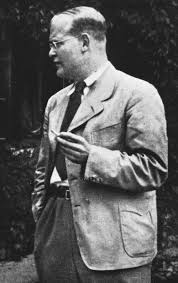
- Dietrich Bonhoeffer was born in 1906.
- Bonhoeffer served as a Lutheran pastor and, therefore prominently criticised the church when it diverged from the duties emphasised in the bible.
- Bonhoeffer was influential and active during the time of the Nazis, which influenced his outlook on life and what he preached.
- He joined the pastors emergency league in 1934 which developed into the confessing church which was opposed to the state church controlled by Nazis.
- He showed his dedication to his philosophy and the cause he was advocating for by joining the resistance to Nazism in 1940 and was then involved in a plot to kill Hitler.
- Bonhoeffer believed that Christians should take an active role in fighting against injustice, following the example of Jesus which he detailed in his book emphasising the importance of following God's will.
- The context of what was happening at the time is critical to Bonhoeffer's theology and raises questions as to whether his theology is still relevant when times have changed since Bonhoeffer.
The confessing church
Bonhoeffer opposed state interference in the church and affirmed the bible as the source of revelation (this demonstrates a key contradiction between the authority of the bible over state law.)
The Confessing Church is an example of Bonhoeffer's active opposition towards the state and the Nazis.
The Confessing Church was founded by Bonhoeffer in opposition to Hitler's founding of the German Evangelical Church as this was an example of state interference in Christianity, using the church as a means of control.
Finkenwalde
This is where Bonhoeffer held illegal secret seminaries as a form of civil disobedience.
Bonhoeffer advocated strongly for the purpose of Christian life being about a relationship with God.
God's will
Bonhoeffer emphasised the impact of the fall on our knowledge of good and evil and God's will. – use Karl Barth to reinforce this perspective.
During the Nazis'- human methods of ethics, including reason, conscience, virtue and duty had all failed. Strong argument?
Responsibility should be our goal. What is responsibility for Bonhoeffer and is accurate?
Responsible action is highly risky and difficult however we must still face evil.
How do we find out God's will?
Through meditating on the bible and praying. Contradictory to view on the fall? If we are corrupt this will unconsciously contaminate every belief aspect.
All we can do is hope God forgives us if we do wrong.
Contradictions in the Bible
- Jesus strongly associated with pacifism "If anyone slaps you on the right cheek, turn to them the other cheek also"
- Jesus died on the cross without retaliating to those who had betrayed him
- Undermines the core message of the bible, the bible is supposed to show us God's will.
- Wrong sort of emphasis on suffering.
Bonhoeffer's view of the bible
Note
Bonhoeffers argument cannot go against the bible as the bible does not contain universal truths and it is about how you interpret it (by meditating on it and praying) that is important, not what it says. Therefore it does not matter if you stick to the laws of the bible as what matters is what you gain from it, god's will comes from meditating on the bible, the bible is not God's will itself.
Neo orthodox
If the bible were the perfect word of God then knowing God's will would be simply a matter of following what it says
The effect it has on us is the word of God, not the bible itself (subject to the same criticisms as religious experience)
Therefore Bonhoeffer is Immune to criticism that theology goes against the bible.
The will is alive in the Christian community, this is what Finkenwalde attempted to do.
The Bible contains no universal nor eternal ethical truths
The purpose of the Bible is to inspire people to follow Jesus, not the moral teachings of Jesus.
Key definition: "Rusty swords"
Principles from previous times that are ineffective tools for fighting evil today
Civil Disobedience
State laws are useful for sinful creatures like us.
Human law is fallible and governments can become corrupted by their power.
Only God has the right to believe he is justice himself.
Our primary allegiance is owed to God
The link between Church and state uses the arguments of secularism to argue against the influence of the church on the state.
State laws can be ignored
However:
Actions of violence are often justified by the argument that god is on their side- eg. The engravings on the Nazi belts
Arguments are contradicted by the fact we should not put aside human ethics but our own desires as well. Leads to a less self-centered perspective on moral decision-making.
However- personal desires shape your perspective on the world, reinforcing again how God's will is completely subjective.
Secularists vs Bonhoeffer
State and church separation vs role of church in politics
State is voted for church isn't.
Argued that the rise in secular liberal democracy has led to maintaining peace and stability.
Religion is no longer necessary to maintain social order.
Hauerwas- without God, we lack meaning, purpose, and moral guide: loss of void and uprose leads to a state of utopia and lack of freedom. Church as a sort of moral compass
Cheap vs. costly grace
- Believed the church practices "cheap grace"- eg the belief that you can be easily forgiven through confession,
- True grace is "costly"
- Reinforced by the suffering of Jesus
- Backed up by the parable of the Good Samaritan: Good Samaritan helped an injured Jew, neighbourly.
- Is the emphasis on suffering still relevant today?
- The pacifism of Jesus worked from the dead.
- Would God want us to suffer?
Bonhoeffer vs Aquinas
Aquinas argues Bonhoeffer fails to take natural law into account
- Must follow primary precepts in order to fulfil God's will
- Aquinas believes civil disobedience is ok in some cases however his view is much clearer than Bonhoeffer's and is therefore safer.
- However: can precepts be relied on after the fall?
- Idolatry can lead to the worship of nations and even to movements like the nazis
- Can we discover natural law reliably?
Influence of Nietzsche on Bonhoeffer
Nietzsche was a secular critic of Christianity, believing that it was a toxic influence on humanity and something that we should get past.
Bonhoeffer agreed with Nietzsche in regards to Christianity becoming toxic.
Has the rise in secularism led to the death of purpose? Resulted in a nihilistic void in our culture.
Is it right that Bonhoeffer relates to some of Nietzsche's arguments?
Bonhoeffer's solution:
Religionless Christianity
- Aim of religionless Christianity: Making a religion work in the new secular age
- Bonhoeffer lived in an era where secularism had replaced Christian understanding of reality, with the rise in science.
- Consequence of the "world coming of age", no longer needs reliance on legalism.
- Religionless Christianity is Christianity without irrelevant principles, cheap grace, and rusty swords.
- Would allow us to focus on what it means to live like a disciple of Jesus and follow God's will. However:
Has Bonhoeffer stripped Christianity of its core values and principles?
Essay questions:
Does Bonhoeffer put too much emphasis on suffering?
Assess Bonhoeffer's teachings on the relationship between Church and State
Bonhoeffer's views on the cost of discipleship are too extreme, how far do you agree?