Genetic Engineering (AQA GCSE Biology Combined Science): Revision Notes
📚Revision Notes
6.2.4 Genetic Engineering
Note
Genetic Engineering: The process of altering the genetic material of an organism by introducing a gene from another organism to give it a desired characteristic.
Applications of Genetic Engineering
- In Plants: Engineered to enhance traits like disease resistance or to produce larger fruits.
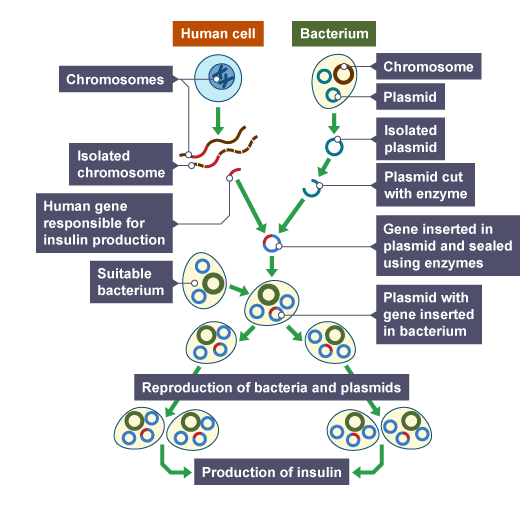
- In Bacteria: Engineered to produce substances beneficial to humans, such as insulin for diabetes treatment.
The Process:
- Gene Extraction: A desired gene is 'cut out' from an organism's DNA using restriction enzymes, creating sticky ends (unpaired bases).
- Vector Preparation: A plasmid (circular DNA) or virus is cut with the same restriction enzyme, creating matching sticky ends. The plasmid also contains an antibiotic resistance marker.
- Gene Insertion: The gene is inserted into the plasmid or virus, and the sticky ends are joined by DNA ligase enzymes.
- Transformation: The recombinant plasmid or virus is introduced into a host cell (like bacteria). As the bacteria multiply, they replicate the modified gene. Antibiotic resistance helps identify successful modifications.
- In Plants: The modified gene is introduced into meristematic (unspecialised) cells, which can grow into fully modified plants.
Genetically Modified (GM) Crops
- Benefits: Engineered for insect resistance and herbicide tolerance, leading to higher yields and less crop loss.
Genetic Modification in Medicine
- Gene Therapy: The introduction of normal genes into a patient's cells to correct genetic disorders by producing the correct proteins.
Benefits and Risks of Genetic Engineering
| Benefits | Risks |
|---|---|
| Medicine: Mass production of hormones (e.g., insulin) using microorganisms. | Environmental Impact: GM crops might affect wild plants and insects, potentially reducing biodiversity. |
| Agriculture: Enhanced yields by improving growth rates, enabling crops to grow in extreme conditions, and producing natural pesticides or herbicides. | Health Concerns: The long-term effects of GM crops on human health are not fully understood. |
| Nutritional Enhancement: Crops with added vitamins can be produced in areas where nutrients are scarce. | Ethical Concerns: Genetic engineering in agriculture might lead to human genetic modifications, raising concerns about designer babies. |
| World Hunger: Increased yields could help address food shortages as the global population grows. | Resistance: GM crops could create super weeds and pests due to increased resistance to herbicides and pesticides. |