Control of Blood Glucose Concentration (AQA GCSE Biology): Revision Notes
📚Revision Notes
5.2.3 Control of Blood Glucose Concentration
Note
The concentration of glucose in your blood needs to be kept within a certain limit because glucose is needed by cells for respiration. It is controlled by the pancreas.
Eating foods that contain carbohydrates increases the glucose levels in the blood.
- If the glucose levels are too high, the pancreas produces the hormone insulin
- Insulin binds to cell in target organs (muscles and liver) causing:
-
- Glucose to move from the blood into muscle cells for respiration
-
- Excess glucose to be converted into glycogen which is stored in the liver
- The blood glucose concentration is reduced
Note
Rigorous activity, e.g. exercise, uses glucose for respiration and therefore there is less in the blood.
- If glucose levels decrease, the pancreas produces the hormone glucagon
- Glucagon binds to to the liver cells causing glycogen to be broken down into glucose
- Glucose is released into the blood, increasing the blood glucose concentration
Your blood glucose concentration is kept constant through using these two hormones. They work in a negative feedback loop.
- When blood glucose levels increase/decrease, a hormone is secreted to oppose the change.
- The action of this hormone cannot occur continually because when the blood arrives at a certain glucose concentration the other hormone is produced, resulting in the opposite effect.
Types of Diabetes
When you have diabetes you cannot control your blood glucose level.
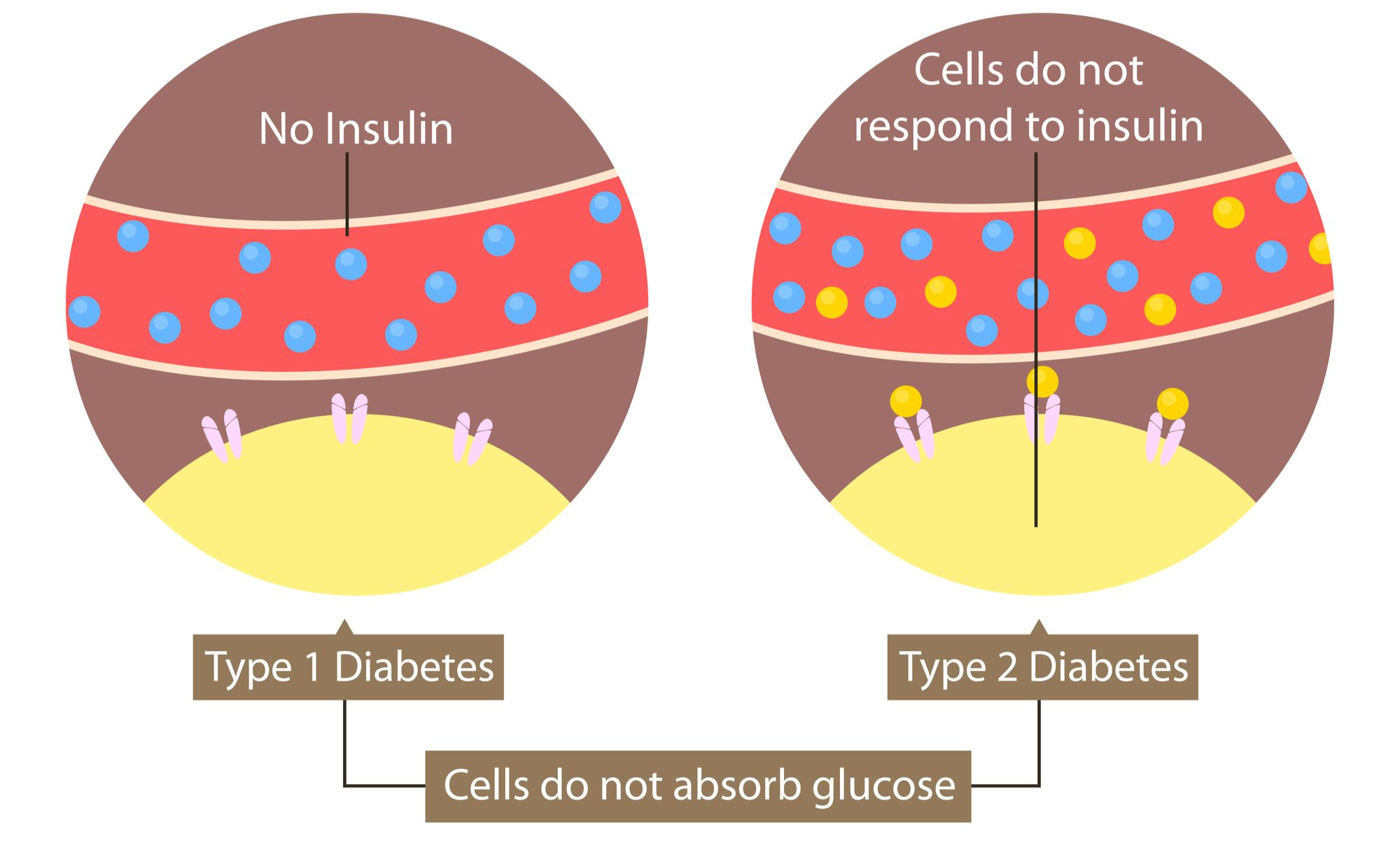
Types of diabetes (type 1 and type 2)
Note
Type 1 diabetes: The pancreas cannot produce enough insulin.
- Blood glucose level can rise to a fatal amount
- Glucose is excreted with urine and lots of urine is produced leaving the individual very thirsty
- It is treated with insulin injections at meal times, which results in glucose being taken up from the bloodstream
- It is also advised to limit the intake of simple carbohydrates which contain lots of glucose
- Doctors are attempting to cure diabetes with pancreas and pancreatic cell transplants, and genetically engineering pancreatic cells from mice to make insulin
Note
Type 2 diabetes The body cells no longer respond to insulin.
- Blood glucose levels can rise to a fatal amount
- Obesity is a risk factor for this disease
- Treatments include reducing the number of simple carbohydrates in diet, losing weight and increasing exercise
- There are also drugs to make insulin more effective on body cells, help the pancreas make more insulin or reduce the amount of glucose absorbed from the gut