Fossils (AQA GCSE Biology): Revision Notes
📚Revision Notes
6.3.5 Fossils
Note
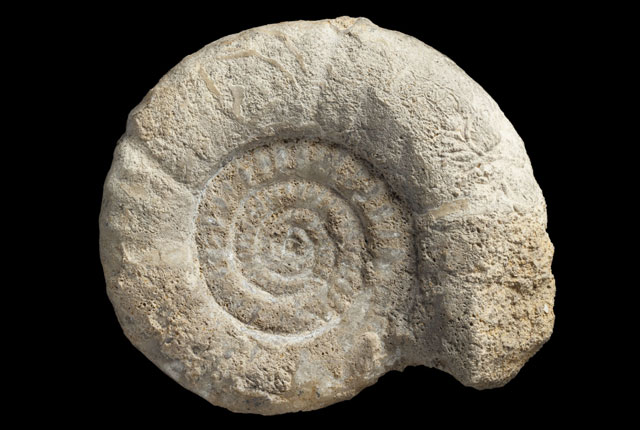
Fossils are the preserved remains or traces of organisms that lived millions of years ago, typically found embedded in rock layers. They provide crucial evidence for understanding the history of life on Earth.
Formation of Fossils
Fossils can form in several ways:
- Preservation in the Absence of Decay:
- Fossils are formed when parts of an organism do not decay due to the absence of oxygen or moisture, which prevents the survival of microbes responsible for decomposition. This can result in the preservation of soft tissues or other organic material.
- Mineral Replacement:
- As organic parts of an organism, such as teeth, shells, and bones, decay, they may be replaced by minerals. This process gradually transforms the original material into a rock-like structure that retains the shape of the original organism.
- Preserved Traces:
- Fossils can also form from preserved traces of organisms, such as footprints, burrows, or rootlets (plant roots). These traces become fossilised when the ground around them hardens and forms a cast or impression.
Importance of Fossils
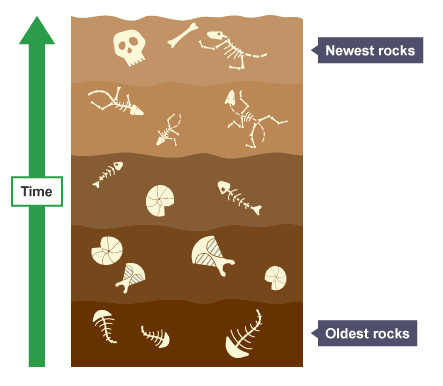
- Evidence of Evolution: Fossils provide snapshots of ancient life, allowing scientists to study how the anatomy of organisms has changed over time. By comparing fossils from different periods, we can trace the evolutionary history of species.
- Comparative Analysis: Fossils are used to compare the anatomical features of different organisms. The number of similarities between fossilised species can indicate how closely related they are. This information is used to construct evolutionary trees, which map out the relationships between species.
Limitations of Fossils in Understanding the Origin of Life
- Lack of Early Fossils: Fossils are limited in their ability to tell us how life began on Earth because most early life forms were soft-bodied and decayed completely, leaving behind few, if any, fossilised remains.
- Geological Activity: Even when early traces of life did exist, many of these have been destroyed over millions of years by geological processes, such as erosion, volcanic activity, and tectonic movements.