The Heart (AQA GCSE Biology): Revision Notes
📚Revision Notes
2.2.2 The Heart
Note
The heart is a vital organ in the circulatory system, which is responsible for transporting oxygen and nutrients to every cell in the body and removing waste products like carbon dioxide. The heart functions as a pump, circulating blood throughout the body in a double circulatory system. This system consists of two circuits, ensuring efficient oxygenation of blood and distribution to the body.
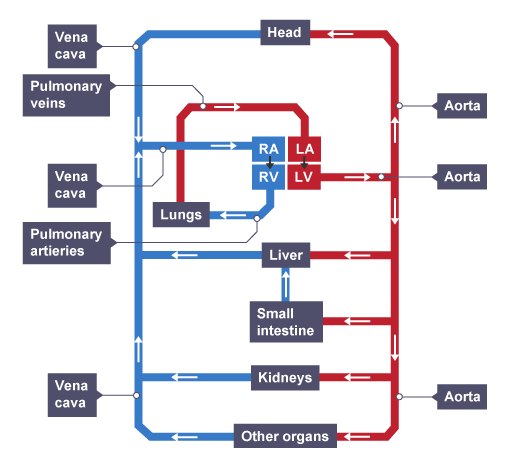
Double Circulatory System:
- Pulmonary Circuit:
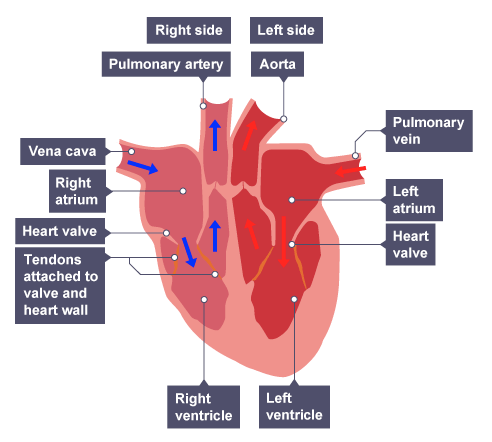
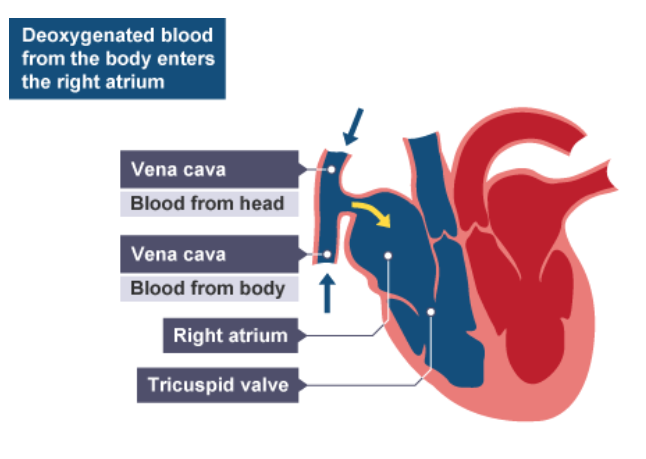
- Deoxygenated blood from the body flows into the right atrium through the vena cava.
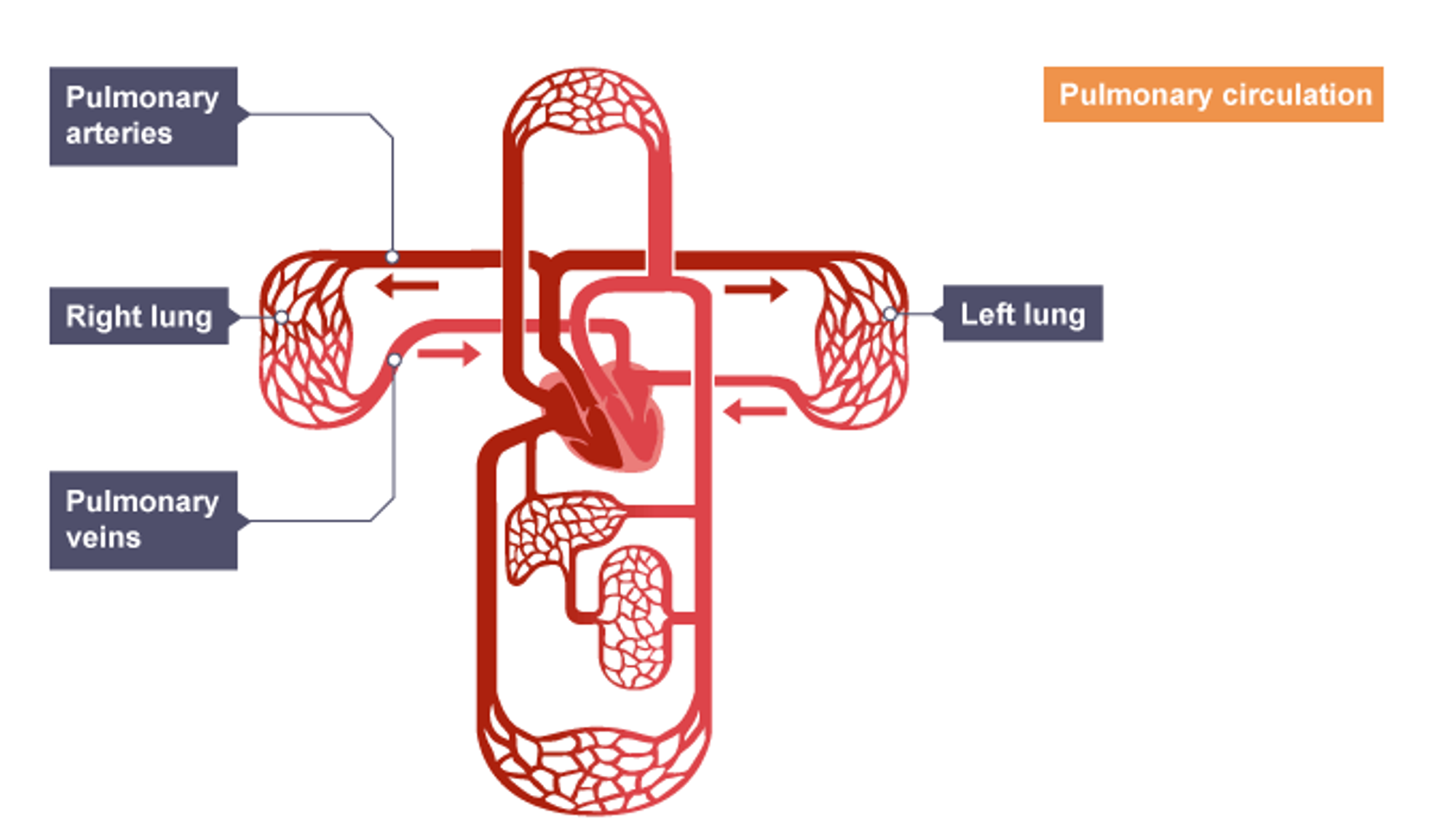
- It then moves into the right ventricle, which pumps it to the lungs via the pulmonary artery.
- In the lungs, the blood undergoes gaseous exchange, where it releases carbon dioxide and absorbs oxygen.
- Systemic Circuit:
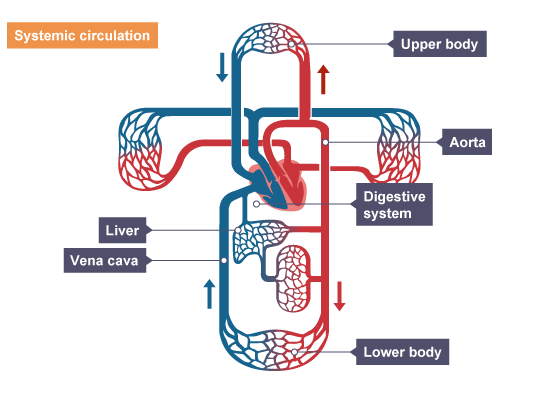
- Oxygenated blood returns from the lungs to the left atrium via the pulmonary vein.
- It then moves into the left ventricle, which pumps the oxygenated blood through the aorta to the rest of the body, delivering oxygen and nutrients to tissues.
Structure of the Heart:
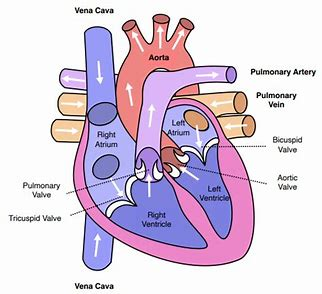
- Muscular Walls: The heart has strong muscular walls to generate a powerful heartbeat. The wall of the left ventricle is thicker than that of the right ventricle because it needs to pump blood throughout the entire body, while the right ventricle only pumps blood to the lungs.
- Four Chambers: The heart is divided into four chambers—two atria (upper chambers) and two ventricles (lower chambers). This separation ensures that oxygenated and deoxygenated blood do not mix.
- Valves: The heart contains valves between the atria and ventricles, as well as at the exits of the ventricles. These valves prevent blood from flowing backwards, ensuring one-way circulation.
- Coronary Arteries: These arteries cover the surface of the heart, supplying the heart muscle itself with oxygenated blood to maintain its function.
The Process of Blood Flow:
- Blood Entry:
- Deoxygenated blood enters the right atrium via the vena cava.
- Oxygenated blood enters the left atrium via the pulmonary vein.
- Atrial Contraction:
- The atria contract, pushing blood into the ventricles.
- Ventricular Contraction:
- The right ventricle contracts, sending deoxygenated blood to the lungs via the pulmonary artery.
- The left ventricle contracts, sending oxygenated blood to the rest of the body via the aorta.
- Valve Function:
- As the ventricles contract, the valves close to prevent backflow of blood into the atria, ensuring efficient circulation.
Heart Rate and Pacemakers:
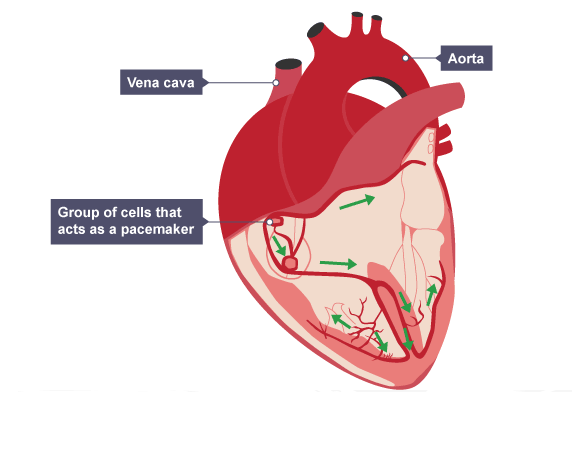
- The natural resting heart rate is around 70 beats per minute and is controlled by a group of specialised cells in the right atrium known as the pacemaker. These cells generate small electrical impulses that cause the heart muscle to contract rhythmically.
- If the heart's rhythm becomes irregular, an artificial pacemaker can be implanted. This device sends electrical signals to maintain a normal heart rate, ensuring that the body receives sufficient oxygenated blood.
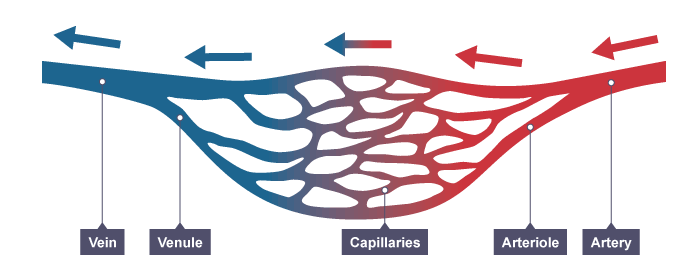
Blood Vessels:
- Arteries:
- Carry blood away from the heart.
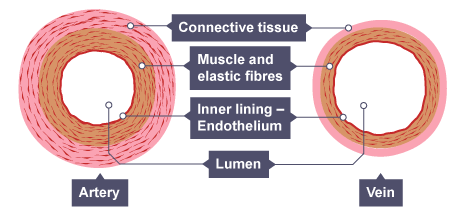
- They have thick, muscular walls and elastic fibres to withstand the high pressure generated by the heart's pumping action.
- Veins:
- Carry blood towards the heart.
- They have a wide lumen to accommodate the low-pressure blood flow and valves to prevent backflow, ensuring blood flows in the right direction.
- Capillaries:
- Tiny vessels that allow blood to flow close to cells, enabling the exchange of substances such as oxygen, carbon dioxide, and nutrients.
- They have one-cell-thick walls, creating a short diffusion pathway and permeable walls to allow substances to pass through easily.
Calculating Blood Flow Rate:
- The rate of blood flow can be calculated using the formula: Rate of Blood Flow=Time (minutes)Volume of Blood
This measurement helps assess how effectively the heart is pumping blood throughout the body.
Note
The heart and circulatory system work together to maintain a continuous flow of blood, ensuring that all body cells receive the oxygen and nutrients they need while removing waste products efficiently.