Business ethics (AQA GCSE Business): Revision Notes
📚Revision Notes
Business ethics
What is business ethics?
Business ethics refers to whether companies behave in morally correct ways when making decisions. It's about doing what's right rather than just what's most profitable. This moral approach applies to how businesses treat all their stakeholders - customers, employees, suppliers, and the wider community.
Important
Key Distinction: Ethics vs Law
It's important to understand that ethics and law are different concepts. A business decision might be perfectly legal but still be considered unethical, or it could be ethical but against the law. The key is that ethical decisions are based on moral principles, not just legal requirements or profit maximisation.
In recent years, stakeholders have become much more interested in the ethical behaviour of businesses. This includes concerns about sustainability, environmental impact, and global issues like climate change.
How unethical behaviour affects stakeholders
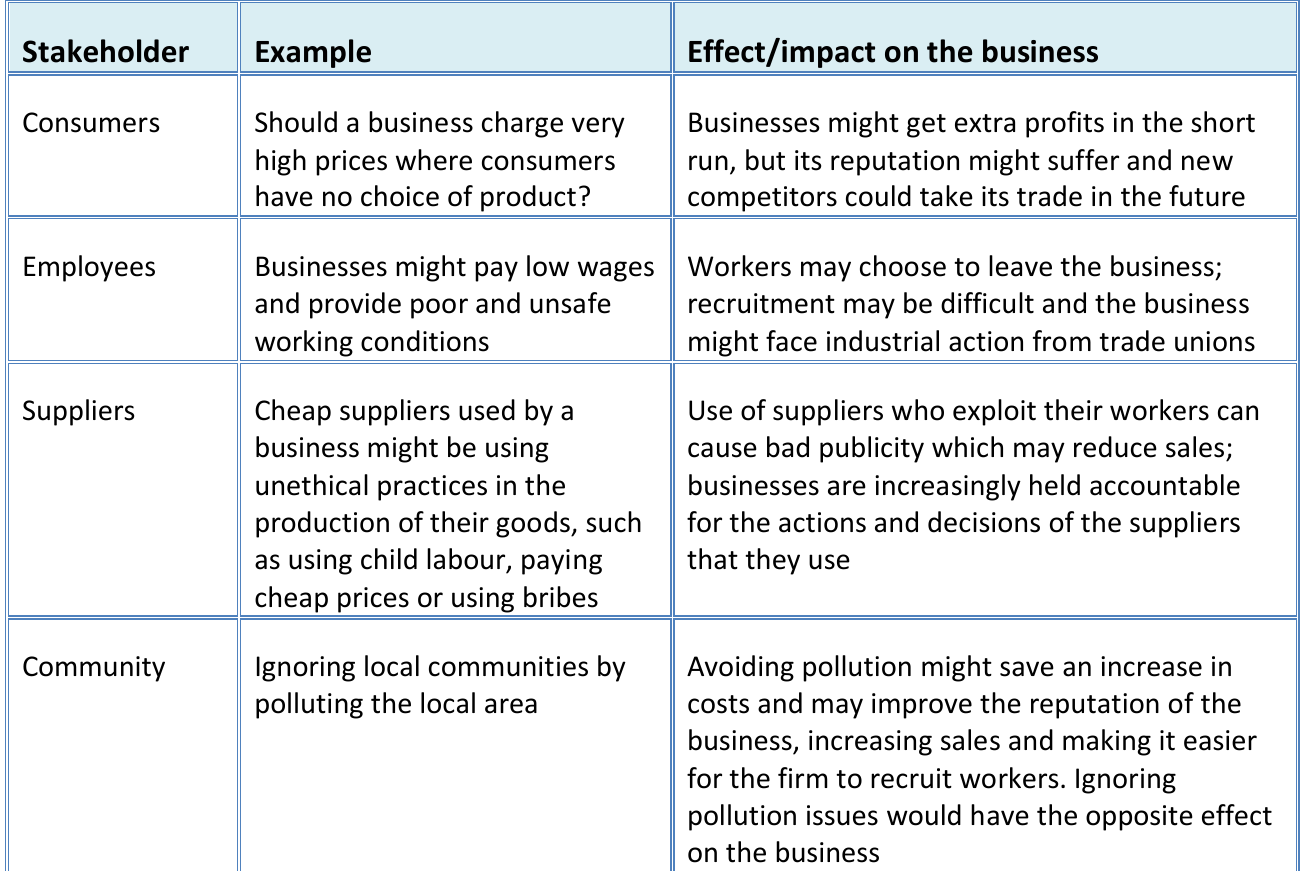
Different stakeholder groups can be impacted in various ways by unethical business practices. Understanding these impacts helps explain why ethical behaviour matters for long-term business success.
Note
Short-term vs Long-term Consequences
The table above shows how unethical decisions might seem profitable in the short term but can lead to serious long-term consequences. For example, when businesses exploit suppliers who use child labour or pay extremely low wages, they might reduce costs initially. However, this can result in bad publicity, reduced sales, and increased public accountability when discovered.
Similarly, treating employees poorly through low wages or unsafe working conditions might cut costs temporarily, but it often leads to high staff turnover, recruitment difficulties, and potential industrial action from trade unions.
Advantages and disadvantages of ethical behaviour
When businesses choose to act ethically, there are both benefits and drawbacks to consider. This creates a trade-off situation that business owners must carefully evaluate.
| Advantages | Disadvantages |
|---|---|
| ✅ Sales might increase due to good publicity | ❌ Costs may increase and profits decrease |
| ✅ Improved brand reputation | ❌ Publicity may not persuade consumers to buy |
| ✅ Employees like working for the business; easier to recruit and retain staff | ❌ Quality or appearance of products may not be as good |
| ✅ Meets owners objectives |
Note
Benefits of Ethical Behavior
The advantages of ethical behaviour often focus on long-term benefits. Good publicity from ethical practices can boost sales, whilst an improved brand reputation helps attract both customers and quality employees. Staff satisfaction typically increases when they feel proud to work for an ethical company, leading to better retention rates and easier recruitment.
Note
Costs of Ethical Behavior
However, ethical behaviour does come with costs. Implementing ethical practices often requires higher expenses, which can reduce short-term profits. There's also no guarantee that consumers will actually choose ethical products, especially if they're more expensive. Additionally, focusing on ethics might sometimes mean compromising on product quality or appearance if ethical materials or processes are more challenging to work with.
Fair trade example
Example
Practical Example: Fair Trade in Action
Fair trade serves as a practical example of business ethics in action. This scheme demonstrates how producers and retailers can make ethical choices when sourcing goods and raw materials from developing countries.
Fair trade businesses commit to:
- Paying fair wages to producers
- Ensuring safe working conditions
- Supporting sustainable farming practices
Whilst this approach typically costs more than conventional sourcing, it aligns with ethical principles and appeals to socially conscious consumers.
The success of fair trade shows that ethical business practices can be commercially viable, particularly when consumers are willing to pay premium prices for products that align with their values.
Remember!
Summary
Key Points to Remember:
- Business ethics is about moral behavior - doing what's right, not just what's legal or profitable
- All stakeholders are affected - consumers, employees, suppliers, and communities all feel the impact of business decisions
- Short-term vs long-term thinking - unethical practices might boost profits initially but often damage reputation and sales over time
- Trade-offs exist - ethical behaviour brings benefits like improved reputation and staff satisfaction, but also increases costs
- Fair trade demonstrates ethics in practice - showing how businesses can source responsibly from developing countries