Ecological issues (AQA GCSE Design and Technology): Revision Notes
📚Revision Notes
Ecological issues
Understanding ecological concerns
Modern production and consumption create significant environmental challenges that affect our planet's ecosystems. These concerns stem from various human activities and industrial processes that put pressure on natural resources and wildlife habitats.
Note
The main ecological issues we face today include the loss of wildlife populations and soil erosion caused by widespread deforestation. When forests are cleared for agriculture or development, entire ecosystems are disrupted, leading to changes in landscapes, loss of natural habitats, and increased noise and vibration from mining operations.
Agricultural expansion also contributes to environmental problems. As farmers need fertile soil for crops, they often expand into new areas, destroying existing habitats in the process. The widespread use of pesticides in farming creates pollution that affects rivers and ecosystems, often causing them to become less diverse and balanced.
 Transportation of goods around the world, known as "product miles," requires vehicles that consume large amounts of fuel, resulting in significant pollution. Additionally, the production of carbon during manufacturing processes, the depletion of finite raw materials, and the use of landfill sites all contribute to environmental degradation.
Important
Landfills can be particularly problematic as they may leak dangerous chemicals into the ground, potentially poisoning wildlife and posing risks to human health.
Carbon footprint explained
A carbon footprint represents the total amount of CO2 emissions that can be directly or indirectly attributed to an individual, organisation, or company. Understanding your carbon footprint is essential for making environmentally conscious decisions.
Note
The main components that contribute to a carbon footprint include:
- The extraction, transportation, processing, and manufacture of products we use daily
- Power consumption, particularly electrical power usage in homes and businesses
- The recycling and end-of-life disposal of products
- Travel activities such as commuting, holidays, and business trips
Companies and individuals need to continuously examine ways to reduce their carbon footprint to minimise their environmental impact and contribute to global sustainability efforts.
Sustainability and life cycle assessment
Sustainability requires companies to carefully consider how their products are manufactured, used, and disposed of throughout their entire lifespan. Sustainable products are designed to reduce demand on non-renewable raw materials and energy sources while producing less waste and reducing overall pollution.
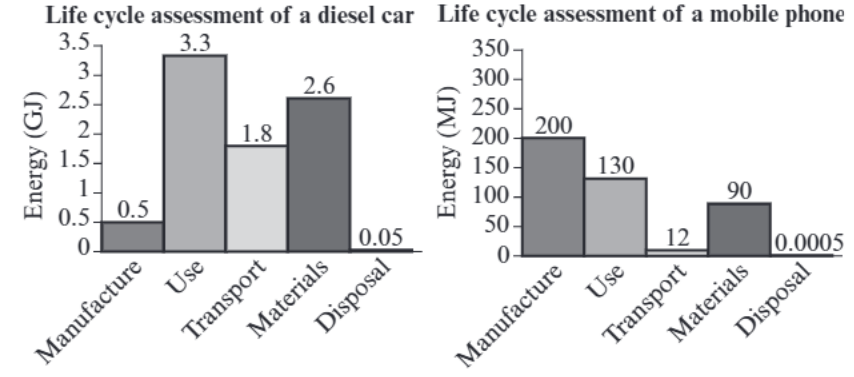 A Life Cycle Assessment (LCA) is a comprehensive analysis tool that companies use to evaluate their environmental impact at each stage of a product's life. This assessment covers everything from raw material extraction through manufacturing, transport, product use, and final disposal.
Note
The life cycle diagram shows how materials flow through different stages: raw material extraction leads to material processing, then to part manufacturing and assembly. After the product use phase, materials can either go to disposal or be recycled back into the system, creating a more sustainable circular approach.
Practical ways to reduce your carbon footprint
There are numerous practical steps individuals can take to minimise their environmental impact across different areas of daily life.
Note
Energy Consumption Strategies:
- Use efficient house insulation to reduce heating needs
- Switch to low energy lighting systems
- Explore alternative energy sources like solar or wind power
- Turn down heating temperatures when possible
Water conservation plays a crucial role in reducing environmental impact. Simple actions like reducing overall water usage and turning off taps when not needed can make a significant difference.
Transportation choices greatly affect your carbon footprint. Consider using low carbon vehicles, participating in car sharing programmes, and minimising the number of journeys you take. When possible, combine multiple errands into single trips.

Note
Recycling and Offsetting:
- Focus recycling efforts on materials like glass, plastics, and paper
- Consider offsetting unavoidable carbon emissions through tree planting programmes
- Support renewable energy projects
Transportation and environmental impact
The transportation of materials, parts, and finished products can result in significant environmental costs due to the accumulation of "product miles." These environmental impacts can be reduced through several strategic approaches.
Note
Strategic Approaches to Reduce Transportation Impact:
Reducing Journey Numbers: Making products smaller and lighter allows more items to fit onto transport vehicles. Using less packaging materials also contributes to more efficient transportation.
Minimizing Journey Length: Utilising distribution hubs and relocating processing plants closer to the source of raw materials reduces the distance products need to travel from manufacture to consumer.
Changing Energy Sources: Vehicles can transition from fossil fuels to renewable energy sources, significantly reducing their carbon emissions during transportation.
Leaner design principles
Ecological impact should be a primary consideration from the very beginning of product design. Designers have the power to make significant environmental improvements through thoughtful design choices.
Using fewer materials or components and incorporating renewable materials or standardised parts can dramatically reduce environmental impact. Products should be designed with parts that can be easily separated for recycling at the end of their useful life.
Important
Key Design Principles for Sustainability:
- Simplify manufacturing processes using energy-efficient and repeatable methods
- Reduce the amount or type of packaging required
- Design products for easy recharging and simple maintenance
- Extend product useful life to reduce the need for frequent replacements
Recycling and reuse benefits
 Recycling and reusing products or materials represents an ecologically responsible approach that significantly improves sustainability while benefiting the environment. This practice helps conserve natural resources and reduces the strain on ecosystems.
Goods can sometimes be manufactured more cost-effectively by avoiding the use of entirely new materials. For example, newly extracted aluminium costs significantly more than using recycled aluminium.
Example
Energy Savings Example: Aluminium Recycling
The energy requirements for aluminium are particularly striking:
- Extracting aluminium from its raw form requires 90% more energy than recycling existing aluminium materials
- This means recycled aluminium uses only 10% of the energy needed for new aluminium extraction
- This dramatic difference makes aluminium recycling both environmentally and economically beneficial
However, modern multi-layered packaging, such as drinks containers, presents recycling challenges. These complex packages make material separation difficult, meaning it often becomes easier to use new raw materials rather than attempting to recycle the mixed materials effectively.
Material-specific reduction strategies
Different materials require tailored approaches to minimise their ecological impact throughout their lifecycle.
Note
Paper and Board Products:
- Effective tree farming can help renew supply while reducing deforestation, habitat loss, and soil erosion
- Recycling paper reduces demand for raw materials
- Using fewer toxic chemicals in processing helps minimise environmental damage
Note
Timber Management:
- Forest Stewardship Council (FSC) certification ensures responsible forest management and sustainable timber supply
- Effective tree farming practices help maintain continuous supply while protecting forest ecosystems
Note
Metal Production:
- Recycling reduces demand for raw materials and minimises environmental impact of mining operations
- More efficient processing methods can significantly decrease the ecological footprint
- Reduced deforestation through better resource management
For textile materials, recycling reduces demand for raw materials while using natural fibres rather than synthetic alternatives provides environmental benefits. Investing in reuse schemes for clothing and fabrics, such as charitable donations, extends product lifecycles. Using fewer toxic chemicals in textile processing also reduces environmental harm.
Note
Systems and Polymers:
- Create rechargeable, energy-efficient products that help conserve energy
- Recycle batteries to enable chemical reuse
- Make printed circuit board components easier to recycle for better material recovery
- Minimise environmental impact from drilling, fracking, and oil processing operations
- Encourage development of biodegradable polymers
- Recycle existing materials to reduce demand for new raw materials
Remember!
Summary
Key Environmental Concepts:
- Carbon footprint includes all CO2 emissions from extraction, transportation, processing, power consumption, and disposal of products
- Life Cycle Assessment (LCA) helps companies analyse environmental impact at every stage of a product's life
- Sustainable design focuses on using renewable materials, reducing waste, and designing for easy recycling
- Transportation improvements can reduce "product miles" through better packaging, shorter journeys, and renewable energy vehicles
- Material-specific strategies are essential - different materials like metals, textiles, and polymers require different approaches to minimise ecological impact