Selection of materials or components (AQA GCSE Design and Technology): Revision Notes
📚Revision Notes
Selection of materials or components
When designing products, choosing the right materials involves much more than just considering their basic properties. Designers must evaluate multiple factors to ensure their material choices will result in successful, marketable products that meet user needs and industry standards.
Understanding material selection factors
The process of selecting materials requires careful consideration of various interconnected factors. Each factor plays a crucial role in determining whether a material is suitable for a specific application and target market.
Note
The interconnected nature of material selection factors means that changing one aspect (like choosing a more sustainable material) can impact others (like cost or availability). Successful designers consider these relationships throughout the selection process.
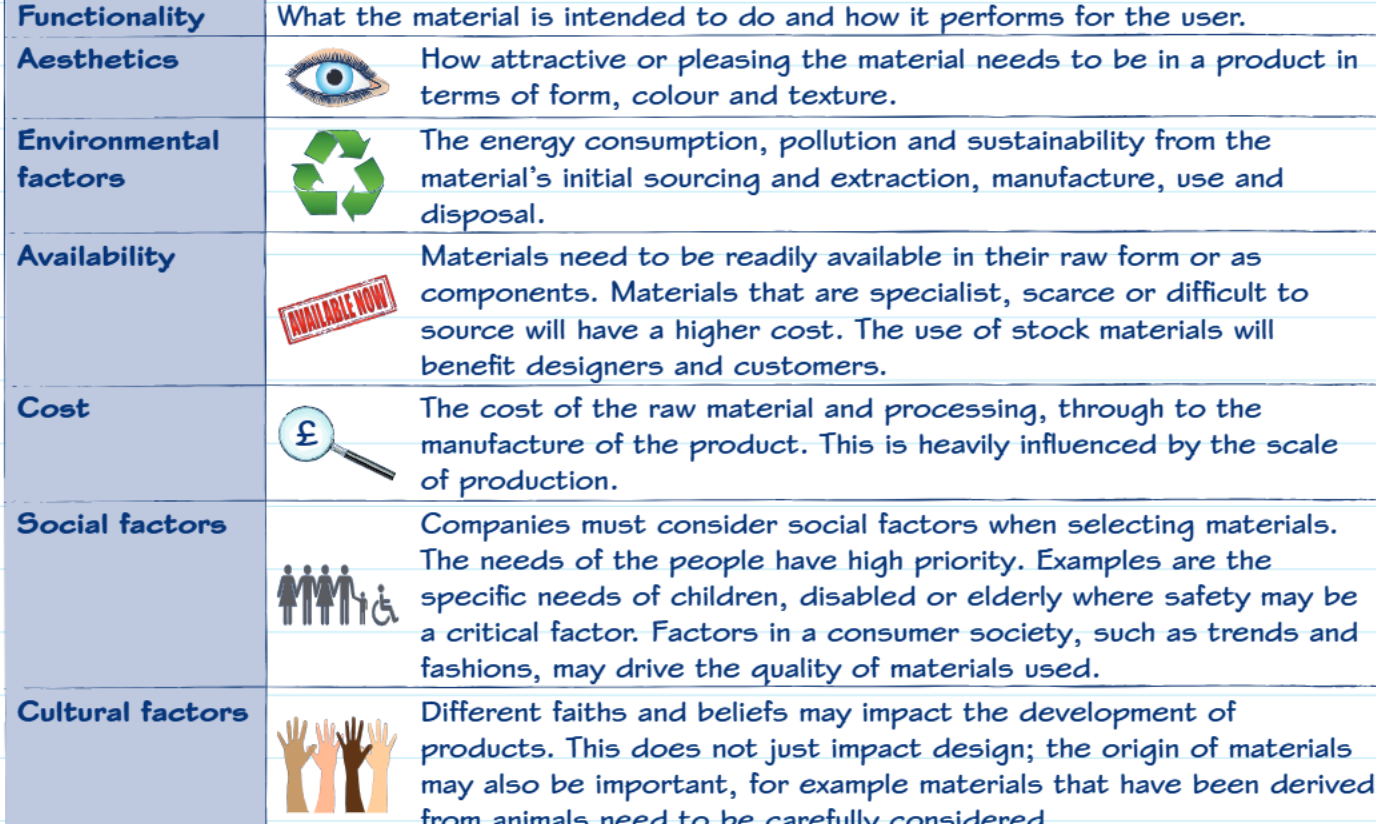
Core factors influencing material choice
Functionality considerations
Functionality focuses on how well a material performs its intended purpose within the product. This involves analysing whether the material can withstand the stresses, forces, and conditions it will encounter during use. For example, a material chosen for outdoor furniture must resist weather damage, while materials for electronic components need specific electrical properties. The performance requirements directly influence which materials are viable options for any given application.
Note
Performance requirements should be clearly defined early in the design process, as they form the foundation for eliminating unsuitable materials and focusing evaluation efforts on viable options.
Aesthetic requirements
The visual and tactile appeal of materials significantly impacts consumer acceptance of products. Aesthetic factors encompass the material's form, colour, texture, and overall appearance. These characteristics must align with the product's intended style and target market preferences. Materials might be chosen for their natural beauty, ability to be coloured or textured, or their contribution to the overall design language of the product.
Environmental impact assessment
Modern material selection increasingly considers the complete environmental lifecycle of materials. This includes evaluating energy consumption during extraction and processing, pollution generated throughout the material's life, and sustainability of sourcing practices. The environmental assessment covers the journey from raw material extraction through manufacturing, use, and eventual disposal or recycling. Materials with lower environmental impact are often preferred, especially for products targeting environmentally conscious consumers.
Important
Environmental impact assessment has become a critical factor in material selection as consumers and regulations increasingly demand sustainable products. Ignoring environmental considerations can lead to market rejection and regulatory compliance issues.
Availability and sourcing
Material availability directly affects production timelines and costs. Standard or stock materials that are readily available in required forms offer advantages in terms of cost-effectiveness and production scheduling. Specialist materials that are scarce or difficult to source typically carry higher costs and may cause production delays. Designers must balance unique material properties against the practical considerations of reliable supply chains.
Note
Building relationships with multiple suppliers and understanding global supply chain dynamics can help mitigate risks associated with material availability and price fluctuations.
Cost implications
The financial aspect of material selection extends beyond the raw material price to include processing costs and manufacturing expenses. Production scale heavily influences overall costs, as larger quantities often benefit from economies of scale. Materials requiring specialised processing techniques or equipment may significantly increase the final product cost, affecting its market competitiveness.
Important
Total Cost Consideration: Always evaluate the complete cost picture including material, processing, tooling, and waste costs rather than just the raw material price. A cheaper material that requires expensive processing may cost more overall.
Social considerations
Social factors reflect the needs and preferences of the intended users and broader society. This includes considering specific requirements for different user groups, such as children, disabled individuals, or elderly users, where safety becomes a critical priority. Current trends and fashions in consumer society also influence material selection, as products must appeal to contemporary tastes and social values.
Cultural sensitivity
Different cultural backgrounds, faiths, and belief systems can significantly impact material acceptance and product development. The origin of materials matters in many cultural contexts - for instance, materials derived from animals may be unsuitable for certain religious or ethical communities. Understanding cultural factors helps ensure products are appropriate for their intended markets and avoid cultural insensitivity.
Important
Cultural insensitivity in material selection can lead to product failure in target markets. Research cultural preferences and restrictions early in the design process, especially for products intended for global markets.
Ethical sourcing standards
Ethical considerations increasingly influence material selection decisions. Materials can be sourced from suppliers who demonstrate responsible practices, such as fair labour conditions and sustainable harvesting methods. Certification systems provide verification of ethical practices.

Example
Certification Example: Ethical Material Sourcing
Forest Stewardship Council (FSC): Certifies responsibly managed wood products, ensuring forests are managed to maintain biodiversity, benefit local communities, and sustain economic viability.
Fairtrade Certification: Ensures fair wages and working conditions for producers, particularly important for materials like cotton, rubber, and metals sourced from developing countries.
These certifications help consumers make informed choices and support ethical business practices while providing designers with verified sustainable options.
Practical application strategies
Working with standard materials
Many design applications benefit from using standard or stock materials that are readily available in common forms and sizes. This approach offers several advantages: reduced costs due to mass production, reliable availability for ongoing production, and established supply chains. Using standard materials allows designers to focus their innovation on other aspects of the product while maintaining cost-effectiveness.
Note
Standard materials often have well-documented properties and performance data, making design calculations and predictions more reliable compared to newer or specialised materials.
Evaluating existing solutions
When developing new products, examining how similar existing products have addressed material selection provides valuable insights. This analysis reveals which materials have proven successful in similar applications and helps identify potential alternatives. Understanding the reasoning behind existing material choices can inform better decisions for new designs.
Balancing competing requirements
Material selection often involves balancing conflicting requirements. A material that excels in functionality might be expensive or environmentally problematic. Successful designers learn to prioritise factors based on the specific product context and target market, making informed compromises where necessary.
Note
Creating a weighted decision matrix can help systematically evaluate materials against multiple criteria, making the balancing process more objective and defensible.
Real-world application examples
Example
Case Study: Children's Toys for Craft Fair Sales
Consider a designer creating children's toys for sale at craft fairs. The material selection would be influenced by:
Availability considerations: Standard materials that can be easily measured and worked with, supporting small-batch production.
Ethical factors: Customers increasingly want to know about responsible manufacturing practices, making ethical sourcing a competitive advantage.
Environmental factors: Eco-friendly materials appeal to conscious consumers who prefer products that don't harm the environment through excessive resource use or harmful manufacturing processes.
Additional considerations for toy shop sales: Beyond availability, cultural, and ethical considerations, factors might include:
- Durability for active play
- Bright colours that appeal to children
- Materials that can withstand cleaning and sanitization
- Safety compliance with toy regulations
Summary
Key Points to Remember:
- Material selection involves evaluating multiple interconnected factors, not just basic material properties
- Functionality, aesthetics, and cost must be balanced against environmental and ethical considerations
- Availability and sourcing reliability significantly impact production feasibility and costs
- Social and cultural factors ensure products are appropriate for their intended markets
- Ethical sourcing and environmental sustainability are increasingly important to modern consumers