The use of production aids (AQA GCSE Design and Technology): Revision Notes
📚Revision Notes
The use of production aids
Manufacturing processes can be very time-consuming and require significant manual work. To help speed things up and improve efficiency, manufacturers use various production aids. These tools are essential for making manufacturing faster, more accurate, and cost-effective.
Note
Production aids are fundamental tools in modern manufacturing that bridge the gap between manual craftsmanship and mass production. They allow manufacturers to maintain quality while increasing output and reducing costs.
What are production aids?
Production aids are tools and devices that help manufacturers work more efficiently. They serve several important purposes:
- Speed up manufacturing processes
- Improve accuracy and quality
- Reduce the chance of human error
- Make complex processes simpler to carry out
- Lower overall production costs
There are four main types of production aids you need to understand: reference points, patterns, templates, and jigs.
Reference points and datums
When working on any manufacturing project, you need a fixed starting point for all your measurements. This is called a reference point or datum.
Important
A reference point is established before any marking or cutting begins. This ensures that all measurements are taken from the same place, making the final product accurate and consistent. Without proper reference points, even small measurement errors can compound into major quality issues.
A reference point is established before any marking or cutting begins. This ensures that all measurements are taken from the same place, making the final product accurate and consistent. If you need a very precise reference point, it may be machined first to guarantee accuracy.
For most manufacturing work, the reference point will be either a square edge or corner of the material. Different materials use different reference points:
- Metal and plastic workpieces: Use a datum edge (a straight, accurate edge)
- Wooden workpieces: Use a face side and face edge (the best surfaces of the timber)
These reference points are crucial because they ensure every measurement starts from the same place, leading to consistent and accurate results.
Patterns
A pattern is essentially a replica or copy of the product you want to make. Think of it like a stencil that shows you exactly what shape to cut or create.
Important
Critical Concept: The accuracy of your pattern directly affects the quality of your final product. If your pattern is wrong, every item you make using it will also be wrong. This is why pattern accuracy is absolutely essential in manufacturing.
Patterns are particularly useful because:
- They can be made from cheaper materials (like paper or thin wood)
- They're easier to work with than expensive materials
- They can be reused many times
- They can be easily modified if the design changes

Example
Practical Example: Clothing Manufacturing
A common example is using a paper pattern to cut fabric for clothing. The dressmaker places the paper pattern on the fabric and cuts around it. This pattern shows exactly where to cut, ensuring each piece is the right shape and size. Multiple garments can be made using the same pattern, guaranteeing consistency across all items.
Templates
Templates are similar to patterns but serve a slightly different purpose. While patterns show you the overall shape to cut, templates help you mark specific points, shapes, or hole locations onto your material multiple times.
Templates work by being placed on top of your material, allowing you to trace around them or mark through holes. They can be:
- Fixed permanently to the material for one-time use
- Transferred easily from one piece to another
- Made as sacrificial items (used once then discarded) or reusable tools
Note
Templates are especially useful when you need to mark the same shape or hole pattern on multiple pieces of material, ensuring consistency across all your work. They're particularly valuable in production environments where the same marking operations must be repeated many times.
Jigs
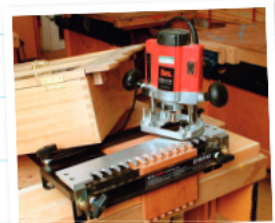
A jig is a specialised device that holds your work in exactly the right position while guiding your cutting tools to the correct location. This is particularly valuable for repetitive manufacturing tasks.

The jig serves two main functions:
- Holds the workpiece: Keeps your material steady and in the correct position
- Guides the tool: Ensures your cutting tool follows the exact path needed
Example
Practical Example: Drilling Accurate Holes
When drilling accurate holes in wood, a jig will hold the wood steady and guide the drill bit to exactly the right spot every time. The jig ensures the hole is drilled at the correct angle and depth, and in precisely the right location. This means you can produce identical results repeatedly without having to measure and mark each piece individually.

Key advantages of production aids
Using patterns, templates, and jigs offers several important benefits:
Note
Production Benefits
- Greater productivity: Work gets done much faster
- Simplified processes: Complex manufacturing tasks become easier to manage
- Reduced costs: Less waste material and fewer mistakes mean lower expenses
- Increased accuracy and quality: Consistent results with better tolerance control
These advantages make production aids essential tools in competitive manufacturing environments where efficiency and quality are paramount.
Understanding tolerance
Tolerance refers to the acceptable level of accuracy for a manufactured product. It's set by the manufacturer at the beginning of the process and determines how precise the final product needs to be. More expensive products typically require tighter tolerance (higher accuracy), while cheaper products may have looser tolerance requirements.
Important
Production aids help manufacturers achieve the required tolerance levels more consistently and efficiently. Without these tools, maintaining tight tolerances becomes extremely difficult and expensive, especially in high-volume production.
Summary
Key Points to Remember:
- Production aids speed up manufacturing and improve accuracy
- Reference points (datums) provide a consistent starting point for all measurements
- Patterns are replicas that guide cutting and shaping operations
- Templates help mark repeated shapes or hole positions accurately
- Jigs hold work steady and guide tools for repetitive tasks
- All production aids help reduce costs, improve quality, and increase productivity