Commercial processes (AQA GCSE Design and Technology): Revision Notes
📚Revision Notes
Commercial processes for timber-based materials
Commercial processes are essential manufacturing techniques used to shape and form wood into finished products. In the timber industry, you need to understand two main commercial processes that allow for precise, repeatable production of wooden components.
Routing
Routing is a commercial process that involves cutting timber in a controlled and precise way using routers equipped with various shaped cutters. This process allows manufacturers to create consistent grooves, profiles, and decorative features in wood products.
Note
The precision achieved through routing is essential for commercial timber production, as it ensures consistent quality across large batches of identical components.
Types of routers
There are three main types of routers used in commercial timber processing, each suited to different scales of production:
CNC routers are computer numerically controlled machines that offer the highest level of precision and automation. These machines can be programmed to create many identical items, making them ideal for large-scale commercial production. The computer control eliminates human error and ensures every piece is cut to exact specifications.
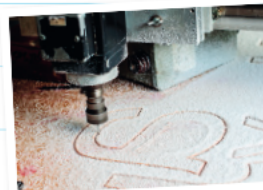 Handheld routers are portable tools used for smaller-scale production and custom work. While requiring more skill to operate safely, they offer flexibility for on-site work and smaller batches. These routers are commonly used by craftspeople and for repair work.
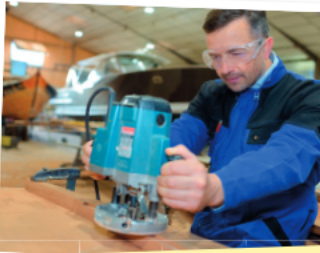 Table routers provide an excellent middle ground between precision and versatility. They are particularly useful for adding decorative mouldings to wood pieces before other manufacturing processes take place.
Routing cutters and techniques
Routers use different types of cutters to achieve various profiles and cuts:
- Plunging tools are designed to cut grooves or create recessed shapes by plunging directly into the wood surface
- Shaped tools cut along the length of timber pieces to create decorative moulding profiles
- Guide wheels are often attached to cutters to ensure accuracy and consistent depth of cut
Common routing profiles include V-grooves, dovetail joints, rebates (rectangular recesses), chamfers (angled cuts), and round nose profiles. Each profile serves different functional or decorative purposes in timber construction.
Advantages of CNC routing
Important
Critical Benefits of CNC Routing:
CNC routers offer significant advantages over manual routing methods. They provide superior safety as there is less risk of human error, and they deliver exceptional accuracy through computer control. Most importantly, CNC machines can repeat the same cutting process many times without variation, making them essential for commercial production where consistency is crucial.
Turning and woodturning
Woodturning is a commercial process used to shape wood by spinning it on a specialised machine called a wood laith. This process creates symmetrical shapes around a central axis, making it perfect for producing items like table legs, bowls, spindles, and decorative features.
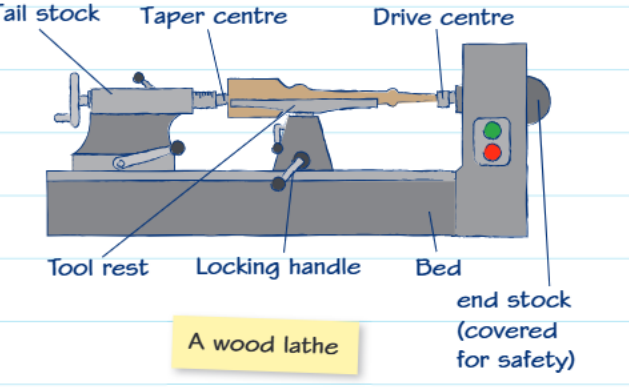 Wood laith components
A wood laith consists of several essential components that work together to hold and rotate the wood while allowing precise shaping:
- Tail stock and taper centre secure one end of the workpiece
- Drive centre rotates the wood at the other end
- Tool rest provides a stable platform for holding cutting tools
- Locking handle secures the tool rest in position
- Bed forms the main frame supporting all components
- End stock (covered for safety) houses the motor and drive mechanisms
Turning tools and their uses
Woodturning requires specialised tools, each designed for specific stages of the shaping process:
- Roughing gouge removes most of the excess material quickly, transforming square timber into a roughly cylindrical shape
- Parting tool separates sections of wood and creates clean divisions
- Round nose tool provides fine, smooth finishing work
- Skew chisel is used for precise planing and creating smooth surfaces
The turning process
Example
Worked Example: Complete Turning Process
Step 1: Mount timber between centres on the laith, ensuring the wood is held firmly against the tool rest
Step 2: Begin with the roughing gouge to remove excess material and create a roughly cylindrical shape
Step 3: Use parting tools to create divisions and separate sections as needed
Step 4: Apply round nose and skew chisel tools for fine finishing work
Step 5: For bowl-like shapes, work can be held using a face plate; for longer items like table legs, work between centres throughout the process
The process requires careful planning to prepare square sections of timber for mounting on the laith, followed by systematic turning between centres to achieve the desired symmetrical shape. Some lathes allow the drive centre to be replaced with a chuck for holding different types of work securely.

Summary
Key Points to Remember:
- Commercial processes enable precise, repeatable production of timber components for manufacturing
- Routing uses shaped cutters to create grooves, profiles, and decorative features in controlled ways
- CNC routers offer the best accuracy and safety through computer control, ideal for large-scale production
- Woodturning creates symmetrical shapes by spinning wood on a laith while using specialised cutting tools
- Different tools serve specific purposes - from rough shaping to fine finishing in both routing and turning processes