Averages from tables 1 (AQA GCSE Maths): Revision Notes
📚Revision Notes
Averages from tables 1
Understanding averages and range
There are three different types of average: the mean, median and mode. Each one tells us something different about a set of data. The range tells us how spread out the data is.
These four measures are fundamental tools in statistics that help us understand and describe numerical data. Learning to calculate and interpret them correctly is essential for analysing data in mathematics and real-world applications.

The mode
The mode is one of the simplest averages to understand and calculate. It focuses on frequency - which value appears most often in your dataset.
Note
The mode is the value which occurs most often in a set of data.
To find the mode:
- Look through all the values in your data set
- Count how many times each value appears
- The value that appears most frequently is the mode
- If no value repeats, there is no mode
- If two values appear equally most often, the data is bimodal
Important
Remember that a dataset can have no mode, one mode, or multiple modes depending on the frequency pattern of the values.
The median
The median represents the central tendency by finding the middle position in an ordered dataset. This makes it particularly useful when dealing with data that contains extreme values.
Note
The median is the middle value when all values are arranged in order from smallest to largest.
To find the median:
- Write all values in order from smallest to largest
- Find the middle position
- If there's an odd number of values, the median is the middle value
- If there's an even number of values, the median is halfway between the two middle values
The mean
The mean, often called the arithmetic average, takes into account every single value in the dataset. This makes it sensitive to extreme values but provides a balanced representation of the data.
Note
The mean is found by adding all values together and dividing by how many values there are.
To find the mean:
- Add together all the numbers in the data set
- Count how many numbers there are
- Divide the total by the number of values
- Don't round your answer unless asked to
The mathematical formula for the mean is:
The range
The range is not an average, but it's an important measure that tells us about the spread or variability of our data. A larger range indicates more variability in the dataset.
Note
The range shows how spread out the data is.
To find the range:
- Find the largest value in the data set
- Find the smallest value in the data set
- Range = largest value - smallest value
This can be written as:
Worked example: basic calculations
Let's work through a complete example to see how all four measures are calculated from the same dataset.
Example
Worked Example: Calculating All Measures
Here are six numbers: 4, 5, 9, 7, 4, 4
Finding the mode: The value 4 appears three times, more than any other number. The mode is 4.
Finding the mean:
- Add all values:
- Divide by number of values:
- The mean is 5.5
Finding the median:
- Order the values: 4, 4, 4, 5, 7, 9
- Find middle positions: with 6 values, the median is between positions 3 and 4
- The median is halfway between 4 and 5:
- The median is 4.5
Finding the range:
- Largest value = 9, smallest value = 4
- Range =
- The range is 5
Problem solving with missing values
Sometimes you need to work backwards from the averages to find missing values. This requires understanding the relationship between the mean and the sum of values.

Important
Key Formula: Sum of values = mean × number of values
This formula is essential for solving missing value problems and can be rearranged to find any unknown component.
Example
Worked Example: Finding Missing Values
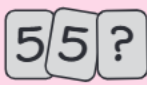
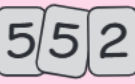
Kayla has three numbered cards. The mode of the three numbers is 5 and the mean is 4. What are the three numbers?
Step 1: Since the mode is 5, at least two cards must show 5.
Step 2: Use the mean formula to find the sum:
- Sum of values = mean × number of values
- Sum of three cards =
Step 3: Find the missing value:
- We know two cards are 5, so:
- The third card =
Check: Calculate the mean: ✓
The three cards show 5, 5, and 2.
Important
Common Mistakes to Avoid:
- Forgetting to order values before finding the median
- Rounding the mean too early in calculations
- Confusing which average is being asked for in the question
- Not checking your answer by working backwards
Summary
Key Points to Remember:
- Mode = most frequent value
- Median = middle value when ordered from smallest to largest
- Mean = total of all values ÷ number of values
- Range = largest value - smallest value
- You can work backwards using: Sum of values = mean × number of values
- Always work out all three averages and the range before answering comparison questions
- When finding the median, remember to order the values first
- For the mean, don't round your answer unless specifically asked
- Check your calculations by working backwards where possible