Describing Motion (AQA GCSE Physics): Revision Notes
📚Revision Notes
5.6.15 Representing Terminal Velocity
Note
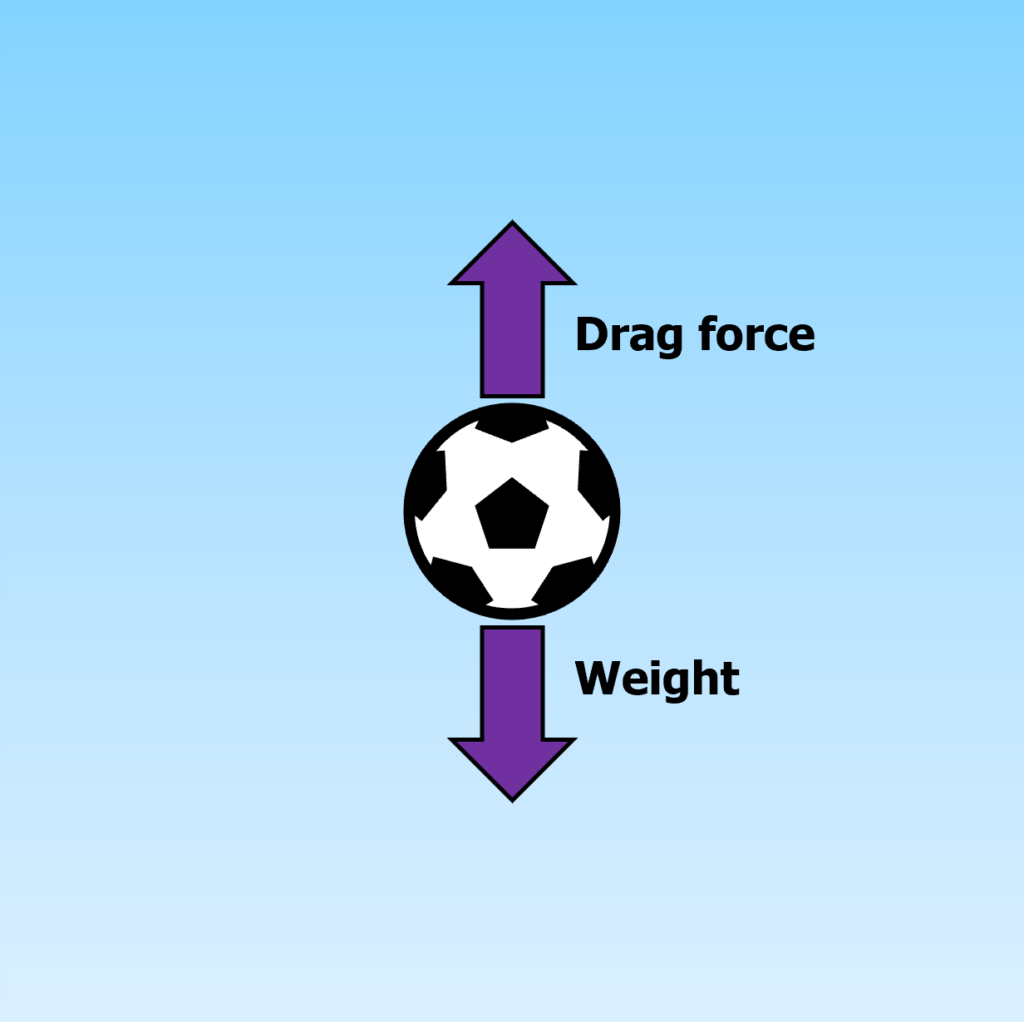
When an object is falling through a fluid (i.e air) vertically, there are two forces acting on the object: the object's weight and drag.
Note
The object's weight is due to gravity and acts downwards. The drag is the friction between the object and the fluid particles.
Note
An example of drag is air resistance. Air resistance opposes the force of gravity and slows the object down. This increases as the speed increases.
Note
Key Points
- As an object is dropped, it initially accelerates due to the gravitational force because this exceeds the drag force. There is a resultant force downwards.
- As the object's speed increases, so does the drag.
- This continues until the drag force is equal to the force due to gravity. Because the forces are balanced, there is no resultant force and the object now moves at constant speed. This is the object's maximum speed and is called the terminal velocity.