Acceleration (AQA GCSE Physics): Revision Notes
📚Revision Notes
5.6.10 Acceleration
Acceleration
Definition
Note
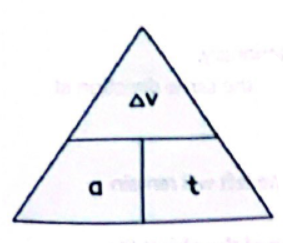
Acceleration: the change of an object's velocity over a given time.
Note
Formula
Velocity-Time Graphs
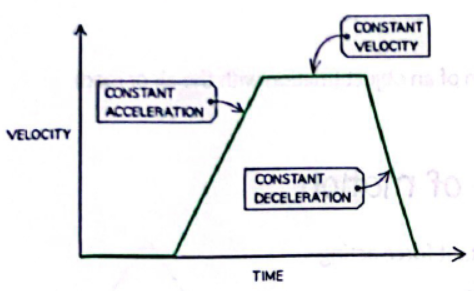
- Horizontal line: Constant velocity.
- Upward slope: Acceleration.
- Downward slope: Deceleration.
- The gradient of a velocity-time graph tells us the acceleration of the object.
Area Under the Graph
- The area under the graph tells us the distance travelled in a specific direction (displacement).
- If the graph has curved lines, the acceleration is not constant.
- In this case, count the total number of squares under the graph, estimating the total "parts" of squares.
The equation for Constant Acceleration
Note
If an object is accelerating at a constant rate, we can use this equation:
How Objects Accelerate Towards the Earth
Initial Acceleration
- When any object falls towards the surface of the earth, it initially accelerates at around 9.8 m/s².
- This acceleration is due to the force of gravity acting on the object.
Air Resistance
- As a skydiver falls, they experience an upward force of friction with the air particles called air resistance.
- After some time, the force of air resistance balances the force due to gravity.