Convex & Concave Lenses (AQA GCSE Physics): Revision Notes
📚Revision Notes
6.3.1 Convex & Concave Lenses
Lenses (Physics only)
-
If light passes through the centre of the lens, it does not change direction.
-
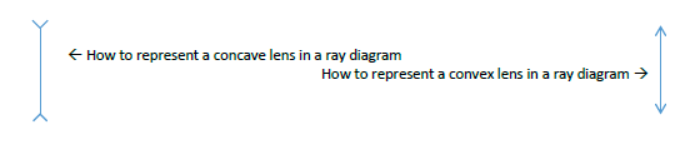
Lenses are generally drawn as a dashed vertical line.
-
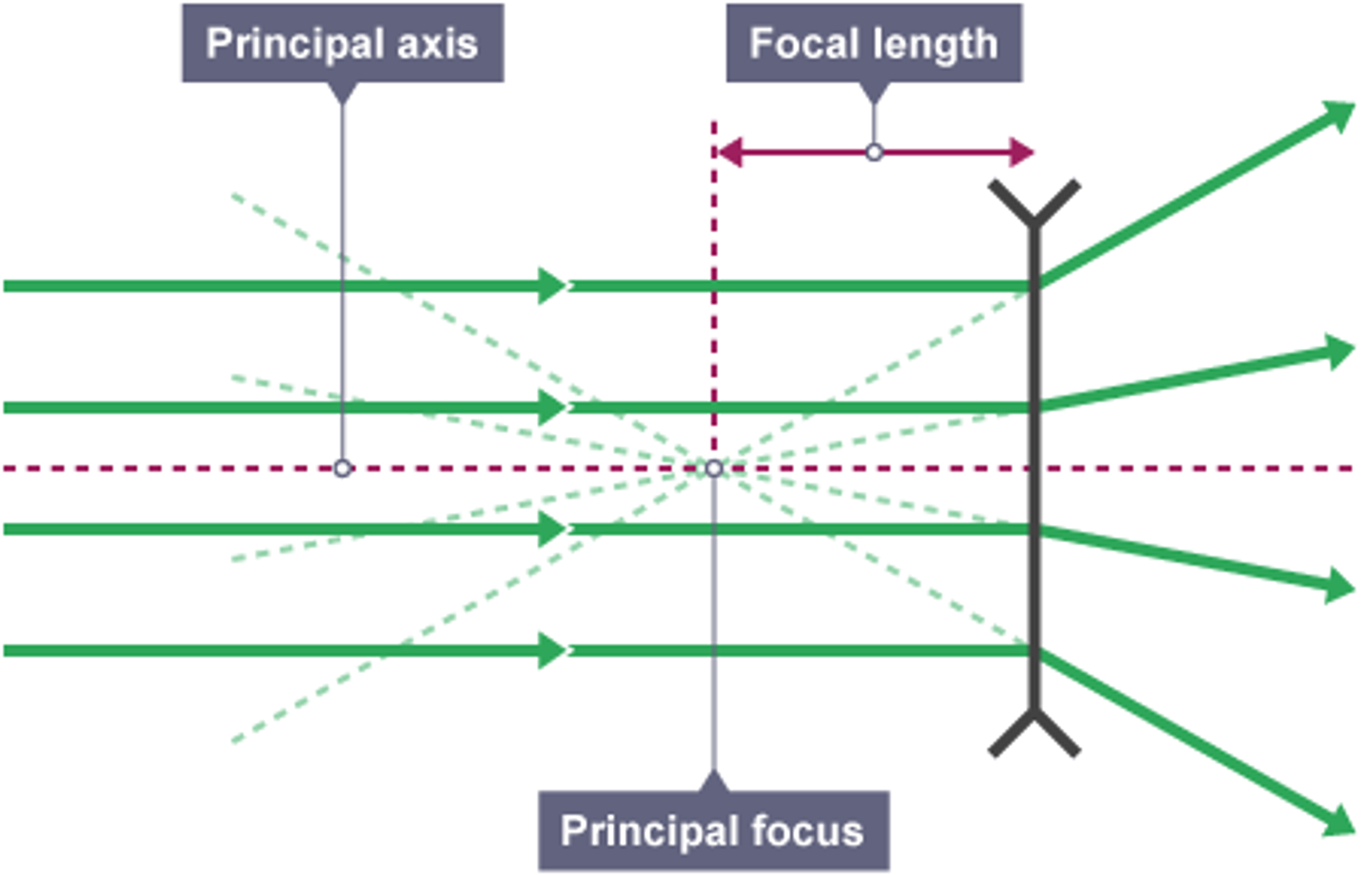
Focal points are points on either side of the lens where light can converge.
-
Convex lenses can have virtual or real images (appear to be on the same or opposite side as the real object respectively).
-
Concave lenses can only have virtual images.
Concave Lenses (Physics only)
-
A concave lens "caves" inward.
-
They are thinner at the centre than at the edges.
-
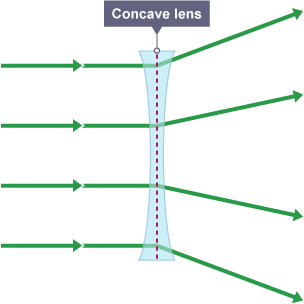
Spreads light outwards.
- Light appears to have come from the focal point:
- Draw a horizontal ray from the top of the object to the lens.
- Draw a faint line from the focal point to the point where the ray hits the lens.
- The ray exits the lens along the same direction as the faint line.
- It is used to spread out light further:
- Example: To correct short-sightedness.
-
As light is focused in front of the retina, it needs to be spread out slightly to be able to be focused onto the retina.
Convex Lenses (Physics only)
- A convex lens is normally wider at the centre.
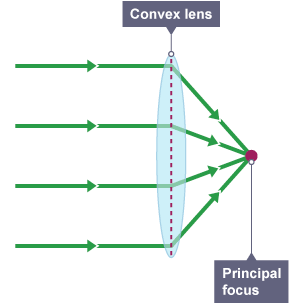
- They focus light inwards.
- Horizontal rays focus on the focal point. Used for magnifying glasses, and binoculars.
- Used to correct long-sightedness, as it focuses the rays closer.
Note
Magnification Formula