Tissue Culture (Edexcel GCSE Biology): Revision Notes
📚Revision Notes
Tissue Culture
What is tissue culture?
Tissue culture is a laboratory technique that allows scientists to cultivate cells, tissues, or complete plants in a controlled setting outside their natural environment. This process involves taking a small sample of cells from a living organism and placing them in a specially prepared, nutrient-rich medium that encourages growth and reproduction. The technique is incredibly valuable because it enables researchers to reproduce tissues from a single specimen without needing to go through lengthy selective breeding processes.
Note
The fundamental principle behind tissue culture is creating optimal conditions for cellular growth in an artificial environment, providing all the necessary nutrients, hormones, and sterile conditions that cells need to thrive and multiply.
Plant tissue culture and micropropagation
Plant tissue culture, also known as micropropagation, is a powerful method for producing large numbers of genetically identical plants from a single parent specimen. This technique has revolutionised plant breeding and agricultural practices.
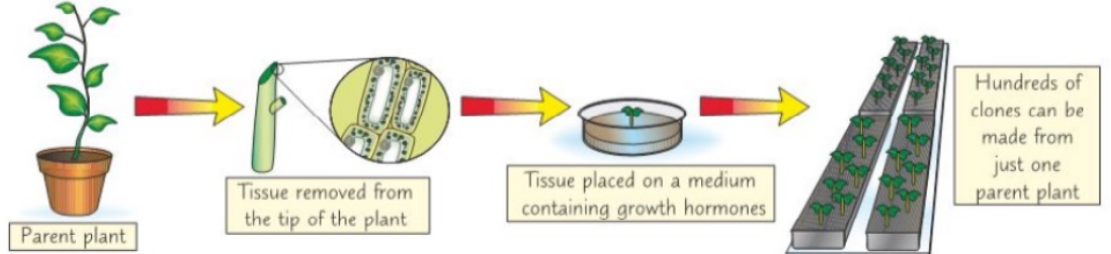
How plant tissue culture works
The process follows a systematic approach that ensures successful cultivation:
Example
Worked Example: Plant Tissue Culture Process
Step 1: Selection phase - Scientists choose a parent plant based on desirable characteristics such as beautiful flowers, high crop yield, disease resistance, or other beneficial traits.
Step 2: Tissue extraction - Several pieces of tissue are carefully removed from the parent plant, with the best results typically achieved when tissue is taken from rapidly growing areas like shoot tips or root systems.
Step 3: Culture preparation - The extracted tissue is placed in a growth medium containing essential nutrients and growth hormones that stimulate cell division and development.
Step 4: Sterile conditions - The entire process is conducted under aseptic conditions to prevent contamination by harmful microorganisms that could damage or destroy the developing plants.
Step 5: Development and multiplication - As the tissues begin to produce roots and shoots, they can be transferred to potting compost to continue their growth into fully developed plants.
Step 6: Mass production - From just one parent plant, hundreds or even thousands of identical clones can be produced.
Advantages of plant tissue culture
Plant tissue culture offers numerous benefits that make it invaluable in modern agriculture and horticulture:
Note
Rapid mass production: The technique allows for the swift creation of large numbers of genetically identical plants, making it especially useful for producing plants with specific desirable traits such as disease resistance or high yield potential.
Genetic consistency: Since the plants produced are clones, they maintain identical genetic characteristics to the parent plant, ensuring consistency in crops and ornamental plants.
Space and time efficiency: Plants can be grown quickly using minimal laboratory space, and the process can continue throughout the year regardless of seasonal conditions.
Important
Conservation applications: This method helps preserve endangered plant species by growing them in controlled environments, protecting them from external threats while maintaining genetic diversity.
Disease-free propagation: Plants grown under sterile laboratory conditions are less likely to carry diseases, resulting in healthier and more robust specimens.
Genetic modification potential: The technique can be combined with genetic engineering methods, where new genes are introduced into plant cells to create plants with enhanced characteristics such as improved growth rates or drought resistance.
Animal tissue culture for medical research
Animal tissue culture represents a crucial tool in medical and biological research, offering scientists the ability to study cellular behaviour in isolation from the complex environment of a living organism.
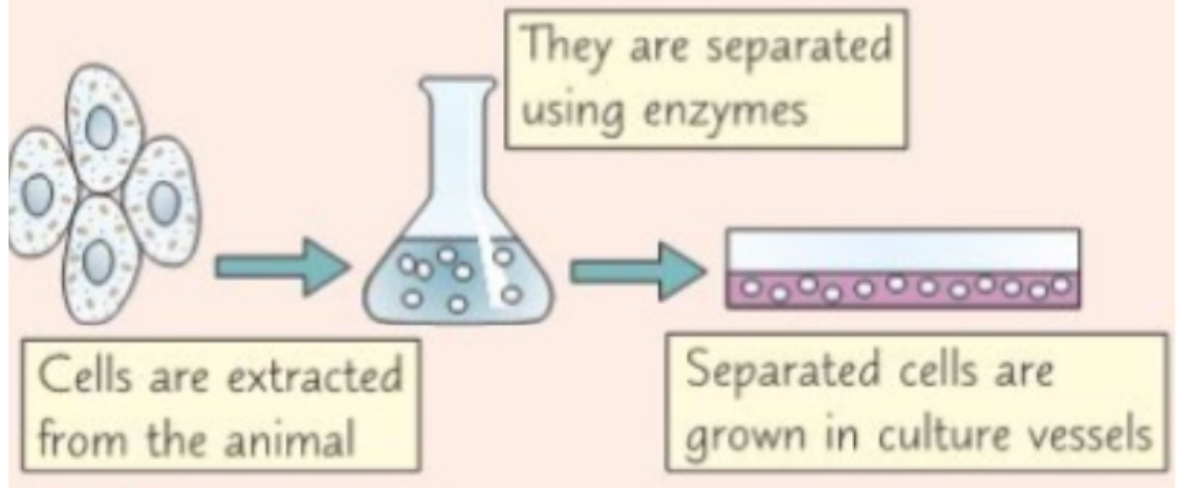
How animal tissue culture works
The process of animal tissue culture follows these systematic steps:
Example
Worked Example: Animal Tissue Culture Process
Step 1: Sample collection - Researchers obtain tissue samples from specific organs or body parts of animals, such as pancreatic tissue, depending on their research focus.
Step 2: Cell separation - The collected tissue samples are treated with enzymes that break down the connections between individual cells, separating them from each other.
Step 3: Culture vessel preparation - The separated cells are placed in sterile culture vessels and bathed in a growth medium containing all the nutrients necessary for cellular survival and reproduction.
Step 4: Multiplication cycles - After several rounds of cell division, the cells are divided again and placed in separate vessels, encouraging continued growth and expansion of the cell population.
Step 5: Storage and use - Once sufficient tissue culture has been developed, it can be stored for future research applications.
Advantages of tissue culture in medical research
Animal tissue culture provides several significant advantages for advancing medical knowledge and treatment development:
Note
Disease investigation: This technique enables scientists to study diseases at the cellular level, helping them understand how individual cells respond to various treatments and how diseases progress through biological systems.
Drug development and testing: Researchers can evaluate new medications and therapeutic approaches using cultured cells before testing them in whole organisms, significantly reducing the need for animal testing while accelerating the development process.
Important
Regenerative medicine applications: Tissue culture technology is used to grow tissues and organs that can potentially be transplanted into patients, supporting advanced treatments such as skin grafts and organ regeneration therapies.
Controlled experimental conditions: By studying cells in isolation, researchers can examine the effects of specific substances or environmental changes without interference from other biological processes occurring in a complete organism.
Summary
Key Points to Remember:
-
Tissue culture allows both plants and animals to be grown from small tissue samples in laboratory conditions using nutrient-rich growth media
-
Plant tissue culture produces genetically identical clones, making it perfect for mass-producing plants with desirable characteristics quickly and efficiently
-
Animal tissue culture enables medical researchers to study diseases, test treatments, and develop regenerative therapies at the cellular level
-
Both processes require
sterile conditionsto prevent contamination and ensure successful growth -
The technique has revolutionised agriculture, conservation efforts, and medical research by providing controlled environments for studying and reproducing biological materials