Chromatography (Edexcel GCSE Chemistry Combined Science): Revision Notes
📚Revision Notes
8.1.3 Chromatography
What Is Chromatography?
Note
Chromatography is a method used to separate mixtures into their individual compounds. It can also help identify the different chemicals present in a mixture. One common way to do this is by calculating something called the Rf value, which can tell us what chemicals are in the mixture.
Note
How Chromatography Works Chromatography is a name for a group of techniques that separate chemicals in a mixture. While there are many types of chromatography, they all involve three key components:
- The Analyte: This is the mixture of chemicals that you want to separate.
- The Stationary Phase: A solid material (often something that attracts certain chemicals) that stays still during the experiment.
- The Mobile Phase: A liquid or gas that moves through the stationary phase, carrying the analyte with it.
During the experiment, the mobile phase moves through the stationary phase, bringing the analyte along. The different chemicals in the analyte interact differently with the stationary phase. Some chemicals are strongly attracted to the stationary phase and move slowly, while others are weakly attracted and move quickly. This difference in movement causes the chemicals to separate from each other.
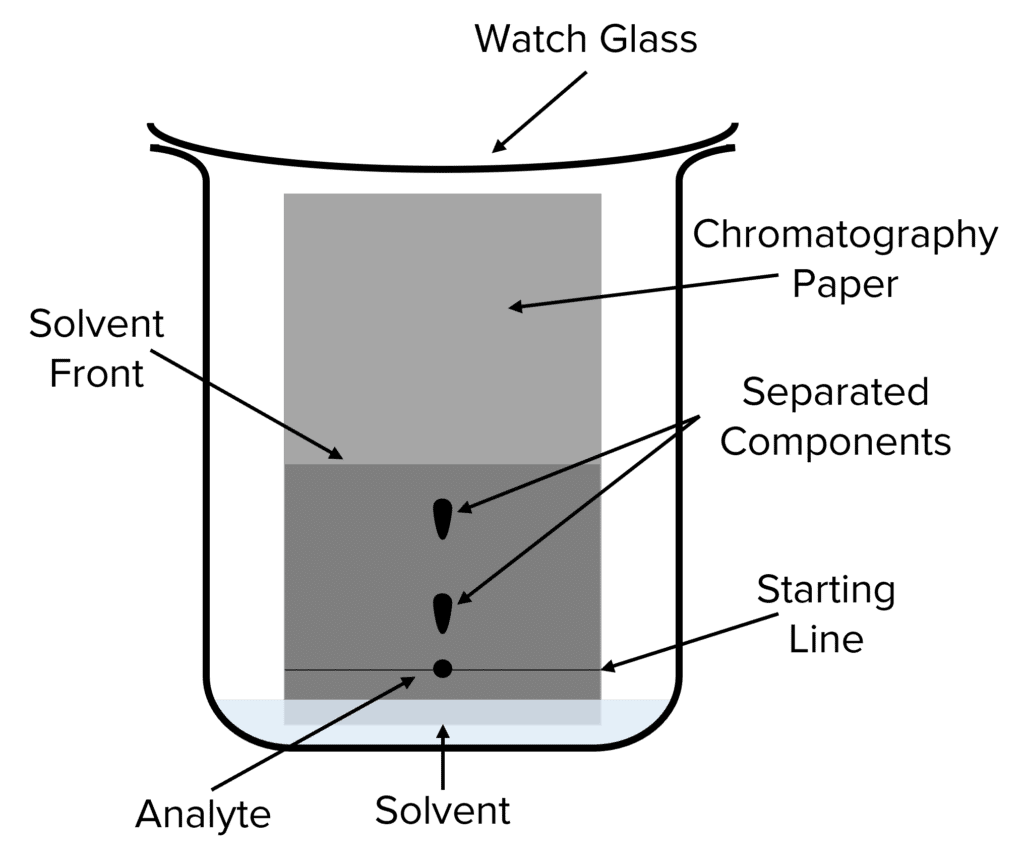
In this method:
- Chromatography Paper acts as the stationary phase.
- A Solvent (like water or alcohol) is used as the mobile phase.
Here's how it works:
- The solvent soaks into the paper and starts moving upwards, carrying the analyte with it.
- As the analyte moves up the paper, the different chemicals in it will move at different speeds depending on how strongly they are attracted to the paper.
- Chemicals that are more strongly attracted to the paper (more polar) will move a shorter distance, while those less attracted will move further.
Note
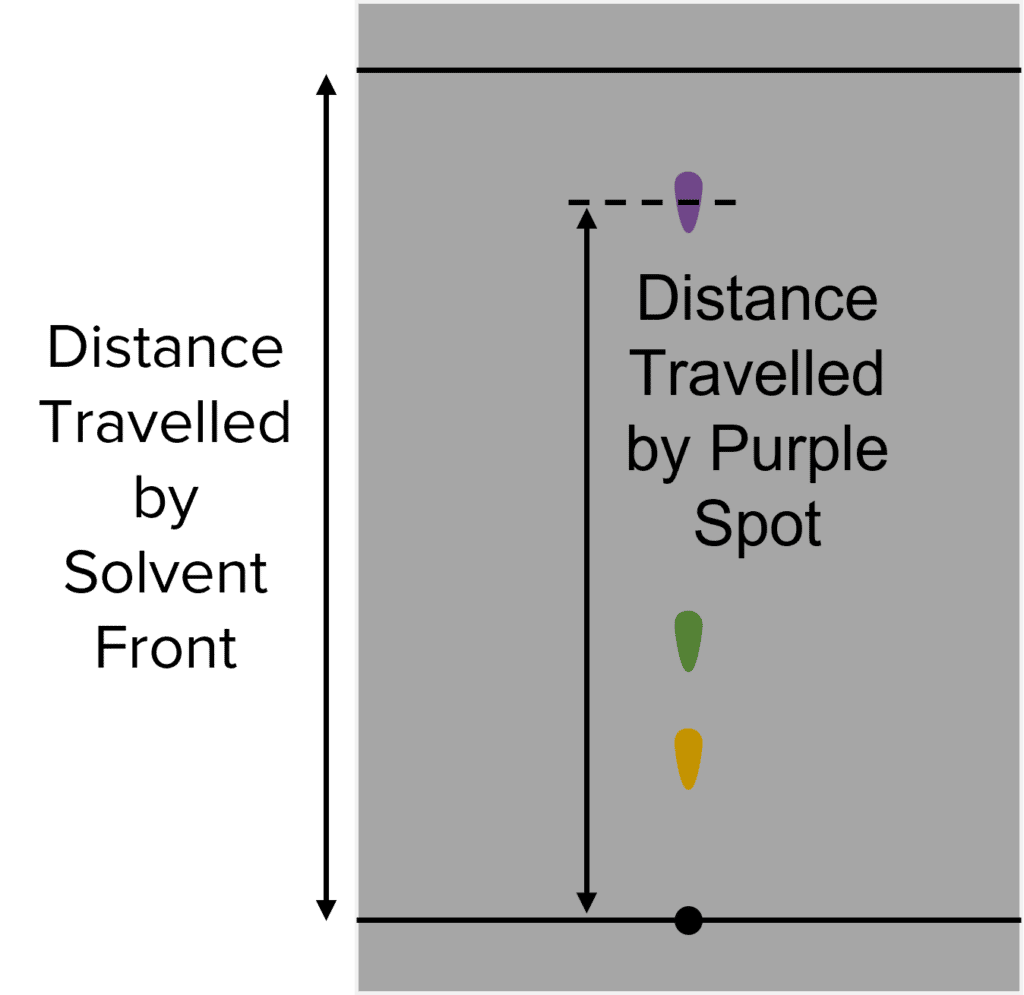
Calculating the Rf Value To measure how far each chemical in the analyte travels, we use the Rf value. This is a number that tells us how far a chemical has moved relative to the solvent. The formula is:
The Rf value for a specific chemical is always the same under the same conditions, so it can be used to identify the chemicals in a mixture.