Embedded systems (Edexcel GCSE Computer Science): Revision Notes
📚Revision Notes
Embedded systems
What are embedded systems?
An embedded system is basically a tiny computer built into a larger device to do one specific job. Think of it as a specialised mini-computer that's designed to control or monitor something particular, rather than being a general-purpose computer like your laptop or smartphone.
Note
The key difference between embedded systems and regular computers is specialisation - while your laptop can run thousands of different programmes, an embedded system is designed to excel at just one specific task.
These systems are everywhere around you - they're the "brains" inside devices like washing machines, car engines, digital cameras, and even your microwave oven. What makes them special is that they work in real-time, meaning they must respond instantly when something happens, like when you press a button or when a sensor detects a change.
Key features of embedded systems
Embedded systems have several important characteristics that make them different from regular computers:
Purpose and design:
- Single-purpose - They're built to do one specific task really well, rather than lots of different things
- Customized hardware and software - Everything is tailored for their particular job
- Small physical size - They need to fit inside other devices
Performance and resources:
- Limited memory and processing power - They don't need as much as a regular computer since they do simpler tasks
- Low power consumption - This is crucial since many run on batteries for long periods
- Usually operate in real-time - They respond immediately to inputs without delays
Note
The combination of low power consumption and real-time operation makes embedded systems perfect for devices that need to work reliably for years without maintenance or frequent battery changes.
User interaction and connectivity:
- Minimal or no user interface - Many work completely in the background without screens or buttons
- Wireless connectivity - Modern embedded systems often connect to networks or other devices
- Responsive to their environment - They constantly monitor and react to changes around them
- Low maintenance - They're designed to work reliably for years without much attention
Hardware components
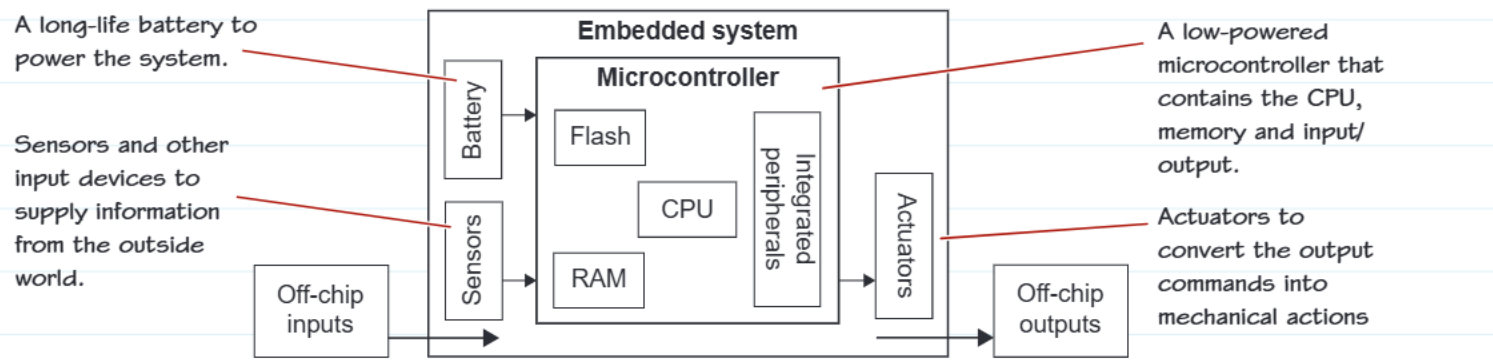
The hardware architecture of an embedded system includes several essential components working together:
Power supply: A long-life battery provides consistent power to keep the system running, often for months or years without replacement.
Input components: Sensors and other input devices gather information from the outside world. These might detect temperature, motion, light, pressure, or other environmental factors.
Note
Processing unit: At the heart is a microcontroller containing three key elements:
- CPU (Central Processing Unit) - the "brain" that processes information and makes decisions
- RAM (Random Access Memory) - temporary storage for data being actively used
- Flash memory - permanent storage that keeps programmes and important data even when power is off
Output components: Actuators convert the system's digital commands into real physical actions, like turning motors, opening valves, or activating displays.
Software: The firmware is the permanent programme that tells the device exactly what to do. Once installed, firmware typically doesn't need to be changed or updated.
Real-world examples
Embedded systems are incredibly common in everyday devices:
Example
Real-World Applications in Action:
Home appliances:
- Washing machines regulate water usage based on load size, automatically adjusting cycles for optimal cleaning
- Drinks dispensers monitor stock levels and can automatically send reorder requests to suppliers when running low
Medical devices:
- Insulin pumps continuously monitor blood glucose levels and deliver precise insulin doses to patients when needed
Vehicle systems:
- Anti-lock braking systems prevent wheel lockup during emergency braking by rapidly adjusting brake pressure
Security systems:
- Burglar alarms detect intrusions and automatically send alerts to homeowners' mobile phones
The internet of things (IoT)
The Internet of Things represents the next evolution of embedded systems. IoT creates a network of physical objects that use embedded systems and wireless technology to collect and share data with minimal human involvement.
However, this connectivity brings new challenges. Many IoT devices come with default passwords that users never change, making them vulnerable to hackers. Cybercriminals can exploit these weak security settings using simple automated scripts to gain unauthorised access to devices and personal data.
Important
Security Warning: Always change default passwords on IoT devices and keep them updated with the latest security patches. Weak security on one device can compromise your entire home network.
Summary
Key Points to Remember:
- Embedded systems are specialised mini-computers designed to perform one specific task within a larger device
- They operate in real-time, responding instantly to inputs without delays
- Key components include sensors (inputs), microcontroller (processing), and actuators (outputs), all powered by long-life batteries
- Common examples include washing machines, car systems, medical devices, and security systems that work automatically in the background
- IoT connects embedded systems to networks, but this requires careful attention to security and password protection