Coastal management (Edexcel GCSE Geography A): Revision Notes
📚Revision Notes
Coastal management
Understanding coastal management strategies
Coastal management involves protecting coastlines from erosion and flooding using various techniques. These methods are essential because coastal areas face constant threats from wave action, storms, and rising sea levels. Each management technique brings both benefits and drawbacks that must be carefully weighed, particularly because implementing one solution can sometimes create problems elsewhere along the coast.
Note
The key challenge in coastal management is that both hard and soft engineering approaches can change natural wave patterns, potentially leading to increased erosion in neighbouring coastal areas. This means that coastal planners must consider the wider impact of their decisions beyond just the immediate area being protected.
Hard engineering approaches
Hard engineering involves constructing artificial barriers and structures to provide direct protection against coastal erosion and flooding. These techniques typically offer strong, immediate defence but come with higher costs and can alter the natural appearance of coastlines.
Important
Hard engineering techniques can spoil the visual landscape and often redirect erosion problems to other areas along the coast rather than solving them completely.
Sea walls
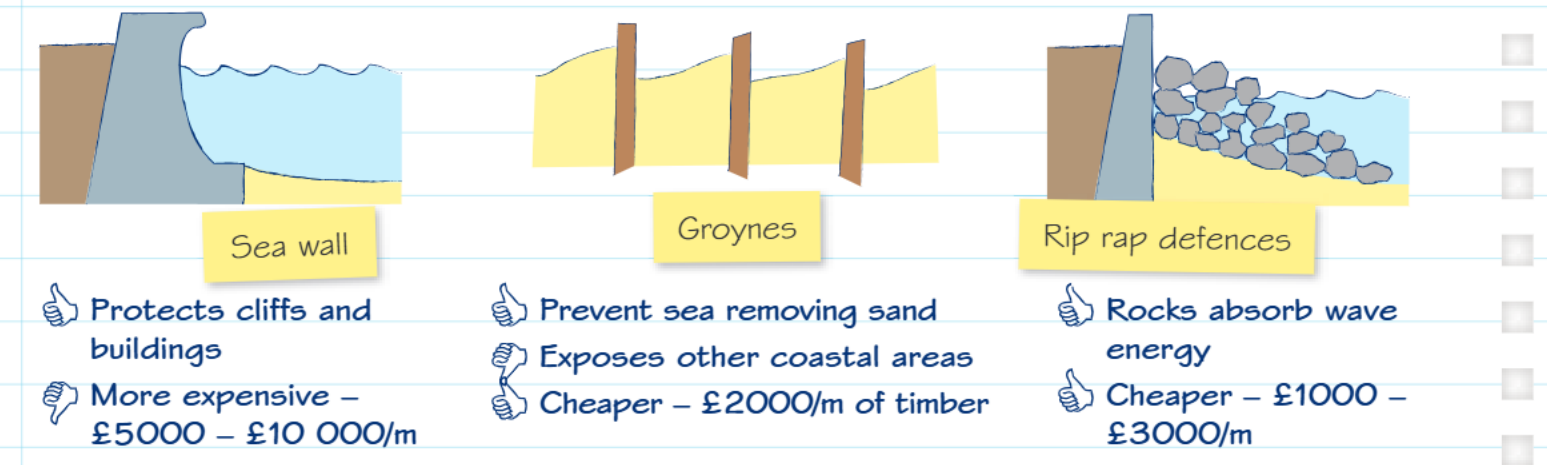
Sea walls are robust concrete or stone barriers constructed along the shoreline to deflect wave energy away from the land. These structures create a solid defence between the sea and valuable coastal property or infrastructure.
The main advantage of sea walls is their effectiveness in protecting cliffs and buildings from wave attack. They provide reliable, long-term protection when properly maintained and can save valuable coastal property from destruction.
However, sea walls are extremely expensive to build and maintain, costing between 10,000 per metre. They can also create an artificial appearance that disrupts the natural beauty of coastal landscapes, potentially affecting tourism and local wildlife habitats.
Groynes
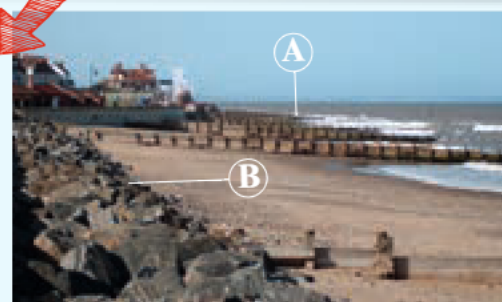
Groynes are barriers built at right angles to the coastline, extending from the beach into the sea. These structures work by interrupting longshore drift - the natural movement of sand and sediment along the coast - causing beach material to accumulate on one side.
Example
Coastal Protection Example: How Groynes Work
Step 1: Groynes are built perpendicular to the shoreline Step 2: They interrupt the natural flow of sediment along the coast Step 3: Sand accumulates on the updrift side, building up the beach Step 4: The wider beach provides natural protection against wave attack
Cost: Approximately $2,000 per metre for timber construction
The downside is that whilst groynes trap sediment on one side, they can leave coastal areas further along the shore starved of beach material, potentially increasing erosion in those locations. This demonstrates how coastal management decisions can have knock-on effects along the coastline.
Rip rap defences
Rip rap, also known as rock armour, consists of large rocks or concrete blocks placed along the shoreline. Unlike solid sea walls, these loose materials allow waves to lose energy as water moves through the gaps between the rocks.
Rip rap effectively absorbs wave energy rather than simply reflecting it back to sea, which can help reduce the risk of increased erosion elsewhere. These defences are also more cost-effective than sea walls, typically costing between 3,000 per metre.
The main disadvantages include the possibility of rocks being displaced during severe storms, requiring maintenance and replacement. Additionally, whilst more natural-looking than concrete sea walls, rip rap can still appear artificial in some coastal environments.
Soft engineering approaches
Soft engineering works alongside natural coastal processes rather than opposing them. These methods tend to be more environmentally sustainable and cost-effective, though they often require ongoing management and maintenance to remain effective.
Note
Soft engineering approaches aim to work with nature to help maintain the coastline, making them increasingly popular in modern coastal management strategies.
Beach replenishment
Beach replenishment involves artificially adding sand or other sediment to beaches that have been eroded. This material is typically sourced from offshore sand banks or areas where sediment is naturally abundant.
This technique offers several advantages: it reduces wave energy by providing a natural buffer zone, maintains attractive beaches for tourism and recreation, and is very cost-effective at approximately $200 per metre. Replenished beaches look completely natural and can support local ecosystems.
Example
Worked Example: Beach Replenishment Benefits
Economic Impact: At 200,000 Wave Energy Reduction: A wider beach can reduce wave energy by up to 70% Tourism Value: Natural-looking beaches maintain their recreational and economic value
The main challenge with beach replenishment is that the added sand can be gradually washed away by waves and tides, meaning the process may need to be repeated every few years. Finding suitable sand sources that match the existing beach material can also be difficult and environmentally sensitive.
Offshore reefs
Offshore reefs are artificial structures built in the sea at some distance from the shore. These can be constructed from concrete, rocks, or specially designed materials that encourage marine wildlife to establish new habitats.
The key advantage of offshore reefs is that they cause waves to break further from shore, significantly reducing the wave energy that reaches the coastline. They can also create new marine ecosystems and potentially offer recreational opportunities such as diving sites.
However, offshore reefs can interfere with fishing activities and boat navigation, potentially affecting local maritime industries. They are also expensive to construct and install, costing around $5,000 per metre, and may require detailed environmental impact assessments before approval.
Choosing the right approach
The selection of coastal management techniques depends on various factors including the economic value of the area being protected, available funding, environmental concerns, and community preferences. Coastal managers often use a combination of hard and soft engineering methods, selecting the most appropriate technique for each specific location based on its unique challenges and requirements.
Important
Modern coastal management increasingly favours integrated approaches that combine multiple techniques and consider the long-term sustainability of protection measures alongside their immediate effectiveness.
Summary
Key Points to Remember:
- Hard engineering provides strong immediate protection but is expensive and can look artificial
- Soft engineering works with natural processes, costs less, but requires regular maintenance
- All techniques have trade-offs - what protects one area might cause problems elsewhere
- Sea walls offer the strongest protection but are the most expensive option
- Beach replenishment is the most cost-effective method and maintains natural-looking coastlines
Cost Comparison:
- Sea walls: 10,000/m
- Offshore reefs: $5,000/m
- Groynes: $2,000/m
- Rip rap: 3,000/m
- Beach replenishment: $200/m