Holderness coast (Edexcel GCSE Geography A): Revision Notes
📚Revision Notes
Holderness coast case study
The Holderness coast in East Yorkshire serves as an excellent example of how physical and human processes interact to create dramatic changes in coastal landscapes. This stretch of coastline demonstrates the complex relationship between natural coastal processes and human attempts to manage them.
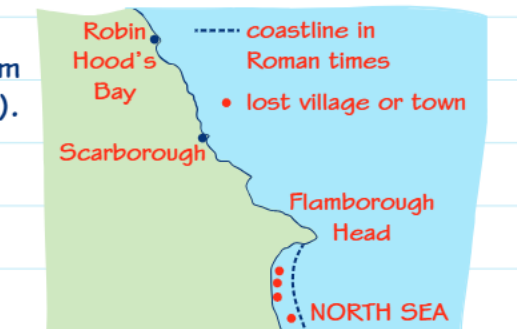
Location and significance
The Holderness coast stretches along East Yorkshire's shoreline, facing the North Sea. This location is particularly significant due to its geological composition and exposure to powerful marine forces. The coastline consists primarily of soft boulder clay, which erodes much more easily than the resistant chalk found at Flamborough Head to the north. This geological variation creates different rates of erosion along the coast.
Note
The area's exposure to the North Sea means it experiences strong wave action, particularly during storms when waves have travelled across a long fetch (the distance over which wind blows across water). This combination of soft geology and powerful waves creates ideal conditions for rapid coastal erosion.
Physical processes shaping the coast
Several key physical processes work together to constantly reshape the Holderness coastline. Coastal erosion occurs through the combined action of powerful waves and the weak rock types found along most of the coast. During storms especially, wave energy increases dramatically, accelerating the erosion process and causing significant cliff retreat.
Mass movement plays a crucial role in coastal change here. The soft boulder clay becomes saturated during periods of heavy rainfall, making it unstable and prone to slumping. When sections of cliff collapse, they add more material to the beach and shoreline, which waves then work to remove.
Important
Critical Process: Transport processes move the eroded material southward along the coast through longshore drift. The sediment doesn't simply disappear - instead, it travels down the coastline where deposition occurs further south at Spurn Head. This creates a dynamic system where erosion in one area feeds sediment supply to another.
Human management and intervention
People have attempted to manage the rapid erosion affecting the Holderness coast through various hard engineering strategies. At locations like Mappleton, coastal defences including rip rap (large rocks placed along the shore) and groynes (wooden or concrete barriers extending into the sea) have been installed to protect settlements and infrastructure from erosion and cliff collapse.
Example
Case Study: Mappleton Coastal Defenses
At Mappleton, engineers installed:
- Rip rap: Large rocks placed along the shore to absorb wave energy
- Groynes: Barriers extending into the sea to trap sediment
- These defences successfully protect the immediate area from erosion
Important
Unintended Consequences: These human interventions have created problems elsewhere along the coast. While hard engineering successfully protects specific locations, it can prevent the natural transport of sediment to other areas. This means that places without protection may experience accelerated erosion as they receive less sediment from updrift areas that are now defended.
Changes and impacts
The changes occurring along the Holderness coast are both rapid and dramatic. Some sections experience coastal retreat at rates approaching 2 metres per year, making this one of the fastest-eroding coastlines in Europe. This retreat has permanent consequences for the landscape and local communities.
Agricultural land, residential properties, and entire settlements have been lost to marine erosion over time. The landscape has been permanently altered as the sea claims more territory, forcing communities to adapt or relocate. Historical records show numerous villages that once existed along this coast have completely disappeared beneath the waves.
Note
The interaction between physical processes and human management creates a complex situation where protecting one area may increase problems elsewhere. This demonstrates the challenges faced when trying to manage dynamic coastal environments where natural processes operate on a much larger scale than individual human settlements.
Remember!
Summary
Key Points to Remember:
- The Holderness coast consists mainly of soft boulder clay that erodes much faster than resistant rock types like chalk
- Physical processes including wave erosion, mass movement, and longshore transport work together to create rapid coastal change
- Human management through hard engineering protects some areas but can increase erosion problems elsewhere
- Coastal retreat occurs at rates of nearly 2 metres per year in some locations, causing permanent loss of land and settlements
- This case study shows how physical and human processes interact to create complex patterns of coastal change