UK weather and climate (Edexcel GCSE Geography A): Revision Notes
📚Revision Notes
UK weather and climate
How UK weather patterns affect coastal landscapes
The changeable nature of UK weather patterns significantly influences how quickly coastal erosion occurs and affects coastal retreat processes. This unpredictability means that erosion rates can vary considerably, directly impacting how landforms and landscapes develop along our coastlines.
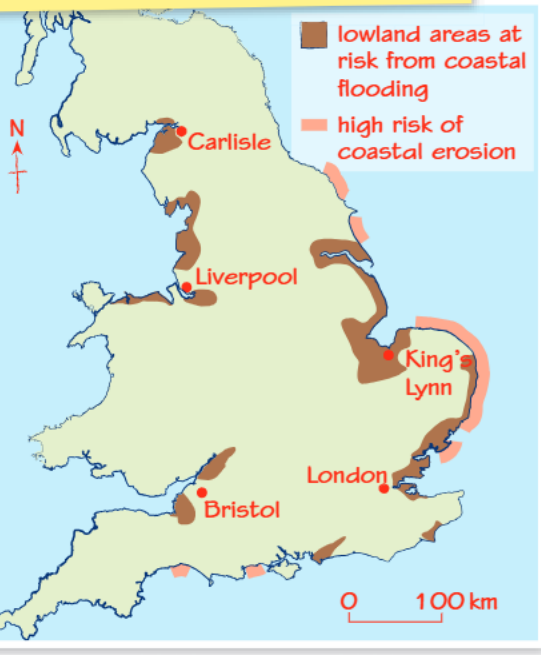
Note
The map above shows which parts of England face the greatest risks from coastal processes. The dark brown areas indicate lowland regions most vulnerable to coastal flooding, whilst the light pink areas highlight zones with high coastal erosion risk. Major cities like Liverpool, King's Lynn, London and Bristol are all situated in or near these risk zones, demonstrating how climate-related coastal hazards affect populated areas.
Seasonal variations in coastal processes
Different seasons create varying impacts on coastal erosion processes. During winter months, colder temperatures lead to freeze-thaw weathering in coastal cliffs. This process occurs when water enters cracks in rocks, freezes and expands, then thaws repeatedly, gradually breaking down the rock structure and making cliffs more susceptible to erosion.
Note
Understanding Freeze-Thaw Weathering
This weathering process is particularly effective because water expands by approximately 9% when it freezes, creating significant pressure within rock cracks. The repeated cycle of freezing and thawing creates a powerful mechanical weathering force that gradually fragments the rock structure.
The impact of stormy weather on coasts
Storm frequency remains high across many parts of the UK, creating several significant effects on coastal areas:
Increased wave power: Coastal areas frequently experience strong winds during storms, which dramatically increase the erosional power of waves as they crash against the shoreline. This enhanced wave energy accelerates the breakdown of coastal materials.
Heavy rainfall effects: Intense rainfall during storms contributes to mass movement processes, where large amounts of loose material move down slopes due to increased water content making the ground less stable.
Damage to coastal landforms: Frequent storms can seriously damage coastal features like spits. Spurn Head, located along the Holderness coast, faces particular risk of being separated from the mainland due to repeated storm impacts.
Sediment redistribution: Beach sediment gets removed from sections of coastline during storms, transported elsewhere by powerful waves and currents. Similarly, sand dunes can be moved or completely removed by storm conditions, reshaping the coastal landscape.
Example
Real-World Impact: Spurn Head
Spurn Head, a 3.5-mile long spit on the Holderness coast, demonstrates the vulnerability of coastal landforms to stormy weather. During severe storms, the narrow neck connecting the spit to the mainland can be breached, temporarily turning it into an island. This process shows how extreme weather events can rapidly reshape coastal landscapes.
Prevailing wind patterns
The UK's prevailing winds blow from the south-west direction. These winds transport warm, moist air from the Atlantic Ocean, bringing frequent rainfall to the country. This consistent pattern contributes significantly to weathering processes and mass movement along coastal areas, as the regular moisture helps break down rock materials and makes slopes less stable.
Important
The south-westerly prevailing winds are crucial to understanding UK coastal processes because they bring the majority of the country's rainfall and storm systems. This consistent weather pattern from the Atlantic Ocean means that western and southern coastlines typically experience more intense weathering and erosion than sheltered eastern areas.
Key terminology
Note
Essential Definitions
Coastal erosion refers to the process of breaking down and removing material along coastlines through the action of waves, weather and other natural forces.
Coastal retreat occurs when coastal erosion causes the shoreline position to move further inland over time, resulting in land loss.
Understanding how UK climate drives coastal erosion
The UK experiences a temperate maritime climate, characterised by mild, wet winters and warm, wet summers. The south-westerly prevailing winds regularly bring rainfall across the country. This substantial rainfall causes coastlines to erode through weathering processes and can lead to mass movement when slopes become waterlogged, contributing to cliff collapse and coastal retreat.
Storm frequency remains high throughout the year, bringing heavy rainfall and strong winds that significantly increase the erosional power of waves. The seasonal nature of the climate means coastal rocks experience freeze-thaw weathering during winter months, which adds to the overall erosion process by weakening rock structures before wave action removes the loosened material.
Important
Critical Climate-Coast Connection
The UK's maritime climate creates a perfect combination of conditions for coastal erosion: consistent moisture from Atlantic weather systems weakens rock through weathering, while frequent storms provide the wave energy needed to remove the weakened material. This combination makes UK coastlines particularly dynamic and rapidly changing environments.
Remember!
Summary
Key Points to Remember:
- UK weather unpredictability directly affects coastal erosion rates and retreat patterns
- South-westerly prevailing winds bring moisture from the Atlantic, contributing to weathering and mass movement
- Storms increase wave power and cause heavy rainfall, accelerating coastal erosion processes
- Seasonal effects like winter freeze-thaw weathering weaken coastal rocks
- England's lowland areas and high-risk erosion zones face particular vulnerability to climate-related coastal hazards