Deforestation in tropical rainforests (Edexcel GCSE Geography A): Revision Notes
📚Revision Notes
Deforestation in tropical rainforests
What is deforestation and why does it happen?
Deforestation refers to the permanent removal of trees and forest cover from tropical rainforest areas. This process transforms dense, biodiverse forest ecosystems into cleared land that can be used for other purposes. Tropical rainforest deforestation occurs due to a combination of economic and social pressures that drive people and governments to clear forest land for immediate financial gain or survival needs.
The clearing of tropical rainforests has accelerated dramatically in recent decades, with massive environmental consequences. Understanding the root causes helps us recognise why this continues to happen despite growing awareness of environmental impacts.
Note
The rate of tropical rainforest destruction has accelerated dramatically since the 1970s, with the process now happening at an unprecedented scale due to increasing global demand for resources and agricultural products.
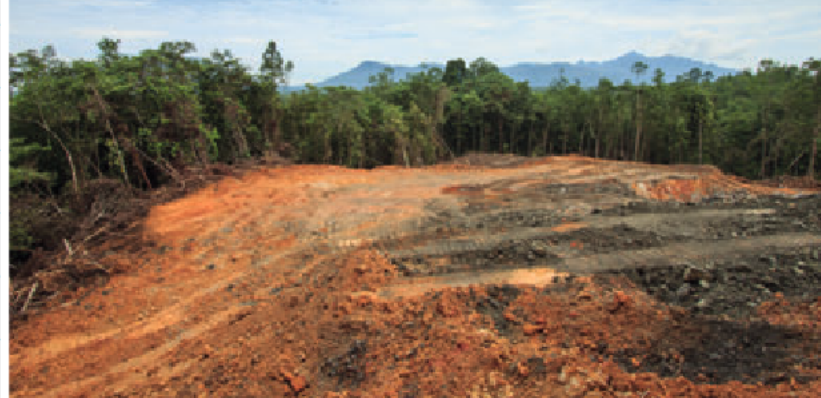
This aerial view shows the stark contrast between cleared forest land and intact rainforest, demonstrating the dramatic landscape changes that result from deforestation activities.
Major causes of tropical rainforest deforestation
Resource extraction
One of the primary drivers of deforestation involves extracting valuable natural resources from forest areas. This includes several key activities:
Road building plays a crucial role in opening up previously inaccessible forest areas. Roads are constructed to transport resources like iron ore and timber, but they're often built without proper environmental controls. These roads then provide access for further deforestation activities, creating a snowball effect of forest loss.
Mining operations have expanded significantly due to rising global demand and increasing prices for minerals found in rainforest regions. A prime example is the Carajás iron ore mine in Brazil, which has required extensive forest clearing to access valuable mineral deposits beneath the forest floor.
Important
Illegal logging continues to be a major problem, driven by high demand for timber in Western countries. Criminal networks often operate in remote forest areas where enforcement is difficult, cutting down valuable hardwood trees for export to international markets.
Agricultural conversion
The transformation of forest land into agricultural areas represents the largest single cause of deforestation worldwide.
Cattle ranching requires vast areas of land and has become the biggest cause of deforestation in the Amazon region. As global demand for beef increases, ranchers clear enormous areas of forest to create grazing pastures for their livestock. The process is often economically attractive because land prices remain relatively low compared to potential profits from cattle.
Oil palm plantations have expanded rapidly, particularly in Southeast Asia, due to increasing demand for palm oil in food products, cosmetics, and biofuel. Palm oil has become ubiquitous in modern products, creating strong economic incentives for farmers to clear forest land and establish these highly profitable plantations.
Subsistence agriculture occurs when local farmers clear small forest areas to grow crops for their families' survival. While individual plots may seem small, the collective impact becomes significant. The problem worsens when cleared land quickly loses its nutrients, forcing farmers to abandon depleted areas and clear new forest patches.
Note
Although subsistence farming plots are individually small, their collective impact across thousands of farming families creates substantial forest loss, particularly when soil depletion forces farmers to repeatedly clear new areas.
Population pressure
Rapid population growth creates increasing demands for housing, farmland, and resources, putting enormous pressure on remaining forest areas. Madagascar provides a striking example of this phenomenon - the island's population exploded from just 4 million people in 1950 to 28.9 million by 2020. This dramatic population increase has led to widespread forest clearing as people need more land for homes and agriculture to support their growing families.
The scale of the problem
The rate of tropical rainforest destruction has reached alarming levels. In 2023 alone, approximately 3.7 million hectares of rainforest were cleared globally. To put this enormous figure into perspective, this equals about 10 football pitches worth of forest being destroyed every single minute of the year.
Important
These statistics demonstrate that deforestation is not slowing down despite international awareness and conservation efforts. The economic pressures driving forest clearance often outweigh environmental concerns, particularly in developing countries where immediate economic needs take priority.
Case study: Indonesia's palm oil plantations
Example
Case Study: Indonesia's Palm Oil Expansion
Indonesia provides an excellent example of how agricultural conversion drives large-scale deforestation. The country has become the world's largest producer of palm oil, with plantations covering approximately 14 million hectares by 2024.
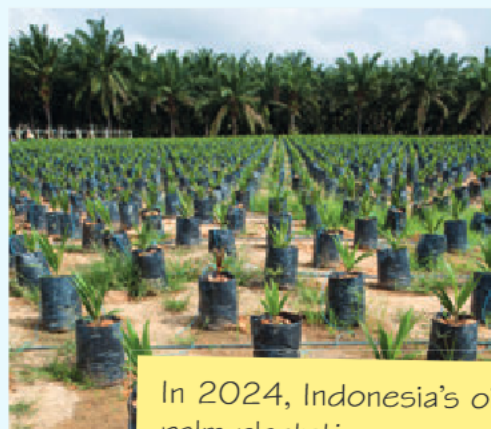
The process begins with clearing tropical rainforest to make room for organised rows of oil palm seedlings, as shown in the plantation nursery above. These seedlings are carefully cultivated in systematic patterns before being transplanted to permanent growing locations across vast cleared areas.
Economic drivers:
- Palm oil generates significant income for farmers and provides export revenue for the country
- Palm oil appears in roughly half of all packaged products in supermarkets, from chocolate and margarine to shampoo and soap
- Increasingly used as biofuel, marketed as an environmentally friendly alternative to fossil fuels
The contradiction: Despite being marketed as environmentally friendly biofuel, palm oil production causes massive environmental destruction through deforestation.
The expansion of palm oil plantations in Indonesia demonstrates how economic incentives drive deforestation. However, this economic benefit comes at the cost of destroying some of the world's most biodiverse ecosystems.
Why resource extraction drives deforestation
Resource extraction creates a powerful economic incentive for deforestation because forests contain valuable materials that can generate immediate income. Mining companies clear forest to access mineral deposits, while logging operations harvest valuable hardwood trees for international markets.
The problem intensifies because resource extraction often requires supporting infrastructure. Roads must be built to transport materials, workers need accommodation, and processing facilities require space. Each of these developments requires additional forest clearing beyond the initial extraction site.
Furthermore, once roads and infrastructure exist, they make previously remote forest areas accessible to other activities like farming and settlement, leading to further deforestation. This creates a cascade effect where an initial mining or logging operation triggers much broader forest loss across the surrounding region.
Note
The infrastructure required for resource extraction - roads, worker accommodation, and processing facilities - often causes more deforestation than the extraction activities themselves, as these developments open up previously inaccessible forest areas to further exploitation.
Summary
Key Points to Remember:
-
Economic and social pressures drive tropical rainforest deforestation, with the main causes being resource extraction, agricultural conversion, and population growth
-
Cattle ranching is the biggest single cause of Amazon deforestation, requiring vast cleared areas for grazing livestock
-
The scale is enormous - approximately 10 football pitches of forest are cleared every minute globally
-
Indonesia's palm oil industry demonstrates how agricultural conversion transforms millions of hectares of forest into plantation land
-
Resource extraction creates cascade effects - initial mining or logging operations lead to roads and infrastructure that enable further deforestation activities