The loss of an empire, 1765–83 (Edexcel GCSE History): Revision Notes
📚Revision Notes
The war and the loyalists
Who were the loyalists?
During the War of Independence, approximately 20% of American colonists remained loyal to the British crown. This was a significant minority - around one in every five colonists supported Britain rather than the rebel cause. These loyalists weren't just passive supporters either; about 19,000 of them actively fought in loyalist military units alongside British forces against the American revolutionaries.
Note
This substantial loyalist population represents a major divide in colonial society - nearly one-quarter of the population actively opposed American independence, creating deep social tensions that would persist long after the war ended.
The loyalty of these colonists would have major consequences for their lives once the war ended and Britain was defeated.
Attacks by American patriots
After the American victory, loyalists faced severe retaliation from their patriot neighbours who had won the war. The defeated loyalists became targets of widespread hostility and violence. Many had their property stolen and sold by the rebels, while others faced direct threats and attacks from angry mobs who saw them as traitors to the American cause.
Important
Despite treaty obligations, the persecution of loyalists was systematic and severe. The Treaty of Paris had promised protection for loyalists, but local communities largely ignored these international agreements, leaving former British supporters vulnerable to revenge attacks.
Under the Treaty of Paris, the Americans had promised to return stolen loyalist property, but this proved extremely difficult to enforce in practice. Many local communities simply ignored these treaty obligations. As a result, loyalists turned to the British government for help, claiming compensation of over £10 million for their losses. However, the British government was only able to pay out approximately £3 million - less than a third of what was claimed.
Faced with this ongoing hostility and unable to recover their losses, many loyalists made the difficult decision to leave the United States entirely. Most chose to relocate to other parts of the British Empire, particularly Canada.
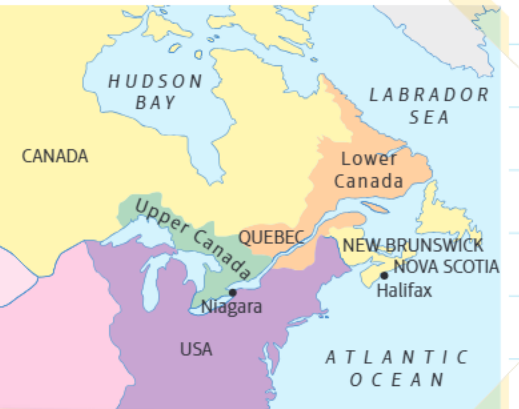
Resettlement in Nova Scotia and Quebec
The British government organised a systematic resettlement programme for the displaced loyalists. This process began even before the war officially ended:
The scouting phase (January 1783)
From January 1783, loyalists sent advance parties to Nova Scotia to assess its suitability as a new home. They needed to report back on the region's potential for settlement and make appeals to the governor of Halifax for assistance. Nova Scotia was chosen because of its fertile land and English-speaking population.
The great migration begins (April 1783)
In April 1783, the first wave of loyalists departed from New York. This marked the beginning of a massive population movement that would continue throughout the year.
Note
The timing of this migration was crucial - loyalists needed to establish settlements and prepare for winter before the harsh Canadian climate set in. The spring departure gave them the maximum growing season to prepare for survival.
Mass settlement (by end of 1783)
By the end of 1783, approximately 30,000 loyalists had settled in Nova Scotia, with another 2,000 establishing themselves in Quebec. Many also settled around Niagara, which had previously been a key British military post and offered familiarity to former loyalist soldiers.
British support for resettlement
The British government provided substantial practical support for the loyalist refugees:
Land grants
The governor of Halifax arranged for 1.2 million acres in Nova Scotia to be set aside specifically for loyalist settlement. The authorities in both Quebec and Nova Scotia provided land grants of between 200 and 1200 acres depending on family size and previous status.
Additional support
Free black males were offered land, though they generally received smaller plots than white settlers. The government also provided farming tools, food and clothing to help the new settlers establish themselves in their unfamiliar environment.
Example
Settlement Support Package
A typical loyalist family arriving in Nova Scotia would receive:
- Land grant of 200-1200 acres (based on family size)
- Basic farming tools and seeds
- Initial food supplies to last several months
- Clothing suitable for the Canadian climate
- Temporary shelter materials
New loyalist communities
The resettlement led to the rapid development of new towns and communities:
Shelburne, Nova Scotia
New loyalist towns quickly developed, with Shelburne in Nova Scotia being a prime example. By 1784, 6000 loyalists had settled there, making it one of the largest loyalist communities.
Diverse populations
The loyalist migration included people from many different backgrounds. Communities of free black people also grew significantly - for example, Birchtown in Nova Scotia became home to about 15,000 free black loyalists by early 1784. This diversity was partly due to British promises of freedom to enslaved people who fought for the loyalist cause.
Note
The loyalist migration created some of the earliest significant free black communities in North America. These settlements represented a unique opportunity for formerly enslaved people to build independent lives, though they still faced significant discrimination and received smaller land grants than white settlers.
Challenges faced by settlers
Geographic and administrative divisions
Mixing with established settlers proved very difficult and soon led to conflict. To address this problem, in 1784, Nova Scotia was split in two, with New Brunswick allocated specifically for the loyalists. Then in 1791, Quebec was also divided, creating Upper Canada for loyalist settlement, while more established settlers remained in Lower Canada.
Harsh conditions
Important
Survival Crisis
Life was extremely tough for many loyalist settlers. They had to survive their first cold Canadian winter with only temporary housing. The harsh conditions took a severe toll - many settlers died during those difficult early months as they struggled to adapt to their new environment and establish permanent homes.
Timeline of key events
- January 1783: Loyalist scouts sent to assess Nova Scotia
- April 1783: First loyalists leave New York
- End of 1783: 30,000 loyalists in Nova Scotia, 2,000 in Quebec
- 1784: Nova Scotia split to create New Brunswick for loyalists; 6,000 settle in Shelburne; 15,000 free black loyalists by early 1784
- 1791: Quebec divided into Upper and Lower Canada
Summary
Key Points to Remember:
-
One in five colonists (20%) remained loyal to Britain during the War of Independence, with 19,000 fighting in loyalist units
-
Loyalists faced violent retaliation from American patriots after the war, including property theft and mob attacks, forcing many to emigrate to British territories
-
The great loyalist migration of 1783 saw 30,000 people resettle in Nova Scotia and 2,000 in Quebec, supported by British land grants and supplies
-
New communities developed rapidly, including Shelburne (6,000 settlers) and Birchtown (15,000 free black loyalists), but survival was extremely difficult
-
Territorial reorganisation followed, with Nova Scotia split (1784) and Quebec divided (1791) to separate loyalists from established settlers and reduce conflicts