The Continental Congresses (Edexcel GCSE History): Revision Notes
📚Revision Notes
The Continental Congresses
The Continental Congresses were crucial meetings that brought together representatives from the American colonies to coordinate their response to British policies. These assemblies played a vital role in uniting the colonies and eventually leading them towards independence.
Note
The Continental Congresses marked the first time the American colonies formally worked together as a unified political entity, setting the foundation for what would become the United States government.
First Continental Congress (1774)
The First Continental Congress met from 5 September to 26 October 1774 in Philadelphia. This historic gathering included representatives from nearly every colony except Georgia, with 55 delegates attending in total.
The three major decisions
The Congress made three important decisions that would shape the colonial resistance movement:
1. Declaration of Rights and Grievances This document clearly outlined what the colonists believed were their fundamental rights and listed their complaints against British policies, particularly regarding trade regulations and taxation.
2. The Continental Association This was a comprehensive agreement to stop importing and exporting British goods. It represented a major escalation from previous boycotts that had only targeted specific British products.
3. Committees of observation and inspection These local committees were established throughout the colonies to monitor and enforce the trade boycott, ensuring that all colonists complied with the Continental Association.
Why the First Continental Congress mattered
The First Continental Congress was groundbreaking for several reasons. It brought together people from nearly all colonies and demonstrated that the colonies could work together effectively to oppose British policies. This was the first time the colonies had formally united to create a comprehensive list of their rights and grievances against Britain.
Important
The decision to ban all trade with Britain was particularly significant because it went far beyond previous limited boycotts. This comprehensive approach showed the colonies were willing to make substantial economic sacrifices for their political principles.
The new local committees gave the colonists a way to ensure the boycott was properly implemented across all the colonies, creating an effective enforcement network that demonstrated colonial organisational capability.
Rising tensions (1774-75)
The period following the First Continental Congress saw a dramatic increase in conflict between Britain and the American colonies. Colonial assemblies that remained loyal to Britain found themselves powerless as colonists refused to pay taxes or follow British laws. Instead, the newly formed committees took control and began enforcing the trade ban through threats of violence while organising local militia groups.
The British military governor attempted to control the situation, but this led to the famous confrontation at Concord in April 1775. British forces tried to arrest key members of the provincial congress and seize their weapons, resulting in armed conflict where 73 British soldiers and 49 colonists lost their lives.
Important
The events at Concord in April 1775 marked the transition from peaceful resistance to armed conflict, fundamentally changing the nature of the colonial dispute with Britain.
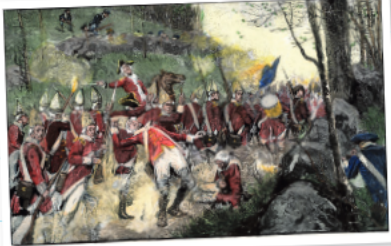
The events at Concord in April 1775 marked the beginning of armed conflict between Britain and the American colonies.
Second Continental Congress (1775)
The Second Continental Congress convened from 10 May to 2 August 1775 (first session), again in Philadelphia. This time, all colonies sent representatives, reflecting the growing unity and urgency of the situation.
The four major decisions
1. The Olive Branch Petition On 8 July 1775, the Congress sent this petition to King George III, asking him to repeal the Intolerable Acts. This showed that many colonists still hoped for a peaceful resolution to the conflict.
2. Continental Army formation The Congress established a Continental Army under George Washington's command, demonstrating their preparation for extended military conflict.
3. Financial support $2 million in Spanish dollars were printed to fund future military operations against Britain, showing the Congress's commitment to sustained resistance.
4. Foreign relations committee A committee was established to seek support from other countries, indicating that the colonists were thinking beyond just their relationship with Britain.
The significance of the Second Continental Congress
The Second Continental Congress represented a major step towards complete independence. With representatives from every colony, the Congress functioned as a national government that clearly showed loyalty to the colonial cause rather than to the British parliament.
Note
While the Congress still attempted to maintain peace through the Olive Branch Petition, they simultaneously prepared for war by establishing an army and seeking international support. This dual approach reflected the colonists' hope for reconciliation combined with realistic preparation for conflict.
However, King George III rejected their petition on 23 August and declared the 13 colonies to be in rebellion. The situation became even more serious when, on 22 December, parliament passed the American Prohibitory Act, which banned all trade with the colonies.
Important
Colonists now faced a difficult choice based on their beliefs, customs, religion, and legal obligations. The colonial population split into three roughly equal groups: approximately 40% supported the rebels, 20% remained loyal to Britain, and 40% stayed neutral.
Timeline of key events
- 5 September - 26 October 1774: First Continental Congress meets in Philadelphia
- April 1775: Battles at Lexington and Concord - first armed conflict
- 10 May - 2 August 1775: Second Continental Congress (first session)
- 8 July 1775: Olive Branch Petition sent to King George III
- 23 August 1775: King George III rejects the petition and declares colonies in rebellion
- 22 December 1775: American Prohibitory Act passed by British Parliament
Summary
Key Points to Remember:
- The Continental Congresses united the colonies in organised resistance to British policies
- The First Continental Congress (1774) established the Continental Association trade boycott and local enforcement committees
- The Second Continental Congress (1775) prepared for war while still seeking peaceful resolution through the Olive Branch Petition
- The escalation from peaceful protest to armed conflict happened remarkably quickly, with the battles at Concord occurring just months after the First Continental Congress
- By late 1775, the colonists were divided roughly equally into three groups: rebels, loyalists, and those remaining neutral