Key factors of the conflict (Edexcel GCSE History): Revision Notes
📚Revision Notes
Key factors of the conflict - War of Independence, 1775–83
International involvement transforms the war
The American War of Independence became much more than a colonial rebellion when European powers joined the conflict. The most significant turning point was the involvement of France and Spain, which transformed what had been a regional conflict into a global war that stretched British resources to their breaking point.

French alliance changes everything
The treaty of February 1778
In February 1778, France made a crucial decision that would shape the entire conflict. The French government officially signed treaties of alliance with the American rebels, marking the first time a major European power formally recognised American independence. This alliance meant that Britain was no longer fighting isolated colonists, but facing one of Europe's most powerful nations.
Important
The French alliance of 1778 was a game-changer because it gave the American rebels their first formal recognition as an independent nation by a major European power. This legitimised their cause internationally and forced Britain to fight a much larger, more dangerous enemy.
Spain joins the fight
Following France's lead, Spain entered the conflict in April 1779 as an ally of the French. While Spain's support was less direct than France's, this alliance further weakened Britain's position by forcing them to defend multiple fronts simultaneously.
How Britain's military strength was weakened
The entry of France and Spain into the conflict created enormous problems for British military planning and resource allocation.
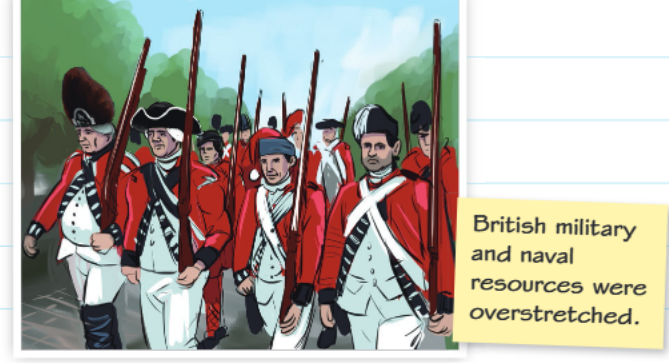
Diverted military resources
Britain suddenly needed to protect not just its American colonies, but also its other territories and even the home islands from potential French and Spanish attacks. This meant that troops and ships that might have been sent to America had to be stationed elsewhere. The British military found itself fighting a war on multiple continents, from the Caribbean to India.
Royal Navy stretched too thin
The statistics tell a striking story of British naval decline in American waters. In 1772, before the conflict escalated, 41% of the Royal Navy was stationed in American waters. However, by 1780, this had plummeted to just 13%. This dramatic reduction occurred because British ships were urgently needed to protect other parts of the empire and to defend against French and Spanish naval threats closer to home.
Note
This massive reduction in naval presence - from 41% to just 13% in eight years - shows how the international dimension of the war completely changed Britain's strategic priorities. The Royal Navy, once focused primarily on controlling American waters, was now spread dangerously thin across the globe.
By 1781, the situation had become critical. The Royal Navy was unable to send sufficient reinforcements to break the French naval blockade at Yorktown, directly contributing to Cornwallis's surrender and British defeat.
French support for the American cause
France provided comprehensive assistance to the American rebels across multiple areas, making their support far more than just a formal alliance.
Military expertise and planning
French military officers brought professional expertise that proved invaluable to the American cause. The Marquis de Lafayette became one of Washington's most trusted advisors as early as July 1777, helping to plan military campaigns and providing strategic guidance. French officers helped transform the Continental Army from an amateur militia into a more professional fighting force.

Financial and material support
The French commitment extended to substantial financial investment in the American cause. France sent approximately £40 million worth of supplies and weapons to the rebels, providing essential military equipment that the Americans could not manufacture themselves. Spain also contributed supplies and money, though to a lesser extent than France.
Example
Financial Impact of French Support
To put the £40 million in perspective: this was an enormous sum for the 18th century. This money paid for:
- Weapons and ammunition the Continental Army desperately needed
- Uniforms and equipment for troops
- Naval supplies for the small American fleet
- Food and medical supplies for extended campaigns
Troops on American soil
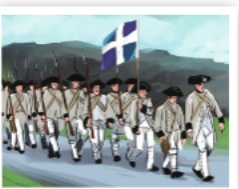
In February 1780, France demonstrated its serious commitment by sending 6,000 professional troops to America under the command of the Comte de Rochambeau. These experienced soldiers joined Washington's forces and played a crucial role in forcing the British surrender at Yorktown.
Naval support proves decisive
Perhaps the most critical French contribution was naval support. The French fleet played a vital role even before major engagements began. In June 1778, the British abandoned Philadelphia because they feared the French were sending ships to cut off their supply lines.
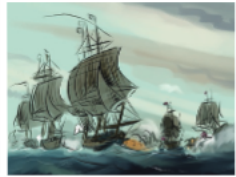
Admiral de Grasse's French fleet proved decisive at Yorktown by creating a naval blockade that prevented British reinforcements from reaching Cornwallis. This naval superiority allowed French troops to assist in the rebel attack, ultimately forcing the British to surrender and effectively ending the war.
Timeline of key events
Note
Key Moments in International Involvement
- July 1777: Marquis de Lafayette begins advising Washington
- February 1778: France signs alliance treaties with American rebels
- June 1778: British abandon Philadelphia due to French naval threat
- April 1779: Spain joins the war as French ally
- February 1780: Comte de Rochambeau arrives with 6,000 French troops
- 1781: French naval blockade at Yorktown leads to British surrender
Summary
Key Points to Remember:
-
International involvement was crucial - French and Spanish entry transformed a colonial rebellion into a global conflict that Britain couldn't win
-
British resources became overstretched - The Royal Navy's presence in American waters dropped from 41% to just 13% between 1772 and 1780
-
French support was comprehensive - France provided military advice, £40 million in supplies, 6,000 troops, and decisive naval support
-
Naval power proved decisive - The French fleet's blockade at Yorktown prevented British reinforcements and forced Cornwallis to surrender
-
Global consequences - What began as an American rebellion became a worldwide war that ultimately secured American independence