Key features of the conflict (Edexcel GCSE History): Revision Notes
📚Revision Notes
War of Independence 1775-83: Key features of the conflict
Understanding the conflict's decisive elements
The American victory in the War of Independence between 1775 and 1783 can be understood through examining two crucial aspects: the exceptional leadership provided by George Washington and the significant strategic errors made by British forces. These factors combined to create the conditions that allowed the American colonists to successfully break away from British rule.
Note
The war's outcome was determined by two primary factors: Washington's innovative and adaptive leadership style, and Britain's failure to effectively coordinate their military campaigns and win colonial support.
George Washington's pivotal leadership role
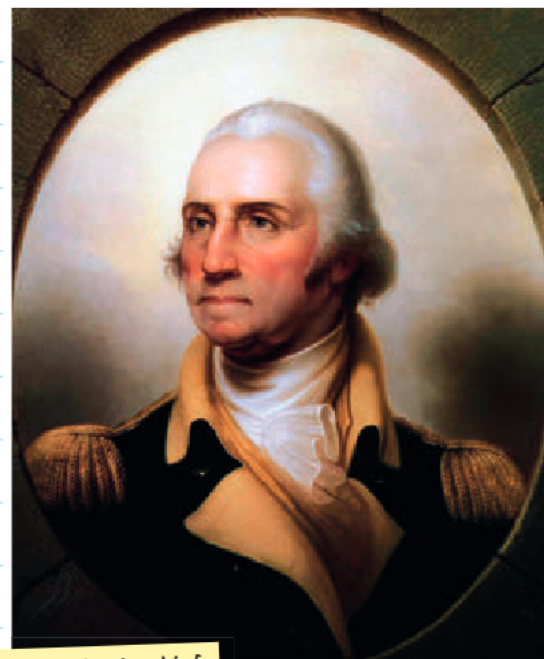
George Washington served as commander-in-chief of the Continental Army from July 1775 to 1783, and his leadership proved instrumental in achieving American independence. His approach to warfare and military leadership differed significantly from traditional European methods, which ultimately gave the Americans a crucial advantage.
Strategic retreat and army preservation
Washington understood that preserving his army was more important than winning individual battles. Rather than engaging in costly direct confrontations that could destroy his forces, he implemented a strategy of organised withdrawals when facing superior British forces.
Example
Battle of Long Island - Strategic Retreat
At the Battle of Long Island, Washington demonstrated his strategic thinking by managing to evacuate his troops to safety, preventing what could have been a devastating loss. This successful retreat saved approximately 9,000 American soldiers to fight another day.
By keeping his army intact, Washington ensured that the rebellion could continue even after military setbacks.
Inspirational leadership and recruitment success
Washington's ability to maintain morale and attract new soldiers was remarkable throughout the war. His leadership style inspired loyalty among existing troops while simultaneously encouraging new recruits to join the cause. The Continental Army grew to include approximately 230,000 soldiers during the course of the war, a testament to Washington's recruiting abilities and the confidence people had in his leadership.
Military discipline and civilian support
Unlike many military leaders of his era, Washington maintained strict discipline among his troops, ensuring they behaved appropriately towards civilian populations. This approach was crucial in maintaining popular support for the revolution. When soldiers were well-behaved and supplies were purchased rather than stolen, it encouraged more colonists to support the rebel cause rather than remaining loyal to Britain.
Innovative military tactics
Washington demonstrated flexibility in his military approach, abandoning traditional European warfare conventions when necessary. He seized opportunities for surprise attacks, particularly during winter months when conventional armies typically remained inactive.
Example
Winter Victories at Trenton and Princeton
Washington's victories at Trenton and Princeton exemplified his unconventional approach. These surprise winter attacks showed that abandoning traditional military conventions could achieve significant results against a more traditional military force.
International diplomatic success
Washington played a central role in securing crucial foreign assistance, particularly from France. He was instrumental in convincing the Marquis de Lafayette to join the American cause, and he successfully negotiated for Prussian military expertise to help train Continental Army soldiers. This foreign support provided essential resources, training, and legitimacy to the American independence movement.
British strategic failures
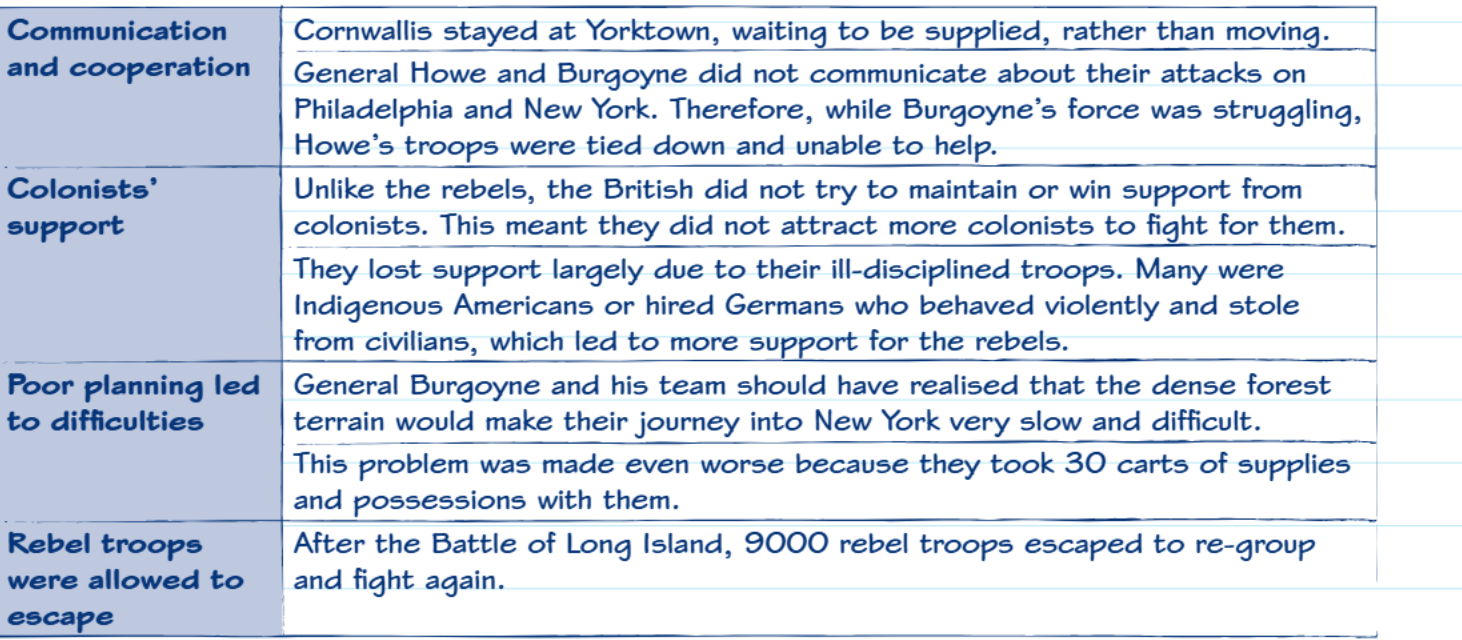
The British military, despite possessing significant advantages in terms of training, equipment, and naval power, made several critical errors that contributed to their ultimate defeat in the war.
Communication and coordination breakdowns
Important
British military leaders failed to coordinate their strategies effectively, leading to missed opportunities and wasted resources.
A prime example occurred when General Cornwallis remained at Yorktown waiting for supplies and reinforcements rather than taking more aggressive action. Meanwhile, Generals Howe and Burgoyne failed to communicate properly about their respective campaigns targeting Philadelphia and New York. This lack of coordination meant that while Burgoyne's forces struggled in difficult terrain, Howe's troops were unable to provide assistance, ultimately contributing to British defeats in both theatres.
Failure to win colonial hearts and minds
Unlike the American rebels, who successfully built popular support for their cause, British forces never developed an effective strategy for winning over colonial civilians. The British approach often alienated potential supporters through harsh military policies and the behaviour of their troops. Many British soldiers were either Indigenous Americans or hired German mercenaries (Hessians) who often behaved poorly towards civilian populations, stealing from colonists and acting violently. This created resentment and pushed more colonists towards supporting the rebellion rather than remaining loyal to the Crown.
Inadequate planning for American conditions
Important
British military planners seriously underestimated the challenges of fighting a war across the vast American continent.
Example
Burgoyne's Failed Campaign
General Burgoyne's campaign provides a clear example of inadequate planning. His forces became bogged down in dense forest terrain that made movement extremely difficult and slow. The situation was made worse by the decision to transport 30 carts full of supplies and personal possessions, which further impeded progress through difficult terrain and made his army an easier target for American forces.
Allowing enemy forces to escape
British commanders repeatedly failed to capitalise on military victories by allowing defeated American forces to regroup and continue fighting. After the Battle of Long Island, approximately 9,000 rebel troops successfully escaped to fight again another day. This pattern of incomplete victories meant that British military successes never translated into decisive strategic advantages, allowing the American rebellion to continue despite suffering significant defeats.
Timeline of key events
- July 1775: George Washington becomes commander-in-chief of Continental Army
- 1776: Battle of Long Island - Washington organises successful retreat
- Winter 1776-77: Washington's victories at Trenton and Princeton
- 1777: Burgoyne's campaign fails due to poor planning and terrain difficulties
- 1781: Cornwallis trapped at Yorktown due to poor British coordination
- 1783: Treaty of Paris formally ends the war
Summary
Key Points to Remember:
-
Washington's leadership was multifaceted: He combined military strategy, recruitment skills, diplomatic abilities, and innovative tactics to build and maintain an effective fighting force.
-
British advantages were undermined by poor execution: Despite superior resources and training, British forces failed due to coordination problems, inadequate planning, and inability to win popular support.
-
Unconventional warfare proved effective: American success came partly from abandoning traditional European military conventions in favour of tactics suited to local conditions and circumstances.
-
Popular support was crucial: The war's outcome was significantly influenced by which side could maintain civilian support, with American forces proving more successful in this regard.
-
International involvement was decisive: Foreign assistance, particularly from France and Prussia, provided essential resources and expertise that helped tip the balance towards American victory.