The influence of the Church (Edexcel GCSE History): Revision Notes
📚Revision Notes
The influence of the Church in mediaeval England (c1000-c1500)
Introduction
During the mediaeval period from c1000 to c1500, the Church held extraordinary power in English society. It played a direct and crucial role in determining what constituted a crime, how accused individuals were tried, and what punishments were given. The Church operated its own justice system that ran parallel to secular courts, offering alternative forms of trial and punishment.
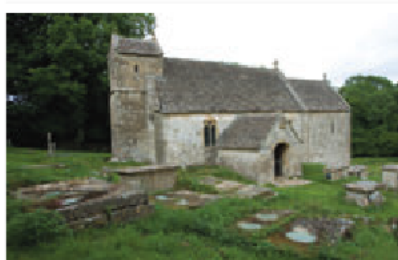
The Church served as the focal point of mediaeval villages and towns, making it central to both spiritual and legal matters in people's daily lives.
Note
The Church's parallel justice system created a complex legal landscape where the same crime could be handled very differently depending on which court system dealt with it. This dual system reflected the Church's significant political and social influence during the mediaeval period.
Church courts and moral crimes
The Church established its own court system to handle specific types of offences. Throughout the 13th century, Church courts were primarily used to try people accused of moral crimes, including sexual relationships outside marriage and violations of Church practices and rituals.
Church courts also had jurisdiction over members of the clergy when they committed crimes. This created a separate legal pathway for religious officials, reflecting the Church's desire to maintain control over its own members and provide opportunities for reform rather than harsh punishment.
Important
The punishments given by Church courts were generally more lenient compared to those handed down by secular courts. This difference in severity reflected the Church's emphasis on forgiveness, redemption, and giving people chances to reform their behaviour.
Example
Example: Typical Church Court Cases
Common cases tried in Church courts included:
- A baker caught working on Sunday (violating sabbath laws)
- A couple living together without marriage
- A priest accused of drunkenness or immoral behaviour
- Someone who failed to pay their tithe (Church tax)
These cases would result in penances like public confession, pilgrimage, or charitable works rather than physical punishment or imprisonment.
Benefit of clergy
One of the most significant ways the Church influenced mediaeval justice was through the concept of "benefit of clergy". This legal privilege allowed certain individuals to be tried in Church courts rather than secular courts, potentially avoiding harsher punishments.
To claim benefit of clergy, a person had to demonstrate their literacy by reading a passage from the Bible. Since priests were among the few people who could read during this period, many criminals memorised specific Bible passages so they could recite them in court and claim this privilege.
Important
This system highlighted the significant inequality in mediaeval justice. It provided a way for educated people to receive more lenient treatment, while those who couldn't read faced the full severity of secular punishment. Importantly, women were completely excluded from claiming benefit of clergy since they were not allowed to become priests during this time.
Example
Worked Example: How Benefit of Clergy Worked
Step 1: A person accused of theft claims benefit of clergy in court Step 2: They are handed a Bible and asked to read Psalm 51:1 ("Have mercy upon me, O God") Step 3: If they can read it (or recite it from memory), they prove their "clerical" status Step 4: They are transferred to a Church court for trial instead of facing secular justice Step 5: The Church court gives a much lighter punishment, such as penance or minor fine
This could mean the difference between execution and a few prayers!
Sanctuary
The Church also offered protection through the system of sanctuary. This ancient right provided safety from the law, but it was only available at certain important churches that had been granted this special privilege.
Note
The Sanctuary System Rules:
When someone claimed sanctuary, they could go to one of these designated churches for protection. The priest would report the crime to authorities, but no one was allowed to arrest the accused while they remained on church grounds.
The person seeking sanctuary had two choices: they could either agree to go to court to face trial, or they could swear an oath promising to leave the country entirely.
However, sanctuary was not unlimited. If the accused person had not left the country within 40 days, they would be declared an outlaw, making them criminals who could be arrested anywhere.
Trial by ordeal
When a person's guilt or innocence could not be determined through normal court proceedings, the Church used a system called trial by ordeal. This method relied on the belief that God would intervene to protect the innocent and reveal the truth.
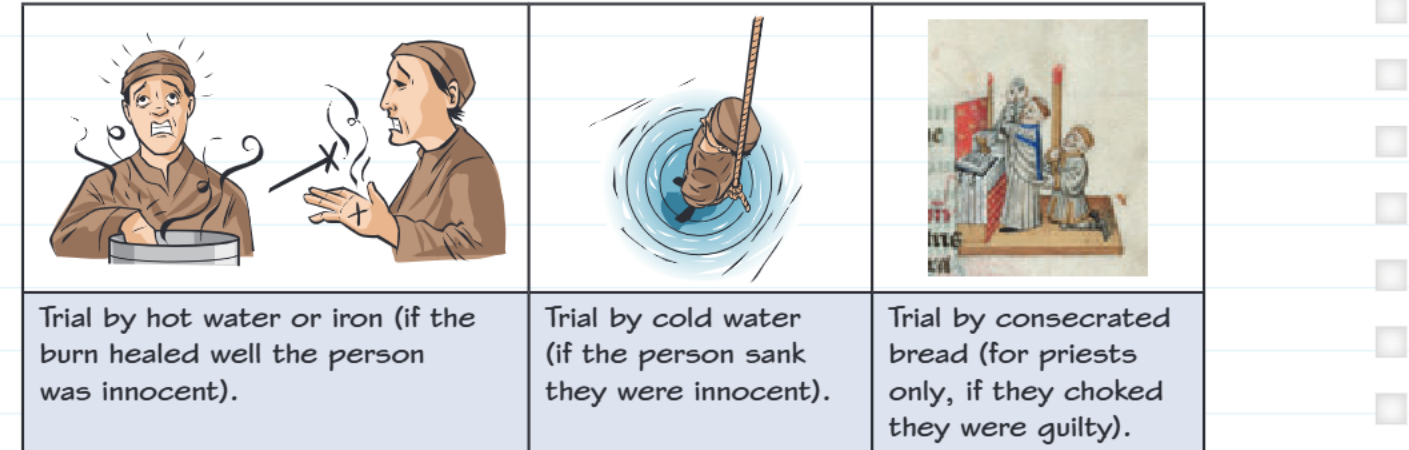
Trial by ordeal had been used since Anglo-Saxon times but continued into the early part of the 13th century. The Church administered three main types of ordeal:
Note
The Three Types of Trial by Ordeal:
Trial by hot water or iron involved the accused person being exposed to extremely hot substances. If their burns healed well, this was taken as a sign from God that they were innocent.
Trial by cold water required the accused to be lowered into water. If the person sank, they were considered innocent because the pure water had "accepted" them. If they floated, they were deemed guilty.
Trial by consecrated bread was reserved specifically for priests. The accused priest would eat a piece of specially blessed bread. If they choked while eating it, this was interpreted as a sign of their guilt.
Important
This system of divine judgement came to an end in 1215 when the Pope ordered priests to stop administering these trials. The Church's withdrawal from trial by ordeal marked a significant shift towards more rational methods of determining guilt and innocence.
Timeline of key events
- c1000-1200: Trial by ordeal widely used alongside benefit of clergy and sanctuary
- 13th century: Church courts commonly used for moral crimes and clergy offences
- 1215: Pope orders priests to stop administering trials by ordeal, leading to their quick disappearance
Summary
Key Points to Remember:
- The Church operated an alternative justice system that was generally more lenient than secular courts
- Benefit of clergy allowed literate people (mainly men) to receive lighter punishments by being tried in Church courts
- Sanctuary provided temporary protection in designated churches, but came with strict time limits and conditions
- Trial by ordeal relied on supposed divine intervention to determine guilt or innocence through physical tests
- The Church's influence on mediaeval justice created significant inequalities based on literacy, gender, and social status