The dissolution of the monasteries (Edexcel GCSE History): Revision Notes
📚Revision Notes
The dissolution of the monasteries
What was the dissolution of the monasteries?
The dissolution of the monasteries refers to Henry VIII's systematic closure of religious houses across England between 1535 and 1539. This dramatic policy involved shutting down hundreds of monasteries, nunneries, and other religious institutions, fundamentally changing England's religious landscape during the Reformation period.
Note
Definition: Dissolution means the official closing down and dismantling of monasteries, nunneries, and other religious institutions, along with the seizure of their lands and wealth.
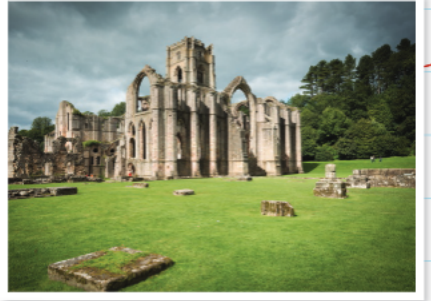
The ruins of mediaeval abbeys like this one stand today as reminders of the thousands of religious buildings that were closed, stripped of their wealth, and often left to decay after Henry's dissolution policy.
Why did Henry VIII dissolve the monasteries?
Henry's decision to close the monasteries stemmed from three interconnected motivations: religious reform, political control, and financial necessity.
Religious motivations
Many Protestant reformers, particularly Thomas Cromwell and Archbishop Thomas Cranmer, viewed monastic practices as corrupt and outdated. They believed that traditional Catholic rituals performed in monasteries, such as prayers for the dead, represented backwards religious practices that needed to be eliminated. From their Reformed perspective, dissolving these institutions would help purify English Christianity and remove what they saw as superstitious elements from religious life.
Note
The reformers argued that monasteries represented "old" Catholic practices that conflicted with the new Protestant theology Henry was adopting for the Church of England.
Political considerations
Henry may have perceived the monasteries as potential centres of opposition to his authority. Many monks and nuns maintained stronger loyalty to the Pope than to the king, making them politically unreliable. This concern seemed justified when many religious houses later supported the Pilgrimage of Grace uprising. Additionally, closing the monasteries would strengthen Henry's control over the English Church by removing independent religious institutions that could challenge royal supremacy.
Important
The monasteries posed a real political threat because their inhabitants often remained loyal to Rome rather than accepting Henry as Supreme Head of the Church.
Financial imperatives
The monasteries possessed enormous wealth, with their combined annual income reaching approximately £160,000. Henry faced several financial pressures that made this wealth extremely attractive:
- Funding potential wars and defending England against possible Catholic crusades organised by France and Charles V
- Achieving financial independence from Parliament, which often challenged royal spending
- Acquiring valuable land that could be sold or granted to supporters to secure political loyalty
Many historians argue that despite Henry's religious justifications, financial gain remained his primary motivation for the dissolution.
The process of dissolution
The dissolution followed a carefully planned sequence of events designed to provide legal justification for seizing monastic property.
Example
Worked Example: The Step-by-Step Dissolution Process
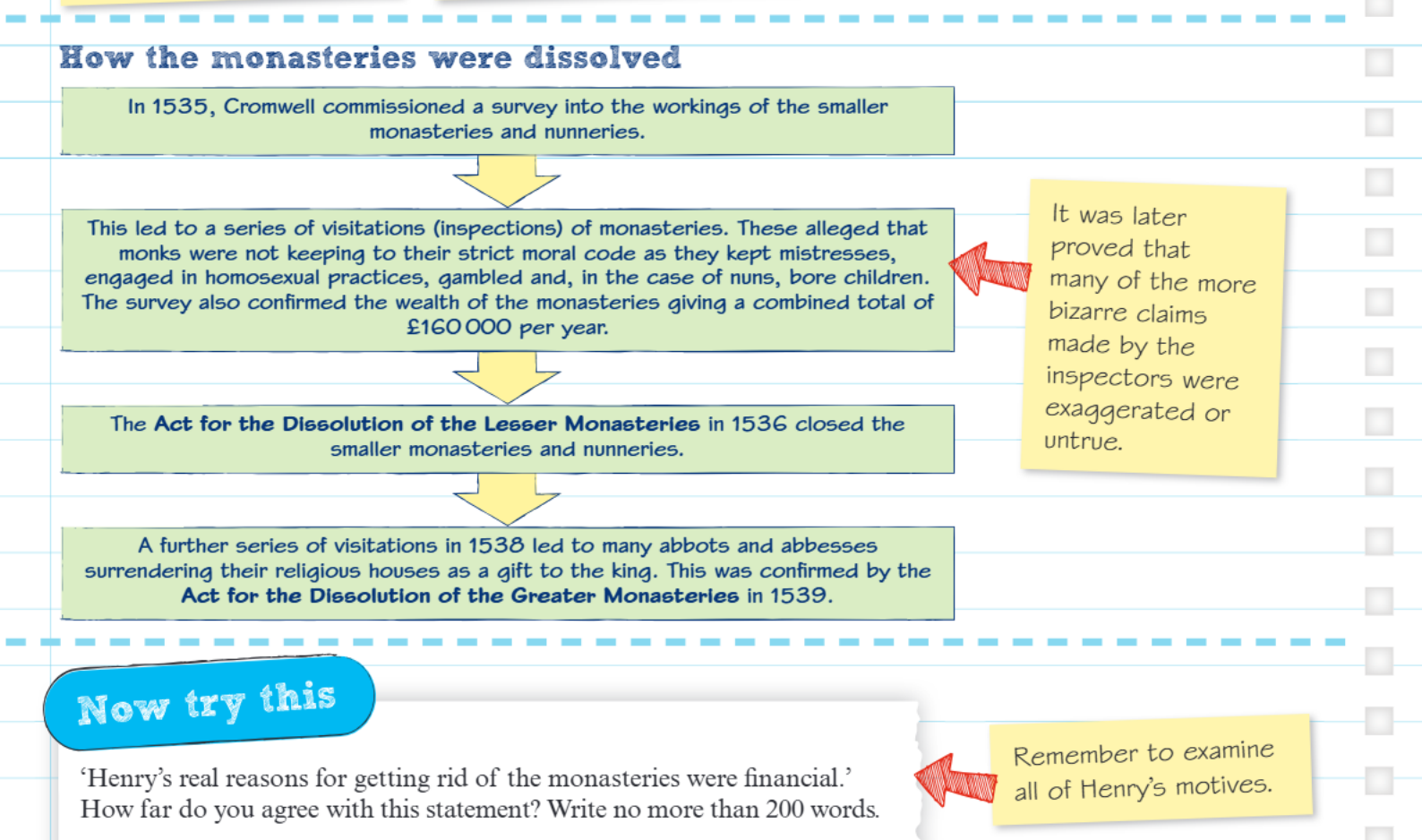
The government followed a systematic approach to ensure legal justification:
Step 1: Survey and assess wealth (1535)
Step 2: Conduct inspections to find "evidence" of corruption (1535-1536)
Step 3: Pass legislation to authorise closures (1536)
Step 4: Pressure larger houses to surrender "voluntarily" (1538)
Step 5: Complete the process with final legislation (1539)
The chronological steps
1535: Initial survey Thomas Cromwell commissioned comprehensive surveys of smaller monasteries and nunneries to assess their wealth and document their activities. This investigation provided the groundwork for future legal action.
1535-1536: Visitations and inspections Government inspectors conducted detailed examinations of monastic houses, claiming to uncover evidence of moral misconduct among monks and nuns. These reports alleged various improprieties including keeping mistresses, engaging in homosexual practices, gambling, and having children. The surveys also confirmed the substantial wealth of these institutions, totaling £160,000 annually.
1536: First dissolution act The Act for the Dissolution of the Lesser Monasteries officially closed smaller religious houses, providing legal authority for their seizure and the redistribution of their assets.
1538: Expanded visitations Further government inspections targeted larger institutions, pressuring many abbots and abbesses to voluntarily surrender their religious houses as "gifts" to the king rather than face forced closure.
1539: Final dissolution act The Act for the Dissolution of the Greater Monasteries completed the process by officially closing all remaining major religious institutions.
Historical accuracy of the charges
It's important to note that later historical research has revealed that many of the moral accusations made by government inspectors were exaggerated or completely fabricated. These claims served primarily as propaganda to justify the seizures rather than reflecting genuine widespread corruption.
Important
Critical Point: Modern historians have proven that most charges against the monasteries were false propaganda designed to justify Henry's actions, not evidence of actual wrongdoing.
Timeline of key events
- 1535: Cromwell begins systematic survey of monastic wealth and practices
- 1536: Act for the Dissolution of the Lesser Monasteries passed; Pilgrimage of Grace uprising begins
- 1538: Intensified visitations pressure larger houses to surrender voluntarily
- 1539: Act for the Dissolution of the Greater Monasteries; Fountains Abbey and other major houses close
- 1540: Dissolution process essentially complete
The historical debate
Historians continue to debate Henry's true motivations for the dissolution. While the king publicly emphasised religious reform and moral purification, the massive financial benefits suggest economic factors played the dominant role. The systematic nature of the process, combined with the exaggerated nature of many moral charges, supports the argument that Henry primarily sought to solve his financial problems while simultaneously strengthening royal authority over the English Church.
Important
Historical Consensus: Most historians now agree that financial motives were more important than religious ones, despite Henry's public claims about moral reform.
Remember!
Summary
Key Points to Remember:
- The dissolution of the monasteries (1535-1539) involved the systematic closure of all religious houses in England under Henry VIII
- Three main motivations drove the policy: religious reform, political control, and financial necessity, with money likely being the primary factor
- The process followed careful legal steps: surveys, visitations, accusations of misconduct, and parliamentary acts in 1536 and 1539
- Thomas Cromwell orchestrated the dissolution, using inspectors whose moral charges were often exaggerated or false
- The monasteries' combined wealth of £160,000 per year provided Henry with crucial financial resources and reduced his dependence on Parliament
- Memory aid: Remember the "3 R's of dissolution" - Religious, Revenue (financial), and Royal (political) reasons