Changes in health provision (Edexcel GCSE History): Revision Notes
📚Revision Notes
Changes in health provision in Mao's China, 1949-76
Background and challenges
When the Communist Party came to power in 1949, China faced enormous healthcare challenges. Before this time, only wealthy elites and those living in major cities could access modern medical treatment. The vast majority of Chinese people, particularly those in rural areas, relied entirely on traditional remedies and had virtually no access to qualified doctors or hospitals.
Note
The scale of China's healthcare challenge in 1949 was immense - with a population of hundreds of millions, the vast majority living in rural areas with no modern medical infrastructure whatsoever. This represented one of the largest public health challenges any government had ever attempted to address.
The Communist Party recognised that providing healthcare to all Chinese people would be extremely expensive and difficult to achieve on such a massive scale. However, they were determined to create a healthier workforce and demonstrate the benefits of communist rule to the population.
Reasons driving healthcare reform
Several key factors motivated the Communist Party to transform China's healthcare system:
Limited pre-1949 access: Modern healthcare was restricted to a small elite and urban populations. Rural communities, which made up the majority of China's population, had no access to qualified medical professionals and depended entirely on traditional peasant remedies.
Communist ideology: The Party wanted to prove that their system could provide essential services like healthcare to everyone across China, including people in remote rural locations. This was part of building a healthy workforce to support economic development.
Opposition to Western influence: Mao strongly opposed what he saw as Western medical experts controlling China's health ministry. He wanted to reduce dependence on foreign medical knowledge and create a distinctly Chinese approach to healthcare.
Healthcare provision during the Great Leap Forwards
The Communist Party implemented several major initiatives to expand healthcare access:
Health stations establishment: As part of the Great Leap Forwards, each commune was required to set up its own health station, which functioned as a basic medical clinic for the local community.
Urban to rural doctor movement: In 1965, Mao ordered qualified doctors and healthcare workers to leave the cities and conduct hygiene campaigns throughout China's countryside. This aimed to bring medical expertise directly to rural populations who had never had access before.
Massive state investment: By 1965, the government had funded training for 100,000 people to become fully qualified doctors. The state also constructed more than 800 modern hospitals across the country, representing an unprecedented investment in healthcare infrastructure.
The barefoot doctors programme
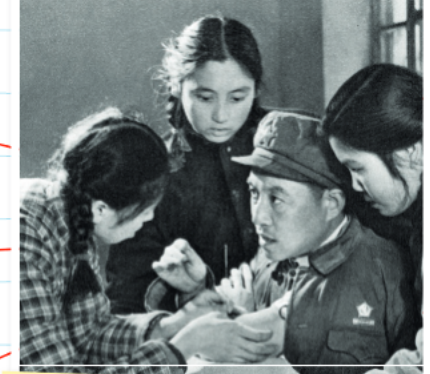
One of the most significant innovations was the creation of "barefoot doctors" - community-based medical workers who became the backbone of rural healthcare.
Note
Understanding Barefoot Doctors
The term "barefoot doctors" was both literal and symbolic. These medical workers were called "barefoot" because, like most Chinese peasants of the time, they typically worked without shoes in the rice paddies and fields. The name captured their grassroots, community-based approach to healthcare delivery.
Who were barefoot doctors: These were commune members, typically peasants, who received basic medical training while continuing their agricultural work. They earned the name "barefoot doctors" because, like most peasants, they rarely wore shoes.
Rapid expansion: The programme grew dramatically from around 250,000 barefoot doctors in 1965 to over one million by 1970, showing the scale of the Communist Party's commitment to rural healthcare.
Services provided: Barefoot doctors could deliver basic medical care in remote villages and refer seriously ill patients to proper hospitals. They were trained to give vaccination injections, particularly against smallpox, which made an important contribution to creating a healthier workforce for the People's Republic of China.
Hygiene education: These medical workers played a crucial role in educating rural populations about sanitation and proper disposal of human waste. Previously, peasants often used human waste as fertiliser, which led to water-borne diseases like cholera. Barefoot doctors ran "patriotic health movements" to teach better hygiene practices.
Cost-effective system: Since barefoot doctors were paid by their commune as a percentage of what the commune earned, they provided very affordable healthcare. The Communist Party could offer basic medical services to all without requiring massive investment from industry.
Major successes of healthcare reform
The changes in health provision achieved remarkable improvements in several key areas:
Dramatic increase in life expectancy: Chinese people's average lifespan rose from just 36 years in 1949 to 66 years in 1976 - an increase of 30 years in less than three decades.
Reduced infant mortality: The number of babies dying per 1000 births fell significantly from 130 per 1000 in 1950 to 60 per 1000 in 1976, meaning many more children survived to adulthood.
Universal rural access: By 1976, 85% of rural China's population had access to some form of medical care through barefoot doctors, compared to virtually zero access before 1949.
Affordable healthcare model: The barefoot doctor system provided basic healthcare without requiring the state to divert massive resources from industrial development, making it economically sustainable.
Example
Worked Example: Healthcare Impact Assessment
To understand the scale of improvement, consider a typical rural village of 1,000 people:
Before 1949:
- Medical access: 0 people
- Expected infant deaths per year: ~13 babies (130 per 1000 births)
- Average life expectancy: 36 years
By 1976:
- Medical access: ~850 people (85% coverage)
- Expected infant deaths per year: ~6 babies (60 per 1000 births)
- Average life expectancy: 66 years
This represents a transformation from no healthcare provision to nearly universal basic coverage in just 27 years.
Limitations and failures
Despite significant achievements, the healthcare reforms had important shortcomings:
Important
Critical System Limitations
While China's healthcare improvements were remarkable, several serious limitations remained that affected the quality and scope of medical care available to the population.
Insufficient hospital capacity: There were only two million hospital beds available for a population of 900 million people, meaning serious medical cases often couldn't receive proper treatment.
Loss of medical expertise: During the Cultural Revolution, Mao ordered qualified "intellectual" doctors from cities to go and train barefoot doctors in rural areas. This disrupted medical research and left urban populations with reduced access to advanced medical care.
Basic care only: While barefoot doctors provided essential services, they could only offer basic care without access to modern Western medicines or complex medical procedures. This meant many serious conditions remained untreatable.
Starting from very low baseline: Although China made huge healthcare improvements under Mao, the country was starting from an extremely low level of medical provision, so even basic care represented significant progress compared to previous conditions.
Timeline of key events
- 1949: Communist Party takes power; life expectancy at 36 years
- 1950: Infant mortality rate at 130 per 1000 births
- 1958-1962: Great Leap Forwards - health stations established in communes
- 1965: Mao orders doctors to move from cities to countryside; 250,000 barefoot doctors active; state funding trains 100,000 qualified doctors
- 1970: One million barefoot doctors operating across rural China
- 1976: Life expectancy reaches 66 years; infant mortality falls to 60 per 1000; 85% of rural population has medical access
Summary
Key Points to Remember:
- The Communist Party transformed Chinese healthcare from serving only elites to reaching 85% of the rural population by 1976
- Barefoot doctors were community-based medical workers who provided basic healthcare in rural areas, growing from 250,000 in 1965 to over 1 million by 1970
- Major successes included increasing life expectancy from 36 to 66 years and reducing infant mortality from 130 to 60 per 1000 births
- The system had limitations including insufficient hospital beds (only 2 million for 900 million people) and loss of qualified doctors during the Cultural Revolution
- State investment was massive, funding 100,000 doctor training programmes and building over 800 modern hospitals by 1965