The Black Death 1348-9 (Edexcel GCSE History): Revision Notes
📚Revision Notes
The Black Death 1348-9
Overview
The Black Death arrived in England in 1348 and became one of the most devastating pandemics in mediaeval history. This catastrophic disease swept through the country and killed approximately one-third of England's entire population. The way mediaeval people understood, prevented, and treated this disease reveals important insights about medical knowledge and beliefs during this period.
Note
The scale of death was unprecedented in English history. Entire villages were abandoned, and some areas took centuries to recover their pre-plague population levels. This massive population loss fundamentally changed English society, economics, and culture.
What was the Black Death?
Modern historians now understand that the Black Death was most likely bubonic plague. This deadly disease was transmitted through a complex chain involving black rats, fleas, and humans. The process worked like this: infected fleas lived on black rats, and when these fleas bit humans, the plague bacteria entered the person's bloodstream. The disease spread rapidly because trading ships carried infected rats from port to port across Europe and into England.
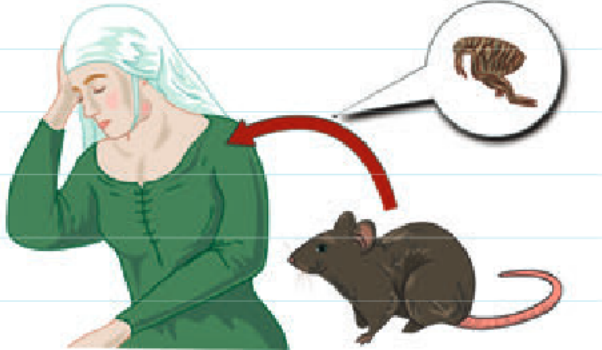
This transmission method explains why port towns were often hit first and why the disease spread so quickly along trade routes. However, mediaeval people had no understanding of bacteria, fleas, or disease transmission, so they developed very different explanations for what was happening.
Important
Mediaeval people had absolutely no knowledge of bacteria, germs, or how diseases actually spread. This complete lack of understanding about the real cause meant that none of their prevention methods or treatments could be effective against the plague.
Mediaeval beliefs about causes and prevention
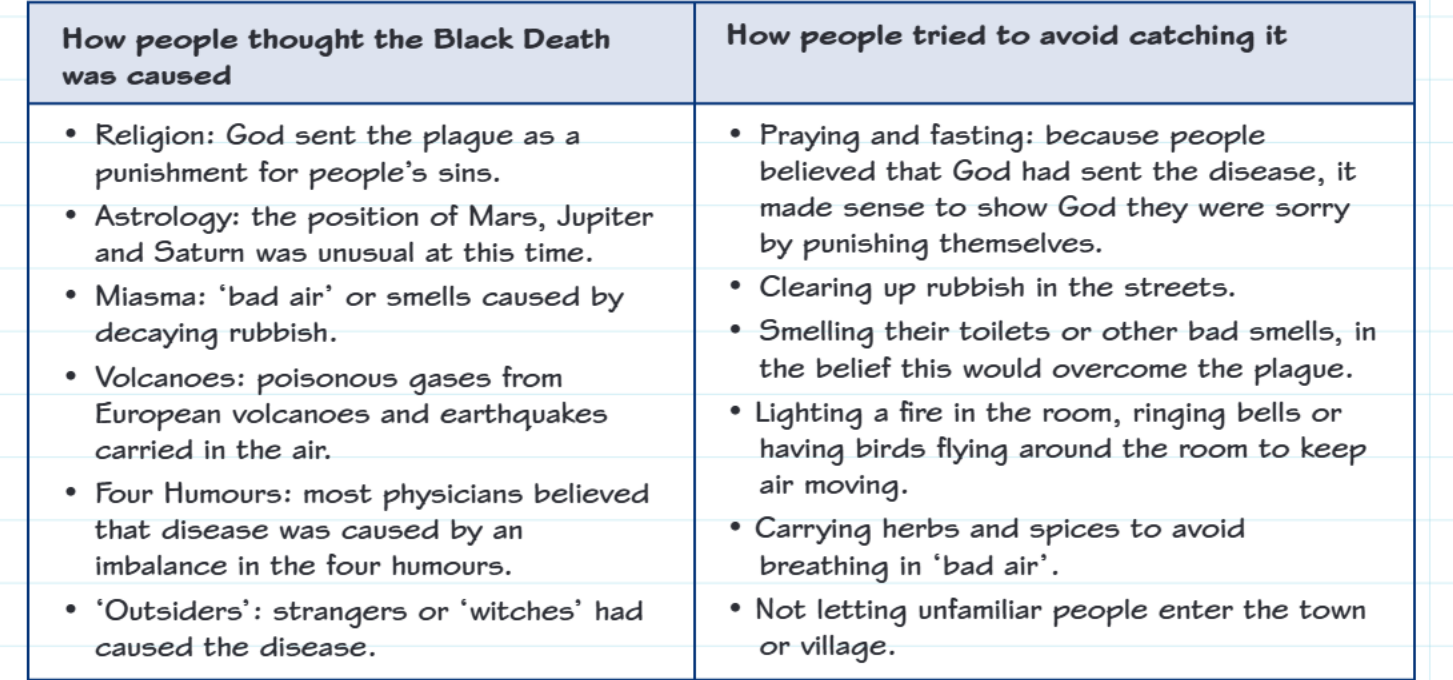
Mediaeval people created various theories to explain the Black Death's devastating effects. Their approaches to both understanding and preventing the disease reflected the limited medical knowledge and strong religious beliefs of the time.
Religious explanations
Many people believed God had sent the plague as divine punishment for humanity's sins. This explanation fitted with mediaeval Christian worldview, where natural disasters were often seen as signs of God's displeasure. As a result, people tried to show repentance through prayer and fasting, hoping to demonstrate their sorrow and convince God to end the plague.
Scientific theories of the time
Mediaeval scholars proposed several "scientific" explanations based on their understanding of the world. Some blamed unusual positions of planets Mars, Jupiter and Saturn, believing celestial movements could influence earthly events. Others followed the miasma theory, arguing that "bad air" from rotting waste caused disease. Volcanic activity was another suspected cause, with people thinking poisonous gases from European volcanoes and earthquakes contaminated the atmosphere.
Note
The miasma theory was actually a reasonable attempt at explanation given mediaeval knowledge. The connection between bad smells and disease wasn't entirely wrong - poor sanitation did contribute to disease spread, though not in the way mediaeval people understood.
Medical understanding
Most physicians relied on the Four Humours theory, which suggested disease resulted from imbalances between blood, phlegm, yellow bile, and black bile in the body. This ancient Greek medical theory dominated mediaeval medicine and influenced how doctors tried to treat patients.
Social scapegoating
Unfortunately, fear and ignorance led some communities to blame outsiders, strangers, or people accused of witchcraft. This response shows how panic and prejudice could override rational thinking during times of crisis.
Symptoms of the Black Death
The Black Death produced several distinctive and terrifying symptoms that made it easily recognisable to mediaeval people.
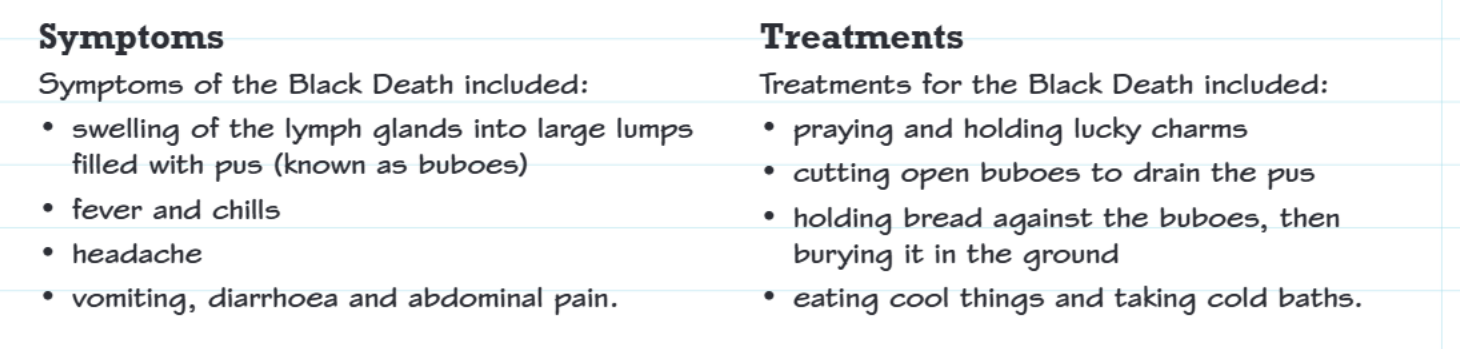
The most characteristic symptom was the development of buboes - painful swellings of the lymph glands that grew into large, pus-filled lumps. These typically appeared in the armpits, groyne, or neck and were extremely painful. Sufferers also experienced high fever and violent chills that left them alternately burning hot and freezing cold.
Severe headaches tormented patients, while their digestive systems were attacked by the disease, causing persistent vomiting, diarrhoea, and intense abdominal pain. These symptoms combined to create a horrifying illness that usually killed within days of appearing.
Important
The buboes were so distinctive that mediaeval people could easily identify the plague. However, by the time these symptoms appeared, the disease was usually already fatal, as mediaeval people had no effective treatments available.
Mediaeval treatments
Mediaeval treatments for the Black Death reflected the limited medical knowledge of the time and often caused more harm than good.
Religious remedies remained popular, with people praying intensively and carrying lucky charms or religious relics, believing these might provide divine protection. Some physicians attempted surgical intervention by cutting open buboes to drain the pus, though this was extremely dangerous and often led to additional infections.
Folk remedies included bizarre practices like holding bread against the buboes before burying it in the ground, possibly hoping to transfer the disease away from the patient. Medical practitioners also tried temperature-based treatments, giving patients cold baths and encouraging them to eat cool foods, based on humoral theory that suggested the disease created too much heat in the body.
Example
Example Treatment: The Humours Approach
A mediaeval physician might diagnose a plague patient as having "too much hot, moist humour" and prescribe:
- Step 1: Cold baths to reduce heat
- Step 2: Cool foods like lettuce and fish
- Step 3: Bloodletting to remove excess blood
- Step 4: Herbal remedies to restore balance
None of these steps actually treated the bacterial infection causing the plague.
None of these treatments were effective against bubonic plague, and many probably weakened patients further. The high death rate continued because mediaeval people lacked antibiotics and proper understanding of bacterial infections.
Timeline
- 1348: Black Death reaches England, beginning to spread through port towns
- 1348-1349: Peak years of the pandemic in England
- 1349: Disease spreads throughout the country, killing approximately one-third of the population
Summary
Key Points to Remember:
- The Black Death (1348-9) killed about one-third of England's population, making it one of history's most devastating pandemics
- Modern historians believe it was bubonic plague, transmitted by fleas from infected rats on trading ships
- Mediaeval people had no understanding of bacterial transmission, so they blamed God's punishment, bad air, planetary positions, and various other causes
- Prevention methods included prayer, cleaning streets, avoiding strangers, and carrying herbs - none of which were actually effective
- Treatments like draining buboes, cold baths, and folk remedies failed because people didn't understand the disease was caused by bacteria that needed antibiotic treatment