Ideas: a scientific approach (Edexcel GCSE History): Revision Notes
📚Revision Notes
Ideas: a scientific approach (c1500-c1700)
Introduction to the scientific revolution in medicine
During the Renaissance period, medicine began to experience a gradual but significant transformation. While many traditional beliefs remained strong, there was an increasing willingness to question ancient theories and explore new, more rational explanations for disease. This shift marked the beginning of a more scientific approach to understanding illness and treatment.
Note
The Renaissance period created a fascinating mix of old and new ideas, with some physicians starting to rely more on direct observation rather than simply accepting what had been written in ancient texts. This wasn't a sudden change, but rather a gradual evolution in medical thinking.
Changes in understanding disease causes
The move away from supernatural explanations
Throughout the Renaissance, fewer people began to accept that illness was purely the result of God's will or supernatural forces. This represented a major shift in thinking that had dominated mediaeval medicine for centuries.
Several new rational explanations for disease started to emerge:
- The idea that seeds in the air could spread illness
- Recognition that environmental factors might play a role in disease
- Growing understanding that diseases might have natural, observable causes
This change was closely linked to the declining influence of the Church, which had previously provided the main framework for understanding illness as divine punishment or intervention.
The weakening grip of religious authority
As new religious ideas began to challenge the Catholic Church's authority during the Reformation, people became more willing to question traditional medical explanations too. While most people remained deeply religious, they started looking for additional explanations for disease that didn't rely solely on divine intervention.
Important
The ideas of ancient physicians like Galen, which had been strongly supported by the Church, began to be examined more critically. This created space for new theories to develop and flourish, marking a crucial turning point in medical history.
Continuity of traditional beliefs
Despite these changes, it's important to understand that many old ideas remained extremely popular throughout the Renaissance period:
Note
Traditional theories that persisted:
Even as new scientific approaches emerged, established medical theories continued to dominate everyday medical practice and popular understanding of disease.
Miasma theory persists
The belief that disease was caused by 'bad air' or poisonous vapours continued to be widely accepted. This theory was particularly popular during epidemic outbreaks, when people could see the apparent connection between poor living conditions and illness.
The four humours theory endures
Even by 1700, very few physicians had completely abandoned the ancient Greek theory of the four humours (blood, phlegm, yellow bile, and black bile). This theory provided a comprehensive explanation for both health and disease that many found difficult to replace entirely.
Revolutionary changes in physician practices
Moving beyond astrology and superstition
One of the most significant changes during this period was that physicians gradually stopped relying on astrological charts to diagnose illness and determine treatment timing. This represented a major shift towards more practical, observation-based medicine.
Similarly, many doctors began to question the usefulness of urine charts - elaborate diagrams that claimed to diagnose disease based solely on the colour and appearance of urine.
The rise of direct observation
Important
Physicians increasingly began to examine their patients directly rather than simply asking them to describe their symptoms. This hands-on approach led to much more accurate diagnoses and a better understanding of how diseases actually affected the human body.
Thomas Sydenham: the pioneer of systematic observation
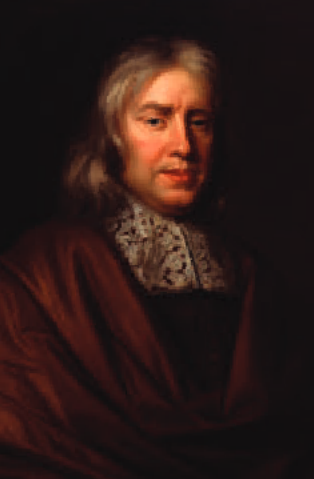
Thomas Sydenham, working as a doctor in London during the 1660s and 1670s, became one of the most influential figures in developing a truly scientific approach to medicine. His work demonstrated how careful observation could revolutionise medical practice.
Example
Thomas Sydenham's Revolutionary Medical Methods
Sydenham's approach was groundbreaking in several key ways:
Step 1: Rejecting book learning in favour of observation Unlike his contemporaries who relied heavily on ancient medical texts, Sydenham preferred to observe his patients directly. He carefully recorded symptoms in detail, building up a comprehensive picture of how diseases actually manifested.
Step 2: Treating diseases, not individuals Sydenham promoted the radical idea that diseases were separate entities that affected people in predictable ways. This challenged the traditional view that illness was entirely dependent on an individual's personal characteristics or moral state.
Step 3: Systematic recording and documentation His book Observationes Medicae, published in 1676, outlined his theories and detailed observations. This work influenced other doctors and demonstrated the value of systematic medical documentation.
Impact on medical practice
Sydenham's work helped move English medicine away from the ideas of ancient physicians and towards a more practical, evidence-based approach. His influence led other doctors to:
- Focus more on direct patient examination
- Keep detailed records of symptoms and treatments
- Look for patterns in how diseases affected different patients
- Base treatments on careful observation rather than theoretical assumptions
Timeline of key developments
1500s: Renewed interest in Greek and Roman medical texts leads to questioning of some mediaeval assumptions
1660s-1670s: Thomas Sydenham develops systematic observation methods in London
1676: Publication of Sydenham's Observationes Medicae spreads new observational approach
1680s-1700: Gradual adoption of more scientific methods by other physicians across England
Summary
Key Points to Remember:
- The Renaissance saw the beginning of a more scientific approach to medicine, though traditional beliefs remained strong
- Thomas Sydenham pioneered systematic patient observation and detailed symptom recording in the 1660s-1670s
- There was a gradual shift away from supernatural explanations towards rational, observable causes of disease
- The Church's declining influence allowed physicians to question ancient authorities like Galen more freely
- Despite changes, popular theories like miasma and the four humours continued to be widely believed throughout this period