Improvements in diagnosis (Edexcel GCSE History): Revision Notes
📚Revision Notes
Improvements in diagnosis
The diagnostic revolution of the 20th century
The way doctors identify illnesses underwent dramatic changes during the 20th century, transforming medical practice forever. While doctors in modern Britain still rely on their clinical knowledge and medical training, they now combine this traditional expertise with cutting-edge scientific testing and advanced technology to achieve much more accurate diagnoses.
Note
This shift represented a fundamental change in medical practice. Instead of relying solely on observation and experience, doctors gained access to tools that could literally look inside the human body and analyse biological samples at the microscopic level.
Laboratory testing and blood analysis
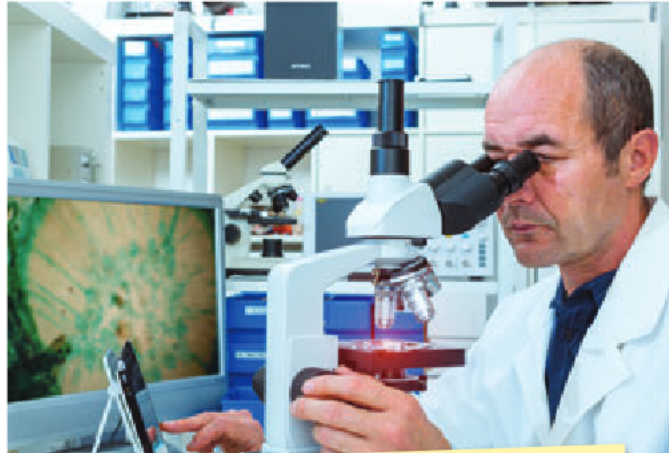
One of the most significant advances came through the development of sophisticated laboratory testing. Blood samples and other biological specimens can now be analysed by specialised medical professionals called pathologists, who work in modern laboratory settings equipped with powerful microscopes and analytical equipment.
Example
How Laboratory Analysis Works:
Step 1: A blood sample is collected from the patient Step 2: The sample is sent to a laboratory where pathologists analyse it Step 3: Specialised equipment examines the blood at microscopic level Step 4: Results reveal information about infections, organ function, and health indicators Step 5: Doctors use these results to make accurate diagnoses
Laboratory analysis has revolutionised diagnosis because it allows doctors to identify diseases and monitor patient health without invasive procedures. A simple blood test can reveal information about infections, organ function, blood sugar levels, and many other health indicators that would have been impossible to detect in earlier periods.
Medical imaging technologies
The 20th and 21st centuries introduced remarkable imaging technologies that allow doctors to see inside the human body with unprecedented clarity. These developments include:
X-rays - First developed in the late 19th century but perfected throughout the 20th century, X-rays enable doctors to see bones, detect fractures, and identify certain diseases.
Advanced scanning technologies - MRI (Magnetic Resonance Imaging), CT (Computed Tomography), and ultrasound scans provide detailed images of internal organs, tissues, and developing babies, offering far more information than traditional X-rays.
Note
These advanced scanning technologies can create detailed 3D images of the inside of the body, allowing doctors to spot problems that would have been completely undetectable in earlier periods of medical history.
Endoscopes - These flexible instruments with cameras allow doctors to look directly inside the body through natural openings or small incisions, enabling diagnosis without major surgery.
Monitoring and treatment devices
Modern medicine has also developed sophisticated devices that continuously monitor patient health and provide ongoing treatment:
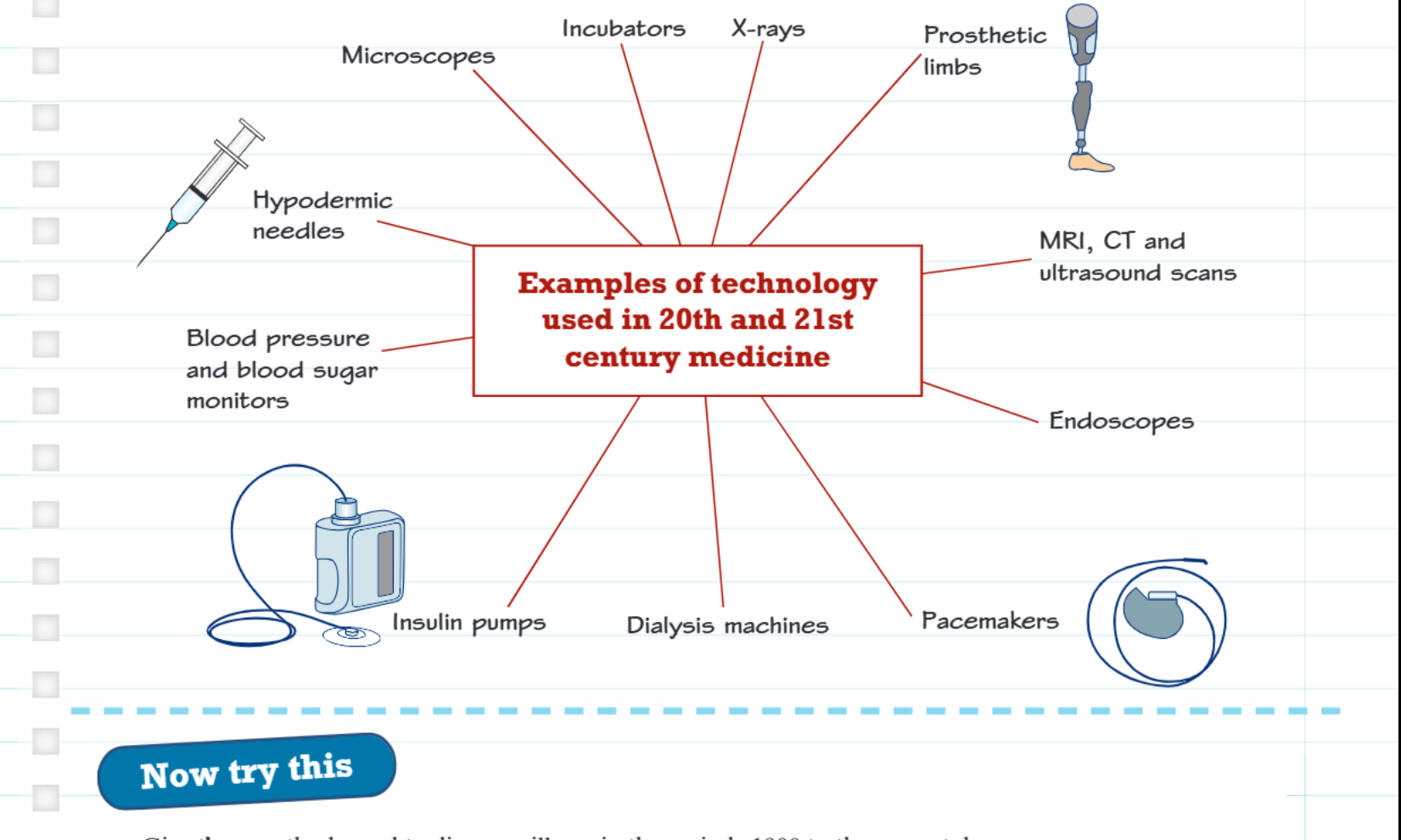
Monitoring equipment includes blood pressure monitors and blood sugar monitors that track vital signs over time, helping doctors understand how conditions develop and respond to treatment.
Life-supporting devices such as pacemakers regulate heart rhythms, while dialysis machines perform the function of failing kidneys, and insulin pumps automatically deliver medication to diabetic patients.
Prosthetic technology has advanced significantly, providing artificial limbs that can restore mobility and function to patients who have lost limbs through injury or disease.
The impact on medical accuracy
Important
These technological advances have made diagnosing disease far more accurate and reliable than ever before. Doctors can now detect conditions in their earliest stages, monitor how diseases progress, and adjust treatments based on precise scientific data rather than educated guesswork.
The combination of traditional medical knowledge with modern scientific testing represents one of the most important developments in the history of medicine, fundamentally changing how illness is identified and treated.
Timeline of key diagnostic developments
- Early 1900s: X-ray technology becomes widely used in hospitals
- Mid-20th century: Development of blood testing laboratories
- 1970s-1980s: Introduction of CT and MRI scanning
- Late 20th century: Widespread use of ultrasound and endoscopes
- 21st century: Integration of computer technology and digital imaging
Summary
Key Points to Remember:
- The 20th century brought revolutionary changes to medical diagnosis through science and technology
- Laboratory testing, especially blood analysis by pathologists, allows diseases to be detected without surgery
- Imaging technologies like X-rays, MRI, CT scans, and ultrasound let doctors see inside the body clearly
- Modern doctors combine traditional medical knowledge with advanced scientific testing for much more accurate diagnosis
- Monitoring devices and treatment technologies continue to improve patient care and save lives