The Bolshevik victory (Edexcel GCSE History): Revision Notes
📚Revision Notes
The Bolshevik victory
Introduction
The Bolsheviks achieved victory in the Russian Civil War (1918-21) through a combination of their own strategic strengths and the significant weaknesses of their opponents, the White Army. This victory was not inevitable, but resulted from careful planning, effective leadership, and the ability to exploit their opponents' divisions.
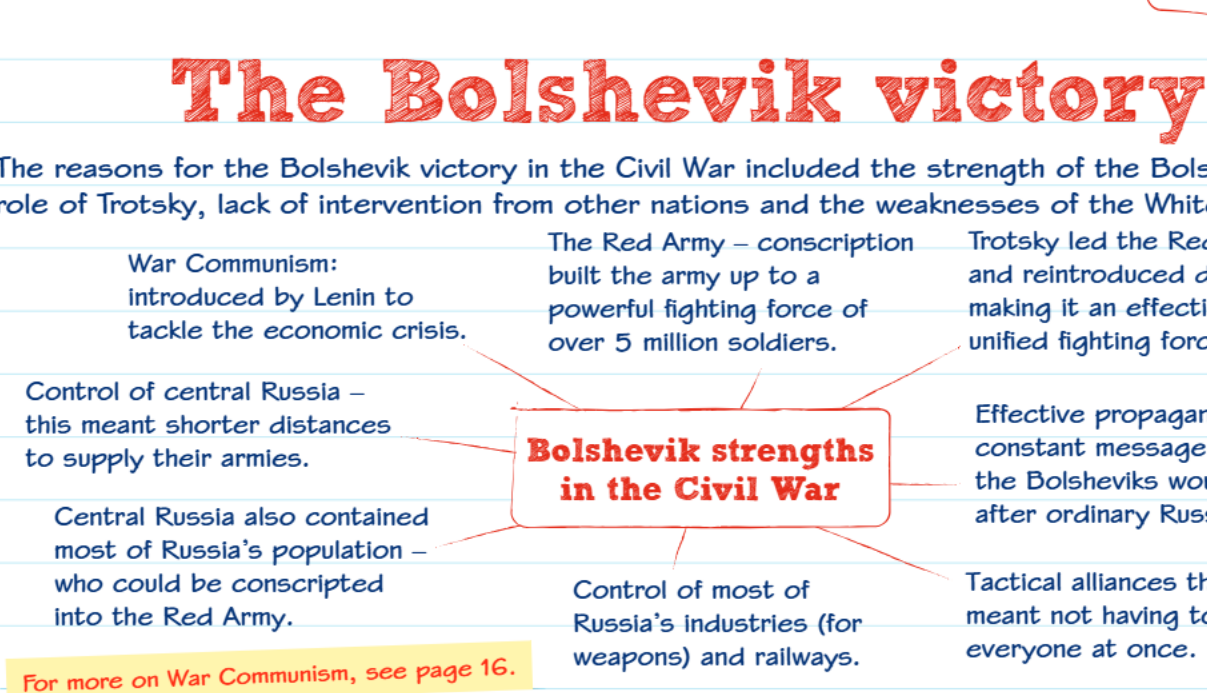
Bolshevik strengths in the Civil War
The Bolsheviks possessed several crucial advantages that contributed to their eventual triumph in the civil conflict.
Note
The Bolsheviks' success wasn't due to a single factor, but rather a combination of multiple strategic advantages working together. Each strength reinforced the others, creating a powerful foundation for victory.
War Communism and economic policy
Lenin introduced War Communism as an emergency economic system designed to tackle the severe economic crisis facing the new Bolshevik state. This policy helped mobilise resources for the war effort and maintained some level of economic organisation during the chaotic period of civil war.
Important
War Communism was crucial because it allowed the Bolsheviks to maintain economic control and resource allocation during a time when traditional economic systems had collapsed. Without this centralised approach, they could not have sustained their massive military effort.
The Red Army and military organisation
The Bolsheviks built a formidable fighting force through systematic conscription, eventually creating an army of over 5 million soldiers. This massive military force gave them a significant numerical advantage over their opponents, who could field a maximum of only 250,000 troops at any one time.
Geographic advantages
The Bolsheviks controlled central Russia, which provided them with shorter supply lines and easier communication between different fronts. This central position also gave them access to the majority of Russia's population, from which they could conscript soldiers and draw support.
Industrial and transport control
Control of most of Russia's key industries allowed the Bolsheviks to produce weapons and military equipment more effectively than their enemies. Additionally, their control of the railway system enabled them to move troops and supplies rapidly across their territory, giving them a crucial logistical advantage.
Effective propaganda campaign
The Bolsheviks maintained a consistent message that they were the protectors of ordinary Russians against foreign invaders and the return of the old aristocratic system. This propaganda was particularly effective because of the foreign intervention supporting the Whites.
Strategic alliances
Rather than fighting all their enemies simultaneously, the Bolsheviks made tactical alliances that prevented them from being overwhelmed by multiple opponents at once.
The role of Trotsky in the Civil War
Leon Trotsky played a pivotal role in the Bolshevik victory, serving as Commissar for War from 1918. His leadership was arguably more influential than Lenin's in securing military success.
Important
Trotsky's contribution to the Bolshevik victory cannot be overstated. Many historians argue that without his military leadership and organisational skills, the Bolsheviks might have lost the Civil War despite their other advantages.
Trotsky transformed the Red Army from a disorganised revolutionary force into an effective and disciplined military machine. He recognised that the army needed experienced leadership and pragmatically recruited former tsarist officers, keeping their families as hostages to ensure their loyalty to the Bolshevik cause.
The introduction of commissars (political officers) was another key innovation. These officials maintained strict discipline within the army while simultaneously spreading Bolshevik propaganda among the troops. Trotsky also encouraged literacy among soldiers, teaching them to read and write while educating them about Bolshevik aims and ideology.
Example
Trotsky's Organisational Methods:
Step 1: Recruited experienced former tsarist officers for military expertise
Step 2: Kept officers' families as hostages to ensure loyalty
Step 3: Appointed political commissars to maintain discipline and ideology
Step 4: Implemented literacy programmes to educate soldiers
Step 5: Established the Socialist Military Oath for unit cohesion
Perhaps most importantly, Trotsky established the Socialist Military Oath, which required all Red Army soldiers to swear loyalty to the Bolshevik cause. This helped create unit cohesion and ideological commitment that was often lacking in the White forces.
White Army weaknesses
The White Army's defeat resulted from several critical weaknesses that the Bolsheviks successfully exploited.
Note
Understanding the White Army's weaknesses is just as important as understanding Bolshevik strengths. Often in history, victories are won as much by the opponent's failures as by one's own successes.
Leadership problems
Unlike the unified Bolshevik command structure, the White forces suffered from divided leadership. There was no single White leader; instead, various commanders competed with each other for authority and resources. This lack of coordination severely hampered their military effectiveness.
Geographic disadvantages
The White armies were geographically spread out across the vast Russian territory, making it extremely difficult to supply their forces or coordinate attacks. This dispersal meant they could not concentrate their limited manpower effectively against Bolshevik strongholds.
Lack of popular support
The White forces were deeply unpopular among workers and peasants, who associated them with the return of the old aristocratic system and foreign domination. This lack of grassroots support meant they could not rely on local populations for intelligence, supplies, or recruits.
Limited industrial capacity
The Whites did not control many of Russia's key industrial areas, making it much more difficult for them to produce weapons, ammunition, and other essential military supplies.
Ideological divisions
The White movement included monarchists, liberals, and left-wing groups who fundamentally disagreed about Russia's future. These ideological divisions prevented them from presenting a unified alternative to Bolshevik rule.
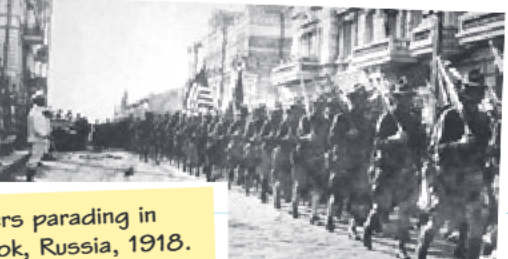
Foreign intervention
Foreign intervention in the Russian Civil War initially appeared to strengthen the White cause but ultimately became a propaganda gift for the Bolsheviks.
British, French, Japanese, and American soldiers were sent to support the White forces and protect Allied weapon dumps that had originally been sent to help Russia during the First World War. However, this foreign support was limited in scale and duration.
Important
The foreign interventions actually helped the Whites for only a brief period before becoming counterproductive. This is a classic example of how external support can sometimes harm the cause it's meant to help.
The foreign interventions actually helped the Whites for only a brief period before becoming counterproductive. The Bolsheviks skillfully used the presence of foreign troops as propaganda, arguing that they were defending Russia against foreign invaders who wanted to restore the old system and exploit Russian resources.
This propaganda message resonated strongly with many Russians who, regardless of their feelings about the Bolsheviks, did not want their country controlled by foreign powers.
Timeline of major events
1918: Civil War begins; Trotsky appointed Commissar for War; foreign intervention commences
1918-1919: Peak period of White Army strength and foreign support
1920: White forces begin major retreats; foreign powers start withdrawing support
1921: Civil War effectively ends with Bolshevik victory
Summary
Key Points to Remember:
-
The Red Army's size advantage was crucial: Over 5 million Bolshevik soldiers versus a maximum of 250,000 White troops gave the Reds overwhelming numerical superiority.
-
Trotsky's military leadership was decisive: His organisation of the Red Army, use of former tsarist officers, and introduction of political commissars transformed Bolshevik military effectiveness.
-
Geographic control mattered: The Bolsheviks' control of central Russia provided shorter supply lines, better communications, and access to most of the population and industry.
-
White disunity was fatal: The lack of unified White leadership and competing ideological goals prevented effective coordination against the Bolsheviks.
-
Foreign intervention backfired: While initially helping the Whites, foreign support became a powerful propaganda tool for the Bolsheviks to portray themselves as defenders of Russian independence.