Key events of the conquest (Edexcel GCSE History): Revision Notes
📚Revision Notes
Key events of the conquest of Mexico
The Spanish conquest of the Aztec Empire between 1519-1521 was achieved through a combination of strategic alliances, deception, and military force. Hernán Cortés successfully overthrew the mighty Aztec Empire by building partnerships with indigenous tribes who opposed Aztec rule, particularly the Tlaxcalans.
Montezuma's invitation to Cortés
The conquest began with a series of calculated moves that allowed Cortés to gain entry to the heart of the Aztec Empire. Montezuma's decision to invite the Spanish to Tenochtitlan proved to be a fatal mistake that would lead to the empire's downfall.
Montezuma had been receiving reports from Aztec spies about Cortés and his activities along the coast. These spies brought concerning news about the alliances and agreements the Spanish leader was making with indigenous tribes who harboured resentment against Aztec rule. Understanding that these local alliances posed a significant threat to his empire, Montezuma decided on a diplomatic approach.
Rather than attacking the Spanish directly, Montezuma chose to send gifts to Cortés and extended a formal invitation for him and his soldiers to visit Tenochtitlan, the magnificent capital of the Aztec Empire. This invitation was presented as a gesture of hospitality to honoured guests.
Note
The Aztecs made a crucial suggestion that would later be used against them - they recommended that the Spanish travel to Tenochtitlan through the sacred city of Cholula, which was under Aztec control. This route may have reflected Montezuma's belief that the Spanish were gods who had come from the sea, and that passing through this holy city would be appropriate for divine visitors.
Cortés, recognising both an opportunity and potential trap, agreed to travel to Tenochtitlan via Cholula. However, he also negotiated with the Tlaxcalans to provide 1000 warriors to accompany him on this journey, ensuring he would have military support if needed.
The massacre at Cholula
The events at Cholula marked a turning point that demonstrated Spanish ruthlessness and sent shockwaves throughout the Aztec Empire. What should have been a peaceful passage became a brutal display of Spanish military power.
As Cortés's expedition made its way towards Tenochtitlan, they entered the sacred city of Cholula. However, instead of simply passing through, the Spanish soldiers launched a devastating attack on the city's inhabitants. Cortés's forces massacred approximately 3000 people and completely destroyed the city, which held deep religious significance for the Aztecs.
Important
Strategic Impact of the Cholula Massacre
This massacre served multiple strategic purposes for the Spanish. It demonstrated their military capabilities and willingness to use extreme violence, sending a clear message throughout the region about the consequences of opposing them. The destruction of such a sacred site also had profound psychological effects on the indigenous population, showing that the Spanish had no respect for Aztec religious beliefs or holy places.
The news of the Cholula massacre spread rapidly across the Aztec Empire, creating fear and uncertainty. Many began to question whether Montezuma's approach of diplomatic engagement was wise, and the event significantly weakened Aztec morale. For the Spanish and their Tlaxcalan allies, the massacre represented a powerful statement of intent as they continued their advance towards Tenochtitlan.
The Spanish arrival in Tenochtitlan, 1519
When Cortés and his forces finally reached Tenochtitlan in 1519, they encountered one of the most magnificent cities in the world. The Aztec capital was an engineering marvel built on an island in Lake Texcoco, connected to the mainland by elaborate causeways.
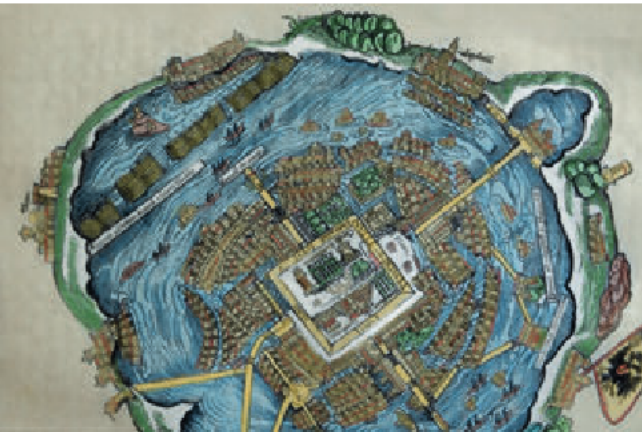
Initially, Montezuma welcomed the Spanish as guests, possibly still believing they might be gods or at least deserving of respectful treatment. This initial hospitality provided Cortés with exactly the opportunity he needed to establish control over the situation.
However, Cortés had no intention of remaining a mere guest. Using deception and threats, he quickly turned Montezuma into a prisoner, effectively taking control of the Aztec ruler while maintaining the pretence that Montezuma was still in charge. Cortés forced the emperor to act as a puppet king, issuing orders that served Spanish interests while ruling the Aztec Empire according to Cortés's instructions.
Note
To further consolidate Spanish control and impose their religion, Christian images were placed in Aztec temples. This was intended to show that the Christian God was superior to Aztec deities, representing both a religious and political statement of dominance.
The defeat of the Aztecs, 1520-21
The final phase of the conquest involved a series of dramatic reversals and ultimately successful Spanish siege warfare that brought down the mighty Aztec Empire.
In April 1520, the situation became complicated when approximately 1000 Spanish soldiers sent by Diego Velázquez landed in Mexico with orders to arrest Cortés. Leaving his deputy Pedro de Alvarado in charge of Tenochtitlan, Cortés departed to deal with this threat to his authority. He successfully defeated Velázquez's forces and convinced many of them to join his cause.
However, during Cortés's absence, Alvarado made a catastrophic decision that would trigger a massive uprising. Fearing a potential rebellion, he ordered the killing of Aztec nobles who had gathered for a religious ceremony. This brutal act finally pushed the Aztec people beyond their breaking point.
Important
The Night of Tears: June 1520
The result was the famous "Night of Tears" in June 1520, when the Aztecs finally turned against their Spanish occupiers. In fierce fighting throughout the city, the Aztecs killed approximately half of the Spanish forces and drove the survivors, along with their Tlaxcalan allies, out of Tenochtitlan. During this chaotic retreat, Montezuma was killed - whether by Spanish hands or by his own people remains historically disputed.
Rather than accepting defeat, Cortés and his surviving allies regrouped and launched a systematic siege of Tenochtitlan. This siege was methodical and brutal, designed to starve the city's inhabitants into submission. The Spanish blocked all supply routes and gradually tightened their grip on the island city. After months of suffering and starvation, the remaining defenders could no longer resist. On 13 August 1521, Tenochtitlan finally surrendered to the Spanish forces.
Timeline of key events
- 1519: Spanish forces arrive in Tenochtitlan; Montezuma welcomes them as guests
- 1519: Cortés takes Montezuma prisoner and establishes control over the city
- April 1520: Velázquez sends 1000 soldiers to arrest Cortés
- 1520: Alvarado kills Aztec nobles during Cortés's absence
- June 1520: Night of Tears - Aztecs rebel and drive Spanish from the city
- 1520-1521: Spanish siege of Tenochtitlan begins
- 13 August 1521: Tenochtitlan surrenders; Aztec Empire falls
Example
Worked Example: Spanish Strategy Analysis
Step 1: Identify the key strategic elements
- Alliance building with anti-Aztec tribes (Tlaxcalans)
- Deception and manipulation of Aztec leadership
- Use of psychological warfare (Cholula massacre)
Step 2: Analyse the sequence of events
- Initial diplomatic approach → gaining entry to Tenochtitlan
- Taking Montezuma prisoner → controlling the empire from within
- Surviving the Night of Tears → regrouping for final assault
Step 3: Evaluate the outcome The Spanish strategy succeeded because it combined military force with political manipulation, turning Aztec strengths (hospitality, religious beliefs) into weaknesses.
Summary
Key Points to Remember:
-
Alliance building was crucial - Cortés succeeded by partnering with indigenous tribes like the Tlaxcalans who opposed Aztec rule
-
Deception played a key role - From accepting Montezuma's invitation to taking him prisoner, Spanish tactics relied heavily on betraying trust
-
The Cholula massacre was a turning point - This brutal event demonstrated Spanish power and sent shockwaves through the empire
-
The Night of Tears showed Aztec resistance - Despite initial defeats, the Aztecs successfully expelled the Spanish in June 1520, proving their military capabilities
-
Siege warfare decided the final outcome - The systematic siege of Tenochtitlan from 1520-1521 ultimately forced the city's surrender through starvation and exhaustion