The impact of trade (Edexcel GCSE History): Revision Notes
📚Revision Notes
The impact of trade
Spain's control over trade with the Americas transformed the Spanish economy and society between c1528-c1555. This monopoly led to the remarkable growth of Seville as Europe's wealthiest trading city, while also creating serious labour shortages that would drive the expansion of the slave trade.
The growth of Seville as a trading powerhouse
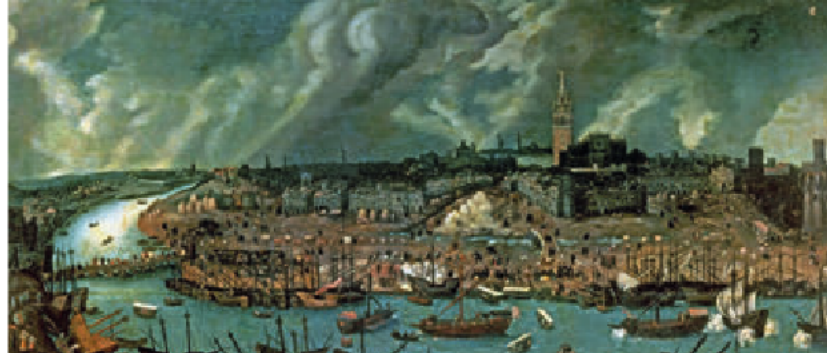
Seville became the beating heart of Spain's American trade empire. All goods flowing between Europe and the Americas had to pass through Seville's Casa de Contratación (House of Trade), where merchants were required to pay taxes and duties on everything they traded.
The city attracted merchants from across Europe who travelled there to purchase American goods and sell European products destined for the colonies. The main trade goods included valuable plants like cotton and tobacco, essential crops such as wheat, livestock including horses and pigs, and cattle. However, it was the flow of precious silver that truly made Seville's merchants extraordinarily wealthy.
Spain's monopoly over this transatlantic trade gave Seville - and particularly its merchants and traders - enormous economic power. By 1555, Seville had established itself as Spain's primary trade connection to the Americas, dominating European access to New World wealth.
Note
Seville's location about 100 kilometres inland meant that ships had to navigate up the River Guadalquivir to reach the port. While this journey was inconvenient, it actually provided Seville with a strategic defensive advantage, making the wealthy port much more difficult for enemies to attack directly.
The rise of the Consulado de Mercaderes
Spanish merchants quickly recognised the enormous profits available from American trade and demanded greater control over this lucrative business. They established the Casa de Contratación system and later formed a powerful merchants' guild called the Consulado de Mercaderes.
Important
This guild essentially created a monopoly that allowed Spanish merchants to control most trade with their American colonies. By restricting competition and controlling supply, they could keep prices artificially high, maximising their profits.
The economic influence of both Spain and the Americas grew significantly as this merchant guild expanded its control over transatlantic commerce.
Labour shortages and their consequences
The wealth flowing from the Americas came at a terrible human cost. The encomienda system, which managed the trade in cotton and tobacco as well as the operation of silver mines, required enormous amounts of labour to function effectively.
However, the Indigenous population had suffered catastrophic decline due to diseases (including deadly smallpox), brutal overwork in silver mines, and mass killings during the early years of conquest. This demographic disaster created severe labour shortages by the mid-1550s.
Important
As labour became increasingly scarce, wages began rising significantly. This posed a serious economic problem for Spanish colonial enterprises that depended on cheap labour to maintain their profitability.
The expansion of the slave trade
The labour crisis led to a tragic expansion of the Atlantic slave trade. Bartolomé de las Casas had initially suggested in the 1520s that Indigenous workers could be replaced by enslaved Africans, though he later recognised the moral horror of this proposal and changed his position.
The Treaty of Tordesillas prevented Spain from directly acquiring enslaved people from West Africa, as the Portuguese controlled that trade route. Instead, Spanish merchants obtained licences called asientos that permitted them to supply enslaved people to the Americas.
Note
These licences operated through a brutal auction system - they were sold to the highest bidders, who could then purchase enslaved people from Portuguese traders and transport them to Spanish American colonies for enormous profits. The enslaved people were then sold to the encomienda system to meet the growing demand for labour.
Timeline of key events
Example
Key Timeline: Trade and Labour Changes
- 1520s: Bartolomé de las Casas first suggests replacing Indigenous labour with enslaved Africans (later changes his position)
- Mid-1550s: Labour shortages become critical due to Indigenous population decline
- 1555: Seville established as Spain's main trade link to the Americas
Summary
Key Points to Remember:
- Spain's monopoly over American trade made Seville one of Europe's wealthiest cities by 1555
- The Casa de Contratación controlled all trade between Europe and the Americas, generating massive tax revenue
- The Consulado de Mercaderes merchant guild created a monopoly that kept prices high and profits enormous
- Indigenous population collapse due to disease and overwork created severe labour shortages by the mid-1550s
- Labour shortages drove the expansion of the Atlantic slave trade through the asientos licence system