Cattle trails and cow towns (Edexcel GCSE History): Revision Notes
📚Revision Notes
Cattle trails and cow towns
Content note
Important
The provided materials focus on the Oregon Trail and westward migration from c1835-c1850, which is not directly related to the development of cattle trails and cow towns during c1862-c1876. The Oregon Trail was primarily used by settlers and families moving west to establish new lives, while cattle trails were commercial routes used to drive herds of cattle from ranches to railroad towns for shipping to eastern markets.
Understanding this distinction is crucial for grasping the different phases of westward expansion in 19th-century America. While both involved movement across the Great Plains, their purposes, participants, and economic impacts were fundamentally different.
What this subtopic should cover
Cattle trails and cow towns were a crucial part of the development of the Great Plains during the period c1862-c1876. This topic would typically include:
Note
Cattle trails: The major routes used to drive cattle from Texas ranches to railroad towns, including the Chisholm Trail, Western Trail, and Goodnight-Loving Trail. These trails developed after the Civil War when Texas had large herds of cattle but limited local markets.
Cow towns: The railroad towns that grew up at the end of cattle trails, such as Abilene, Dodge City, and Wichita in Kansas. These towns became famous for their lawlessness, saloons, and the temporary presence of cowboys at the end of long cattle drives.
The cattle industry: How ranching expanded across the Plains, the role of cowboys, and the economic importance of beef to growing eastern cities connected by railroads.
The cattle industry represented a significant economic transformation of the American West, turning vast grasslands into productive commercial enterprises that connected rural ranches to urban markets through an extensive network of trails and railroad connections.
Understanding the difference
The materials provided show migration routes for families seeking new homes in Oregon and California, which represented permanent westward movement. In contrast, cattle trails were temporary, seasonal routes used for commercial purposes - moving livestock to market rather than people to new homes.
Note
The fundamental difference lies in purpose and permanence. Migration trails like the Oregon Trail were used by families making a one-way journey to establish permanent settlements, while cattle trails were used repeatedly by cowboys and ranchers as part of ongoing commercial operations.
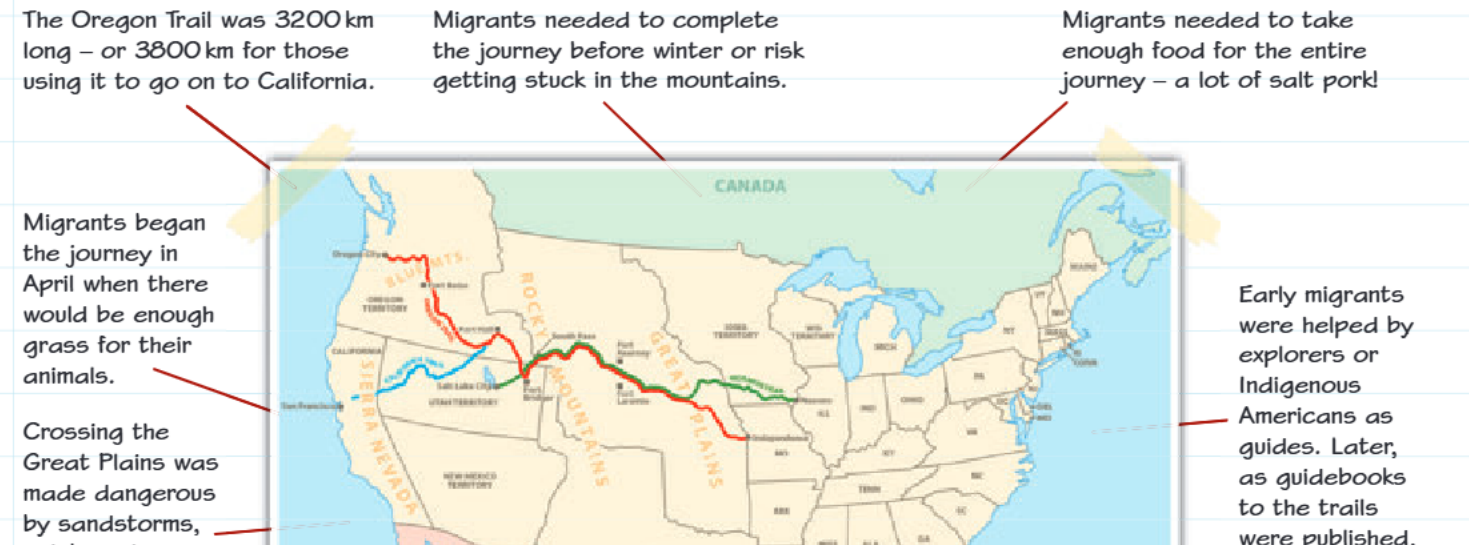
The map above shows migration trails rather than cattle trails, illustrating the difference between these two types of westward movement in 19th-century America.
Key distinctions to remember
The economic and social impacts of these different trail systems shaped the development of the American West in distinct ways:
- Migration trails facilitated permanent settlement and agricultural development
- Cattle trails enabled commercial livestock operations and the growth of the beef industry
- Cow towns developed as temporary gathering points rather than permanent family communities
- Railroad connections were crucial to both systems but served different economic functions
Summary
Key Points to Remember:
- The provided content focuses on the Oregon Trail and family migration, not cattle trails and cow towns
- Cattle trails developed later (c1862-c1876) and served different purposes than migration routes
- Cow towns grew up at railroad connections where cattle drives ended
- This subtopic would examine the commercial cattle industry rather than permanent settlement
- The economic and social development of the Plains involved both types of trails but for different reasons and different time periods