Ranchers vs homesteaders (Edexcel GCSE History): Revision Notes
📚Revision Notes
Development of the Plains, c1862-c1876: Challenges faced by settlers
The harsh reality of Plains settlement
When settlers began moving onto the Great Plains during the mid-19th century, they quickly discovered that life there presented unique and formidable challenges. Unlike the forested eastern regions they came from, the Plains offered a completely different environment that required new methods of survival and farming.
Note
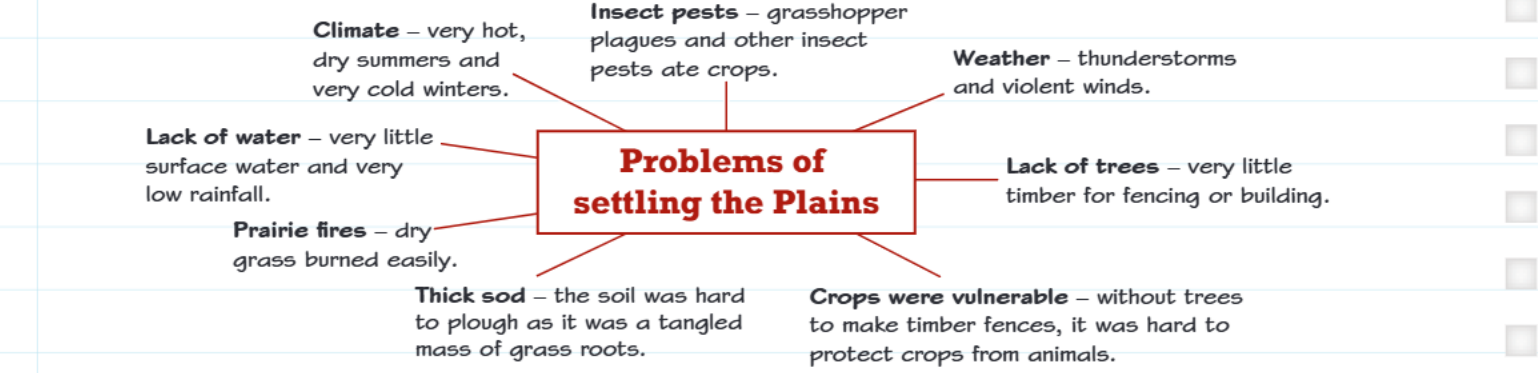
The Plains environment created a complex web of interconnected problems that made settlement extremely difficult. Each challenge was linked to others, creating a domino effect that made survival particularly tough for early settlers.
These challenges would later contribute to tensions between different groups competing for land and resources.
Environmental obstacles to settlement
Climate extremes and weather patterns
The Plains climate proved far more extreme than what most settlers had experienced. Summers brought scorching heat and drought conditions, while winters delivered bitter cold that could be deadly. The dramatic temperature variations made it difficult to plan agricultural activities and posed constant threats to both crops and livestock.
Violent weather patterns added another layer of danger. Thunderstorms arrived with little warning, bringing destructive winds that could flatten crops and damage buildings. These unpredictable weather events made farming a risky venture where a single storm could destroy months of hard work.
Water scarcity and agricultural challenges
Important
Perhaps the most critical problem was the severe lack of water. The Plains received far less rainfall than eastern farming regions, and surface water sources like rivers and streams were rare.
This water shortage made it nearly impossible to grow the same crops that had been successful in wetter climates.
The soil itself presented additional difficulties. The thick sod of the Plains consisted of densely packed earth held together by tangled grass roots, making it extremely hard to plough. Traditional farming equipment that worked well in the East often broke when settlers tried to use it on this tough prairie sod.
Resource scarcity and its consequences
The timber shortage crisis
Important
One of the most serious problems facing Plains settlers was the almost complete absence of trees. This lack of timber created multiple challenges that affected every aspect of frontier life.
Without wood, settlers couldn't build traditional houses or create fences to protect their crops and livestock from wandering animals.
Housing adaptations
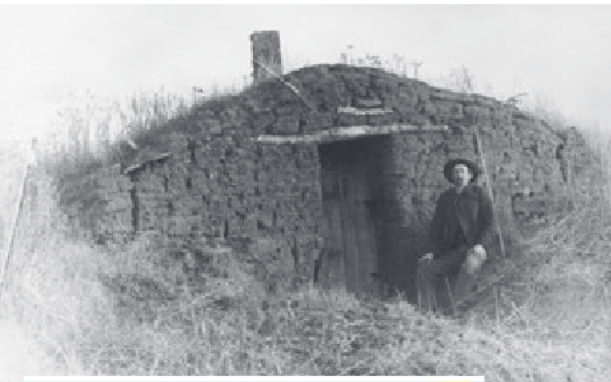
Due to the timber shortage, settlers developed creative housing solutions. Many lived in dugout homes carved into hillsides or built sod houses using blocks of prairie earth.
Example
Worked Example: Sod House Construction
Step 1: Cut rectangular blocks of prairie sod using a special plough Step 2: Stack the sod blocks like bricks to form walls Step 3: Use wooden beams (when available) or more sod for the roof Step 4: Cover with additional layers of sod and clay for weatherproofing
Result: A sturdy, insulated home that could withstand harsh Plains weather
These earth-based dwellings actually offered some advantages - the thick walls provided excellent insulation during harsh winters and were naturally fireproof, offering protection from the frequent prairie fires that swept across the dry grasslands.
However, sod houses also had significant drawbacks. They were impossible to keep clean and became infested with insects. The earthen construction meant that settlers lived in damp, cramped conditions that were far from comfortable.
Economic pressures and solutions
The fencing problem
The lack of available timber created serious economic challenges for settlers trying to establish farms. Without trees, they had to import expensive lumber to build fences around their claims. This made homesteading extremely costly and put many settlers into debt before they could even begin farming.
Important
This problem persisted until 1874, when the introduction of barbed wire provided a revolutionary solution. Barbed wire offered a cheap alternative to wooden fencing, finally making it economically feasible for settlers to protect their crops and establish clear property boundaries.
Agricultural disasters and pest problems
Insect infestations
Grasshopper plagues represented one of the most devastating threats to Plains agriculture. These insect swarms could appear suddenly and destroy entire crops in a matter of hours. The Rocky Mountain grasshopper, in particular, caused widespread agricultural disasters that left many settlers facing starvation and financial ruin.
Note
The lack of trees and proper fencing meant that crops remained vulnerable not only to insects but also to grazing animals that could wander onto farmland and destroy months of work. This created a cycle where multiple threats could compound each other's effects.
Timeline of key developments
- c1862-1870: Initial homestead settlements face severe environmental challenges
- 1874: Barbed wire patented, revolutionising Plains farming by providing affordable fencing
- 1870s: Continued grasshopper plagues devastate crops across the Plains
Comparison with other regions
The difficulties faced on the Plains became even more apparent when compared to farming conditions elsewhere. In California and Oregon, settlers found much better agricultural conditions. By the 1850s, California farmers were so successful that they began exporting wheat worldwide, highlighting just how challenging Plains agriculture really was.
Summary
Key Points to Remember:
- Environmental extremes: The Plains presented harsh climate conditions, water scarcity, and violent weather that made farming extremely difficult
- Resource challenges: The lack of trees forced settlers to develop new housing methods like sod houses and created expensive fencing problems
- Agricultural obstacles: Thick sod, grasshopper plagues, and vulnerable crops made successful farming much harder than in eastern regions
- Economic solutions: The introduction of barbed wire in 1874 finally provided an affordable fencing solution that made Plains settlement more viable
- Innovation and adaptation: Settlers had to develop completely new methods of building, farming, and surviving in this challenging environment