Changes in farming (Edexcel GCSE History): Revision Notes
📚Revision Notes
Changes in farming (c1876-c1895)
Introduction
Between 1876 and 1895, farming in the American West underwent dramatic transformation. New technologies and innovative methods emerged to tackle the harsh challenges of the Great Plains environment. By the 1890s, what had once seemed like impossible farming conditions had become manageable, turning the region into America's agricultural heartland.
Note
The transformation of the Great Plains from seemingly unusable land to productive farmland represents one of the most remarkable agricultural achievements in American history. This change happened in less than 20 years through the combination of innovative techniques and technological breakthroughs.
Revolutionary farming methods
Dry farming techniques
The development of dry farming represented a crucial breakthrough for agriculture on the Great Plains. This method focused on conserving every drop of precious water that fell as rain. Farmers learned to plough their fields immediately after rainfall, trapping moisture deep in the soil where it couldn't evaporate in the harsh prairie sun.
Agricultural experts actively promoted dry farming as the most effective approach for homesteaders attempting to grow crops in this challenging environment. The technique proved particularly successful for wheat cultivation, and farmers discovered that certain varieties like Turkey Red wheat thrived using these water conservation methods.
Example
Practical Example: Dry Farming Process
Step 1: Wait for rainfall on the Great Plains Step 2: Immediately plough the fields while soil is moist Step 3: Create a moisture barrier by packing surface soil Step 4: Trapped water remains deep in soil, protected from evaporation Step 5: Crops like Turkey Red wheat access this stored moisture throughout the growing season
This farming revolution was so successful that dry farming became the primary method responsible for transforming the Great Plains into America's main wheat-producing region. The technique allowed farming to expand into areas previously considered too dry for agriculture.
Technological innovations
Wind pump technology
The invention of wind-powered water pumps solved one of the biggest challenges facing Great Plains farmers - accessing water. The breakthrough came with the development of the "self-regulating" windmill in 1854, though it took many years for the technology to spread widely across the West.
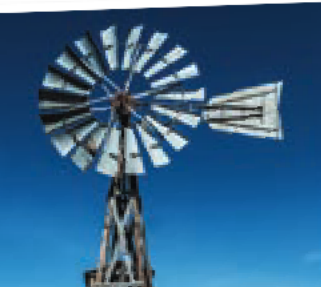
These ingenious machines worked automatically, turning to face the wind as its direction changed throughout the day. The early models required significant engineering improvements, including the development of high steel towers and large steel windmill blades capable of generating enough power to pump water from hundreds of metres underground.
Important
Critical Breakthrough: 1880s Wind Pump Perfection
By the 1880s, powerful and reliable wind pumps had been perfected. Unlike earlier models that needed constant maintenance and adjustment, these advanced pumps operated independently without requiring frequent repairs. This represented the difference between experimental technology and practical farming solutions.
This technology spread rapidly across the West, finally providing farmers with dependable access to the underground water sources essential for both crops and livestock.
Barbed wire revolution
The introduction of barbed wire in 1874 provided the ideal solution to a major problem facing Western farmers - the complete lack of wood for building fences. In the treeless Great Plains, traditional fencing materials simply weren't available, leaving farmers unable to protect their crops or contain their animals.
However, the early barbed wire faced significant challenges. When first introduced, it was relatively expensive and had a tendency to break easily. Some early designs featured long, sharp barbs that could seriously injure cattle, creating resistance from ranchers.
Important
The 1880s Breakthrough: Improved Manufacturing
The real breakthrough came during the 1880s when manufacturers developed improved coating techniques that made the wire much stronger and more durable. Advanced manufacturing methods also drove down costs significantly, making barbed wire affordable for ordinary farmers.
The impact extended far beyond individual farms. The cattle industry quickly adopted barbed wire technology for fencing off large areas of grazing land. Railroad companies also used it extensively to fence off their tracks, preventing livestock from wandering onto the railway lines.
Timeline of key developments
- 1854: Self-regulating windmill invented
- 1870s: Dry farming techniques promoted by agricultural experts
- 1874: Barbed wire first introduced to the market
- 1880s: Improved barbed wire coating developed, making it stronger and cheaper
- 1880s: Powerful, reliable wind pumps perfected and become widespread
- 1890s: All three technologies combined to make Great Plains farming manageable
Summary
Key Points to Remember:
- Dry farming conserved water by ploughing immediately after rainfall, turning the Great Plains into America's wheat-producing region
- Wind pumps (invented 1854, perfected by 1880s) provided reliable access to underground water sources across the West
- Barbed wire (introduced 1874, improved 1880s) solved the fencing problem in treeless areas and was used by farmers, ranchers, and railroads
- These three innovations working together transformed seemingly impossible farming conditions into manageable agricultural land
- By the 1890s, technological solutions had overcome the major environmental challenges facing Western farmers