The Oregon Trail and the Donner Party (Edexcel GCSE History): Revision Notes
📚Revision Notes
The Oregon Trail and the Donner Party
Introduction to westward migration
During the period from around 1835 to 1850, thousands of American families packed up their belongings and headed west in search of new opportunities and land. These early migrants faced incredible challenges as they travelled across the continental United States, but they followed established procedures and routes to protect themselves from the many dangers they would encounter. The story of the Oregon Trail represents both the hope and determination of these pioneers, while the tragedy of the Donner Party serves as a stark reminder of what could happen when these proven methods were abandoned.
The Oregon Trail journey
The route and starting point
The great westward journey typically began at Independence, Missouri, where waggon trains would gather before setting out on the long trek to Oregon or California. These waggon trains usually consisted of 20 or more waggons travelling together for safety and mutual support.
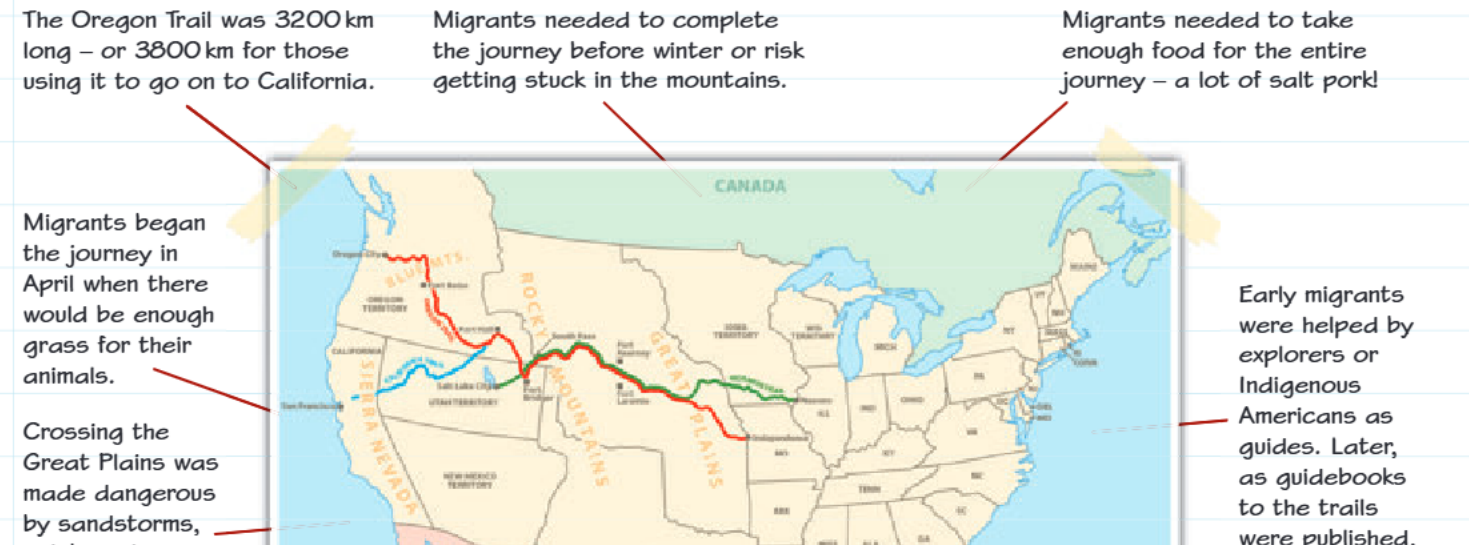
The Oregon Trail stretched an enormous kilometres to Oregon, with an extension that made the journey kilometres for those heading to California. This wasn't just a simple path across flat land - the route took migrants across two major mountain ranges: the Rocky Mountains and either the Blue Mountains or the Sierra Nevada, depending on their final destination.
Note
The choice of final destination significantly impacted the journey's difficulty. While Oregon was the original goal of most migrants, the discovery of gold in California in 1848 would later shift many travellers towards the longer, more challenging California route.
Timing was everything
Successful migrants understood that timing their departure was critical to survival. They had to begin their journey in April, when there would finally be enough grass available for their animals to graze along the way. Starting too early meant their livestock would starve, but starting too late created an even deadlier problem - the risk of being caught in winter weather before completing the journey.
Important
Critical Timing Window
The entire trip took between 8-9 months to complete, which meant travellers had to finish their journey before the harsh mountain winters set in. Getting trapped in the mountains during winter could be fatal, as the Donner Party would tragically discover.
Challenges along the trail
Crossing the Great Plains and mountains presented numerous life-threatening challenges. Travellers faced sandstorms that could blind and disorient them, dangerous quicksand that could swallow waggons whole, and extreme weather conditions ranging from scorching heat to violent storms. Disease was a constant threat, spreading quickly through the confined waggon trains.
The terrain itself was punishing. There was little game to hunt for fresh meat, and the harsh weather made travel difficult and dangerous. Travellers had to haul their heavy waggons across mountain passes using chains, ropes, and pulleys, often resulting in serious injuries. The threat of encounters with hostile Indigenous groups added another layer of danger to the journey.
Buffalo stampedes posed a particular threat on the Great Plains, as these massive herds could destroy everything in their path if startled.
Food and supplies
Migrants needed to pack enough food to last the entire journey, which was no small task. Salt pork became the staple food for most travellers because it could be preserved for months without spoiling. Calculating the right amount of food was crucial - too little meant starvation, while too much added dangerous weight to already overloaded waggons.
Note
Supply Management Strategy
Experienced travellers learned to balance food quantity with waggon weight. Salt pork was preferred over fresh meat not only for its preservation qualities but also because it provided essential nutrients and calories needed for the demanding physical journey.
Navigation and guidance
Early migrants were helped by explorers and Indigenous Americans who served as guides, sharing their knowledge of the best routes and safe passages. As westward migration became more common, guidebooks were published that provided detailed information about the trails. However, these guidebooks weren't always reliable, and migrants who trusted unproven routes often faced disaster.
The Donner Party tragedy
The departure
In May 1846, a waggon train led by Jacob and George Donner left Missouri bound for California. This group consisted of 60 waggons carrying approximately 300 people, including more women, elderly people, and children than was typical for such journeys. While the waggon train was well-equipped for the journey, this demographic makeup would prove to be a significant disadvantage when disaster struck.
The fatal decision at Fort Bridger
At Fort Bridger, the Donner Party faced a crucial decision that would seal their fate. A smaller group of about 80 people decided to take what they believed would be a "short cut" to California. They were using a leaflet for guidance rather than following the established, proven route that other successful migrants had used.
Important
The Fatal Mistake
This decision to abandon the known safe route in favour of an untested shortcut would prove to be catastrophic. The "short cut" was neither shorter nor safer than the established trail. This single decision demonstrates why following proven procedures was so critical for survival.
Disaster in the mountains
Example
Worked Example: The Consequences of Poor Decision Making
The consequences of taking the untested route quickly became apparent:
Step 1: Equipment failures
- Four waggons broke down due to difficult terrain
Step 2: Livestock losses
- 300 head of cattle died from harsh conditions
Step 3: Human casualties
- One person was killed during the journey
Step 4: Critical delay
- These setbacks slowed progress significantly, causing them to reach the Sierra Nevada mountains just as winter began
Result: The group became trapped by heavy snow with no escape route.
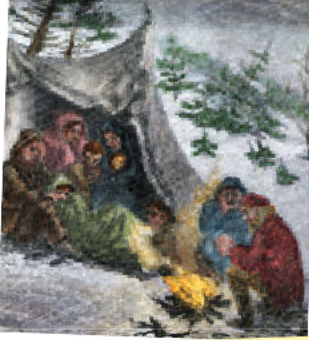
The group found themselves trapped by heavy snow in the mountain passes. With winter setting in and no way forwards or back, their situation became desperate. A rescue party was sent to seek help, but it took them 32 days just to reach Johnson's Ranch - precious time during which those left behind faced starvation and freezing conditions.
Survival and rescue
Faced with starvation and death, the trapped members of the Donner Party were forced to resort to eating their dead companions to survive. This desperate measure allowed some to live through the harsh winter, though the psychological trauma would last forever.
Rescue parties finally reached the survivors in February 1847, nearly a year after their journey had begun. By this time, many had died from starvation, exposure, and disease. The Donner Party's story became a cautionary tale that spread quickly among potential migrants, highlighting the deadly consequences of abandoning proven procedures and routes.
Timeline of events
- May 1846: Donner Party departs Missouri with 60 waggons and 300 people
- Summer 1846: Group reaches Fort Bridger and decides to take untested "short cut"
- Late 1846: Party becomes trapped by snow in Sierra Nevada mountains
- Winter 1846-1847: Survivors resort to cannibalism to stay alive
- February 1847: Rescue parties reach survivors after 32-day journey
Summary
Key Points to Remember:
- The Oregon Trail was a -kilometer journey that required careful timing - starting in April and finishing before winter set in
- Successful migration depended on following established procedures, carrying enough supplies (especially salt pork), and using proven routes
- The Donner Party tragedy resulted from abandoning established procedures and taking an untested "short cut" that led to being trapped in the Sierra Nevada mountains
- Timing was critical - the Donner Party's delays meant they reached the mountains just as winter began, sealing their fate
- The disaster served as a powerful warning to future migrants about the importance of following proven routes and procedures when travelling west