Projections (Edexcel GCSE Maths): Revision Notes
📚Revision Notes
Projections
What are projections?
Projections are simply different ways of viewing a three-dimensional solid shape. When you look at a 3D object, you can observe it from various angles - from the front, from the side, and from above. Each of these viewpoints gives you a different two-dimensional representation of the same object, and these are called projections.
Note
Think of projections as flattened views of a 3D shape. Just like taking photographs of a building from different positions, each projection shows you specific information about the object's dimensions and structure from that particular viewing angle.
The three types of projections
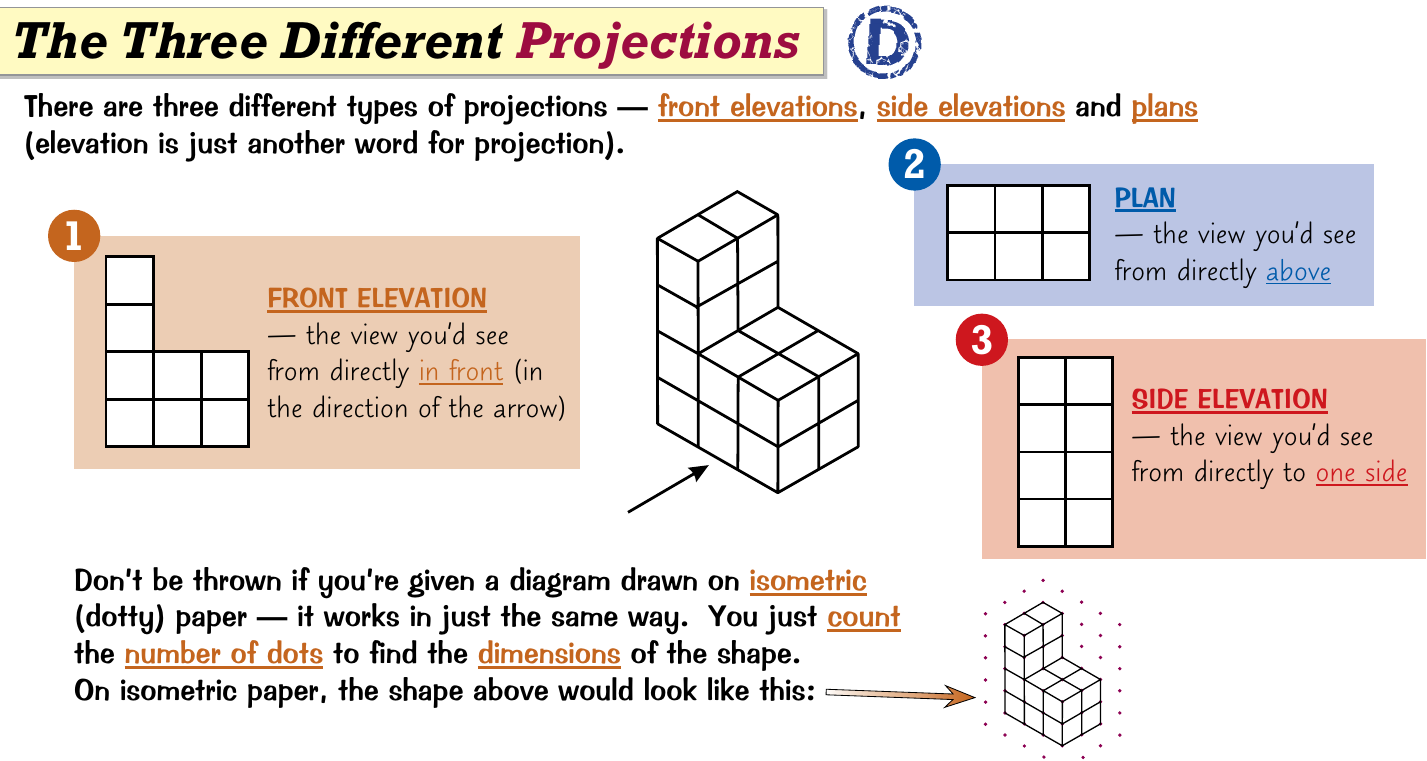
There are three main types of projections that you need to understand, each showing the object from a different perspective. Each projection reveals different dimensional information about the same object.
Front elevation
The front elevation shows you exactly what you would see if you were standing directly in front of the object. This projection displays the width and height of the object, but doesn't show any depth information. When drawing a front elevation, you're essentially looking straight ahead at the object's face.
Side elevation
The side elevation presents the view you would get if you moved to look at the object from directly to one side. This projection shows you the depth and height of the object, giving you information about dimensions that aren't visible in the front elevation. The side elevation is particularly useful for understanding how far the object extends backwards or forwards.
Plan view
The plan view is what you would see if you were looking down at the object from directly above. This projection shows the width and depth of the object, essentially giving you a bird's-eye view. The plan view is like looking at a floor plan of a building - it shows you the layout and dimensions from above.
Note
Key insight: Each projection only shows two dimensions at a time - you can't see all three dimensions (width, height, and depth) in a single projection. This is why you need all three types of projections to fully understand a 3D object.
Working with isometric paper
Sometimes you might encounter projections drawn on isometric paper, which has a dotted grid pattern. Don't worry if you see this - the same principles apply.
Note
On isometric paper, you can count the dots to work out the dimensions of the shape, just as you would count squares on regular grid paper. The dotted grid pattern helps maintain accurate proportions while drawing.
Drawing projections to scale
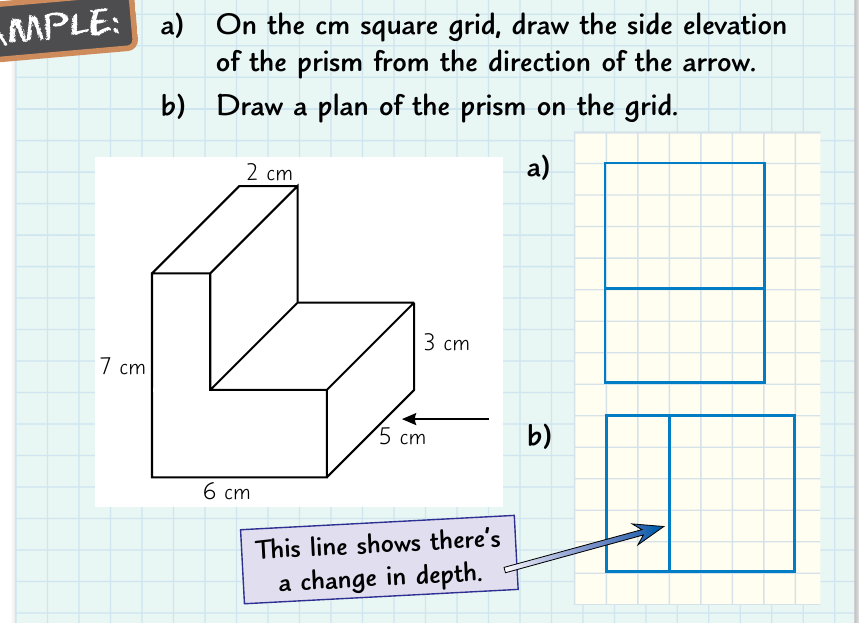
When you're asked to draw projections, you'll often work on grid paper to ensure accuracy. Understanding how to use the grid effectively is essential for accurate projections.
Using grid paper effectively
Grid paper helps you maintain correct proportions and dimensions when drawing projections. Each square on the grid represents a specific measurement, so you need to be careful to get the dimensions right. The grid lines act as your guide to ensure your projections are accurate.
Sketching vs precise drawing
If you're asked to sketch a projection rather than draw it precisely to scale, you don't need to worry about perfect accuracy. However, your sketch should still show the correct proportions and relationships between different parts of the object.
Showing changes in depth
When drawing projections, particularly plan views, you may need to indicate where there are changes in depth. This is often shown with lines that help explain the three-dimensional structure of the object when viewed from above.
Important
Critical for accuracy: If you're given measurements on the original shape, make sure you transfer these correctly to your projections. Pay attention to which dimensions are relevant for each type of projection.
Key considerations when drawing projections
When working with projections, always take your time to understand what you're being asked to draw. Look carefully at the original 3D shape and think about what each projection should show.
Important
Essential steps when drawing projections:
- Take your time to understand the original 3D shape
- Consider which dimensions are relevant for each projection type
- Use grid paper to maintain accurate proportions
- Check your work against the original shape
- Remember that each projection shows only two dimensions at a time
Summary
Key Points to Remember:
- Projections are 2D views of 3D objects taken from different angles
- Front elevation shows width and height (looking straight ahead)
- Side elevation shows depth and height (looking from the side)
- Plan view shows width and depth (looking from above)
- Use grid paper to maintain accurate proportions and dimensions
- Take your time and check your work against the original 3D shape