Symmetry and Tessellations (Edexcel GCSE Maths): Revision Notes
📚Revision Notes
Symmetry and tessellations
Understanding symmetry and tessellations is essential for recognising patterns and properties in geometric shapes. There are two main types of symmetry you need to know about, plus the important concept of tessellations.
Line symmetry
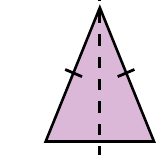
Line symmetry occurs when you can draw one or more mirror lines across a shape, and both sides will fold together perfectly. When you fold the shape along these lines, one half will sit exactly on top of the other half.
Note
The key function of line symmetry is that it creates a perfect mirror image. Think of it like folding a piece of paper - if the edges match up exactly, you've found a line of symmetry.
The number of lines of symmetry varies depending on the shape:
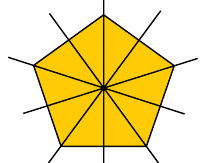
- A regular pentagon has 5 lines of symmetry
- An isosceles triangle has 1 line of symmetry
- A parallelogram has no lines of symmetry
- A rhombus has 2 lines of symmetry
- A kite has 1 line of symmetry
To find lines of symmetry, imagine folding the shape along different lines. If the two halves match up perfectly when folded, then you've found a line of symmetry.
Important
Common mistake to avoid: Don't confuse line symmetry with rotational symmetry. Line symmetry is about folding and mirror images, while rotational symmetry is about turning shapes.
Rotational symmetry
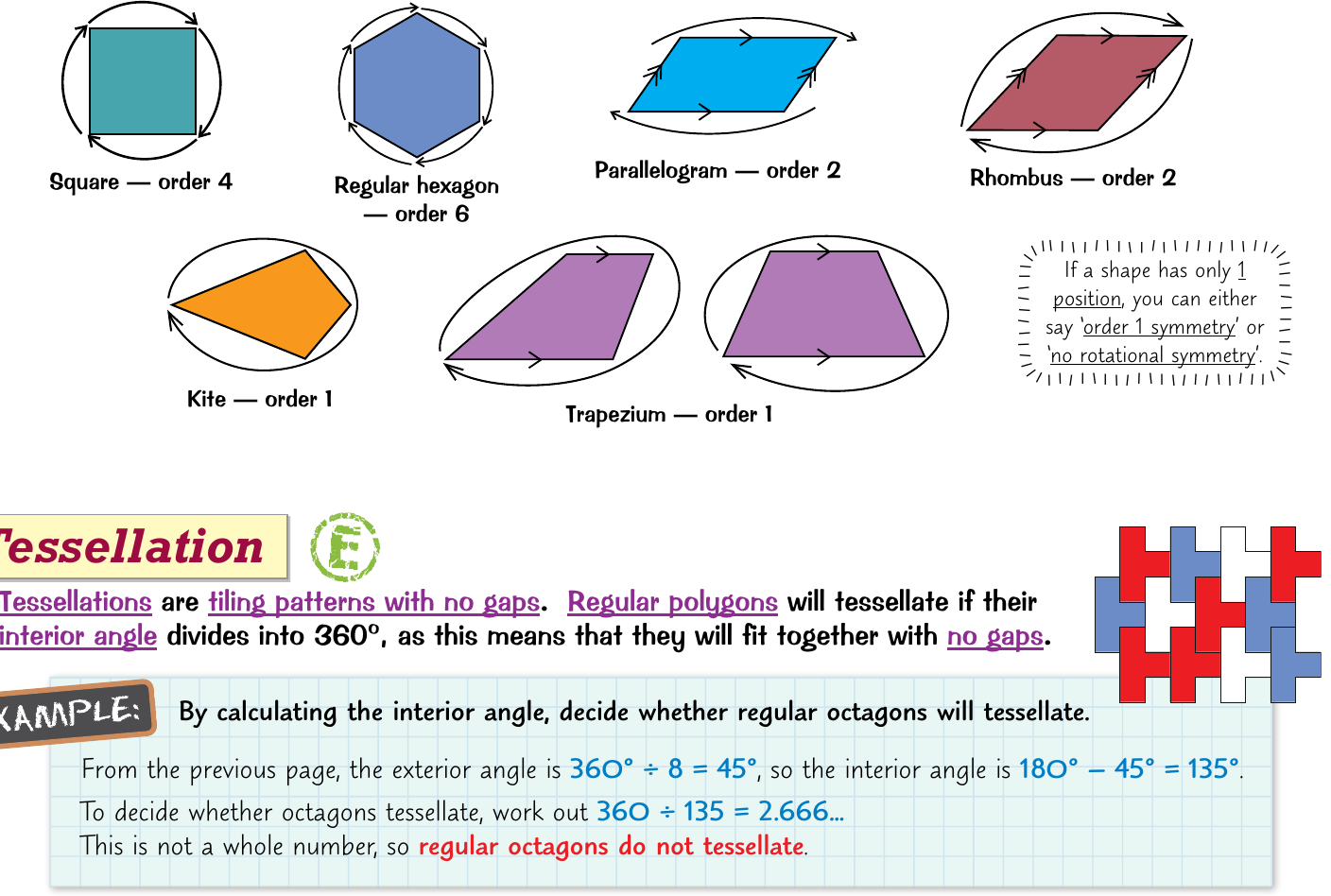
Rotational symmetry describes how a shape can be turned into different positions that look exactly the same as the original. The order of rotational symmetry tells you how many times the shape looks identical during one complete turn.
Here's how different shapes behave under rotation:
- A square has rotational symmetry of order 4 (looks the same 4 times during a full rotation)
- A regular hexagon has rotational symmetry of order 6
- A parallelogram has rotational symmetry of order 2
- A rhombus has rotational symmetry of order 2
- A kite has rotational symmetry of order 1
- A trapezium has rotational symmetry of order 1
When a shape has rotational symmetry of order 1, this means it only looks the same in its original position. You can describe this as either "order 1 symmetry" or "no rotational symmetry."
Note
For regular polygons, the order of rotational symmetry equals the number of sides. This is the same as the number of lines of symmetry they possess. This relationship makes it easier to remember both properties together.
Tessellations
Tessellations are tiling patterns where shapes fit together with no gaps or overlaps. They create repeating patterns that could theoretically continue forever.
Regular polygons will tessellate if their interior angles divide evenly into . This is because the angles around each vertex must add up to exactly for the shapes to fit together perfectly.
Important
Essential rule for tessellations: The interior angle of a regular polygon must divide evenly into . If it doesn't produce a whole number, the polygon cannot tessellate by itself.
Working out if shapes tessellate
To determine whether a regular polygon will tessellate, you need to:
- Calculate the interior angle of the polygon
- Divide by this interior angle
- If the result is a whole number, the polygon will tessellate
Example
Worked Example: Do regular octagons tessellate?
Step 1: Find the interior angle of a regular octagon
- Exterior angle =
- Interior angle =
Step 2: Test if it tessellates
Step 3: Interpret the result Since this is not a whole number, regular octagons do not tessellate on their own.
Only three regular polygons tessellate by themselves: triangles, squares, and hexagons. Their interior angles (, , and respectively) all divide evenly into .
Note
Additional context: While only three regular polygons tessellate alone, you can create tessellations by combining different shapes. Semi-regular tessellations use two or more different regular polygons that fit together perfectly.
Summary
Key Points to Remember:
- Line symmetry involves mirror lines where both sides fold exactly together
- Rotational symmetry describes how many times a shape looks identical during a full rotation
- Regular polygons have the same number of lines of symmetry as their order of rotational symmetry
- Tessellations are patterns with no gaps, and regular polygons tessellate when their interior angle divides evenly into
- Only equilateral triangles, squares, and regular hexagons tessellate on their own