Upthrust & atmospheric pressure (Edexcel GCSE Physics): Revision Notes
📚Revision Notes
Upthrust & atmospheric pressure
Upthrust
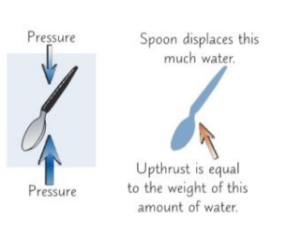
- When an object is submerged in a liquid, it experiences pressure due to the pressure in the liquid.
- Because pressure increases with depth, the bottom surface of this object will experience more pressure than the top surface.
- Because this bottom pressure is larger, there is a resultant force on the object upwards (remember that pressure and force are related). This resultant force upwards is called upthrust.
- The upthrust is equal to the weight of the water displaced by the object. This is just the weight of the water with the same volume as the object.
Note
The balance of the forces will determine whether and object sinks or floats.
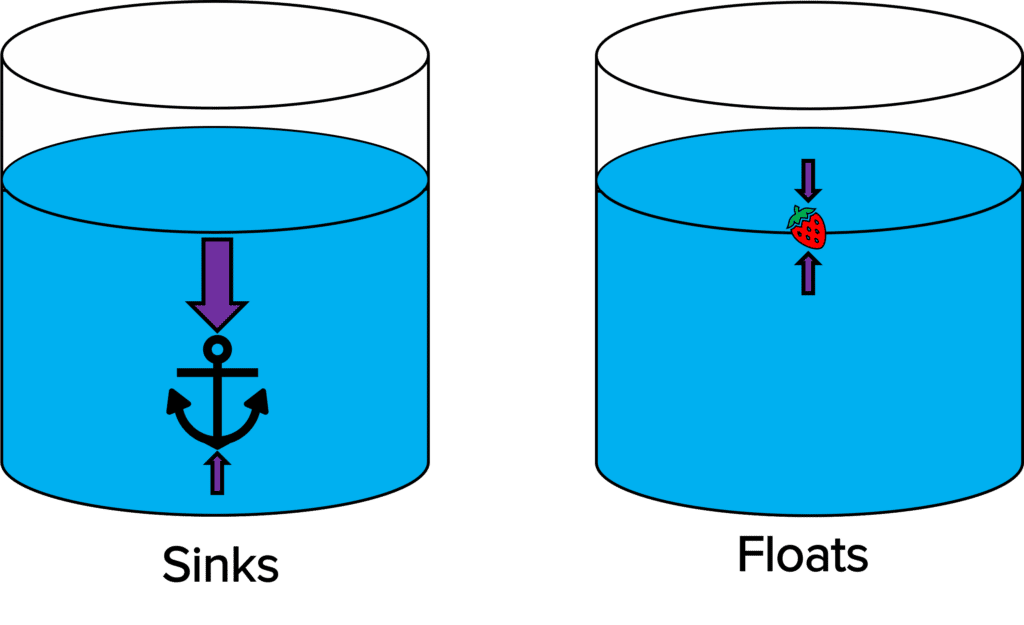
- If the upthrust is equal to or more than the weight of the object, the object floats because the forces are balanced.
- If the upthrust is less than the objects weight, the object sinks. This is because floating or sinking depends on the density of the object. Upthrust is the weight of the displaced water. So if the density of this water is less than the object, then the weight of the water is less than the object as well. This means that the upthrust is less than the weight of the object. Hence the object would sink.
Atmospheric Pressure
Note
Atmospheric pressure is the pressure exerted by the weight of the Earth's atmosphere. It is caused by air molecules colliding with surfaces.
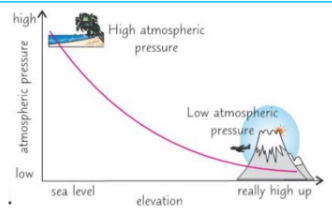
- At sea level, atmospheric pressure is approximately 100 kPa (kilopascals).
Key Factors Affecting Atmospheric Pressure:
- Altitude: As altitude increases (e.g. climbing a mountain), atmospheric pressure decreases. This is because there is less air above pushing down, so fewer air molecules are present at higher altitudes.
- Weather Conditions:
- High-pressure systems often bring clear, calm weather.
- Low-pressure systems are associated with cloudy, rainy, or stormy weather.
Everyday Effects of Atmospheric Pressure:
- Breathing: Atmospheric pressure allows us to breathe. The pressure difference between the inside and outside of our lungs forces air in and out.
- Suction Cups: These work by creating a vacuum where atmospheric pressure pushes the cup against a surface.
- Boiling Point of Water: At higher altitudes (where atmospheric pressure is lower), water boils at a lower temperature because less energy is needed for the water molecules to escape into the air as gas.