DNA & the Genome (OCR GCSE Biology A (Gateway Science Suite)): Revision Notes
📚Revision Notes
6.1.4 DNA & the Genome
The genetic material in the nucleus of a cell is composed of a chemical called DNA. DNA is a polymer made up of two strands which wrap around each other like a rope - in a structure called a double helix. The DNA in the nucleus is contained in structures called chromosomes.
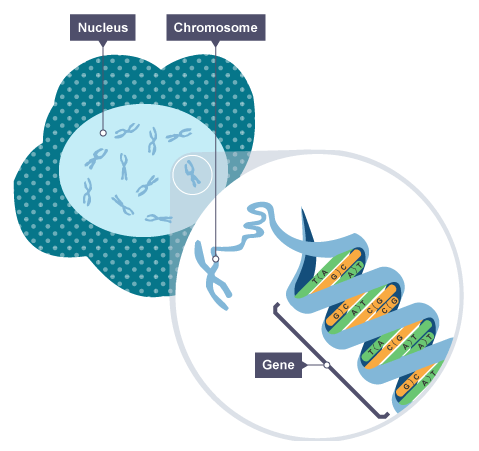
Between the two strands are the four nitrogenous bases lined up in single rows – these come together to form a series of complementary pairs (see below).
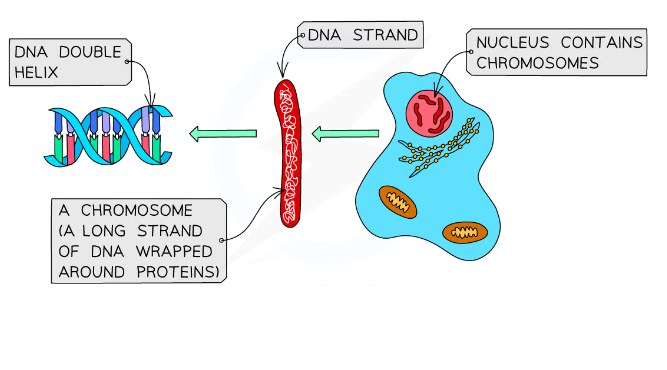
A gene is a small section of DNA on a chromosome - a triplet of bases that codes for a specific protein. Each gene codes for a particular sequence of amino acids, together a chain of amino acids can join to make a protein.
The genome is all the genes coding for all of the proteins within an organism. The whole human genome has now been studied and this has improved our understanding of the genes linked to different types of disease, the treatment of inherited disorders and has helped in tracing human migration patterns from the past. Understanding the human genome will have great importance for medicine in the future.