Variation (OCR GCSE Biology A (Gateway Science Suite)): Revision Notes
📚Revision Notes
6.2.1 Variation
The phenotype an organism has depends on two things:
- Genotype: the genes it inherited
- Genes are passed on from the parent in sex cells.
- The combining of genes from the mother and father creates genetic variation.
- Only identical twins have the same genotype.
- There is lots of genetic variation in a population.
- Environment: the place it lives in
- The conditions the organism grows and develops in also affects its appearance.
- Examples include scars in animals, or smaller and yellow leaves in plants.
Sometimes characteristics can result from a combination of genetics and the environment, such as weight. Weight depends on the food you eat but also how quickly your body breaks it down and how much it stores as fat depends on your genes.
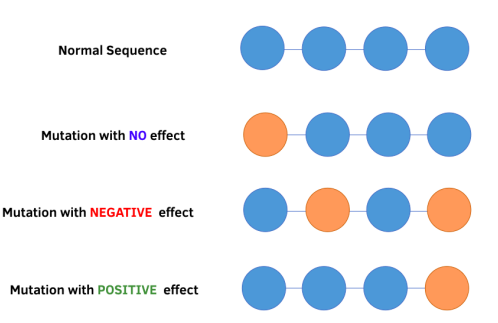
Genetic variation is introduced by mutations in the sequence of DNA.
- Most have no effect on phenotype.
- Some will influence phenotype but it is unlikely that it will bring about a new phenotype.
- If the mutation does determine the phenotype and it is advantageous, natural selection will mean it becomes the common phenotype relatively quickly.